
Few shows in television history have dared to push boundaries as relentlessly as South Park. Since its debut in 1997, the animated series has become a cultural juggernaut, notorious for lampooning celebrities, religion, politics, and social taboos with unapologetic irreverence. Its creators, Trey Parker and Matt Stone, operate under a singular philosophy: either everything is okay to make fun of, or nothing is. This all-or-nothing approach to satire has earned the show both devoted fans and furious critics across the globe.
While South Park offends audiences on a near-weekly basis, some episodes have provoked outrage that extends far beyond typical TV controversy. From religious backlash and celebrity feuds to international censorship and death threats, certain installments have ignited fires that the creators could not simply laugh off. These episodes are infamous not just for their crude humor, but for the tangible real-world consequences they triggered—making headlines and forcing networks, governments, and viewers alike to grapple with the show’s fearless commentary.
In this article, we count down 10 South Park episodes that crossed the line and sparked global outrage. Each entry highlights the premise, the exact source of controversy, and the fallout that followed. Whether it was offending religious groups, enraging Hollywood stars, or provoking international bans, these episodes exemplify how South Park continues to challenge the limits of satire—and why it remains one of the most provocative and influential animated series of all time.
10. “The Passion of the Jew” (Season 8, Episode 3)
After watching The Passion of the Christ, Kyle becomes convinced the film portrays Jewish people as villains and spirals into guilt about his heritage. Meanwhile, Cartman sees the movie as divine validation for his long-standing antisemitism and forms a disturbingly enthusiastic fan club.
The episode aired in 2004 at the height of the global debate surrounding Mel Gibson’s controversial biblical epic. Instead of choosing sides, the creators Trey Parker and Matt Stone satirized everyone involved. The show mocked Gibson as a sadomasochistic lunatic obsessed with violence while simultaneously skewering the way the film’s themes could fuel antisemitic interpretations. Critics from multiple directions took offense: some religious viewers accused the episode of disrespecting Christianity, while others felt its portrayal of Jewish guilt and Cartman’s Nazi-style rally imagery went far beyond satire.
Despite the controversy, the episode wasn’t banned in the United States, but it ignited intense media debate about whether South Park had crossed a moral line. Religious commentators and advocacy groups criticized the show for trivializing serious theological tensions surrounding Gibson’s film. At the same time, some Jewish organizations expressed discomfort with the episode’s exaggerated portrayal of internalized guilt and antisemitic caricatures, even though the satire was largely aimed at exposing those ideas.
Ironically, the uproar only reinforced South Park’s reputation as television’s most equal-opportunity offender. By lampooning both the film and the culture war surrounding it, Parker and Stone managed to anger nearly everyone involved—an outcome that, for South Park, has historically been less of a mistake and more of a mission statement.
9. “Super Best Friends” (Season 5, Episode 3)
When a charismatic cult leader named David Blaine begins recruiting followers in South Park, Stan and Kyle call in a team of legendary religious figures known as the “Super Best Friends” to stop him. The unlikely superhero-style group includes Jesus, Buddha, Krishna, Laozi, and the Prophet Muhammad, who unite to defeat the dangerous cult.
While the episode originally aired in 2001 with little backlash, it later became one of the most controversial entries in South Park history because of its depiction of the Prophet Muhammad as a superhero-like character. Although the portrayal was relatively mild compared to later controversies, Islamic tradition generally forbids visual depictions of Muhammad. As global tensions surrounding such portrayals intensified in the mid-2000s, the episode was retroactively viewed as offensive by some Muslim groups.
Following the international uproar surrounding depictions of Muhammad in Western media, particularly after the 2005 Danish cartoon controversy, Comedy Central quietly pulled the episode from circulation. By the late 2000s, “Super Best Friends” had effectively disappeared from official streaming platforms and syndication.
The removal marked one of the rare instances where South Park content was effectively censored after release. For fans, the episode became something of a lost chapter in the show’s history—an early warning sign of the much larger controversy that would erupt years later when South Park again attempted to depict Muhammad on-screen.
8. “The China Probrem” (Season 12, Episode 8)
After watching Indiana Jones and the Kingdom of the Crystal Skull, the boys become convinced that the beloved Indiana Jones franchise has been “raped” by Hollywood. Meanwhile, Cartman grows paranoid that China is secretly planning an invasion of the United States, interpreting every news story as proof that a communist takeover is imminent.
The episode sparked immediate backlash for a shocking scene in which George Lucas and Steven Spielberg are depicted literally assaulting Indiana Jones as a metaphor for ruining the franchise. Many viewers considered the gag wildly excessive even by South Park standards. The controversy intensified because the episode also played heavily on Cold War–style paranoia about China, mixing political satire with graphic comedic imagery that some critics felt crossed from satire into crude shock value.
Although the episode wasn’t banned, it generated a wave of criticism from media commentators who accused the show of going too far for the sake of a punchline. The exaggerated assault metaphor became one of the most discussed moments in South Park history, with some viewers defending it as brutally honest satire of fan disappointment while others called it tasteless and unnecessary.
Ironically, the outrage only amplified the episode’s message about Hollywood’s treatment of beloved franchises. The controversy ensured that The China Probrem became one of the most infamous pop-culture takedowns ever aired on the series and proof that when South Park wants to make a point, subtlety is usually the first casualty.
7. “With Apologies to Jesse Jackson” (Season 11, Episode 1)
During a live taping of Wheel of Fortune, Randy Marsh misreads a puzzle and blurts out a racial slur on national television. The scandal instantly engulfs the Marsh family, forcing Stan to navigate the backlash while Cartman seizes the moment to push his own twisted ideas about race.
The episode tackled one of the most explosive topics in American culture: the use of the N-word. By centering the plot on Randy’s humiliating mistake and its social consequences, the show forced viewers to confront the difference between “saying a word” and understanding the pain behind it. The title itself referenced civil rights leader Jesse Jackson, and the episode repeatedly used the slur in a satirical context. Many viewers and advocacy groups felt uncomfortable with how often the word appeared, even though the episode clearly criticized racism.
Despite the controversy, the episode earned widespread critical praise for tackling the issue head-on. Commentators debated whether the show handled the topic responsibly or simply used shock value to attract attention. The episode sparked broader conversations about racial language, intent, and privilege in American media.
Rather than damage the show’s reputation, the controversy strengthened South Park’s status as a series willing to confront taboo subjects directly. Many critics later described With Apologies to Jesse Jackson as one of the show’s sharpest and most socially aware episodes, even as it provoked outrage for daring to address the subject so bluntly.
6. “Cartoon Wars Part I & II” (Season 10, Episodes 3 & 4)
When the animated series Family Guy announces it will air an episode depicting the Prophet Muhammad, panic spreads across the entertainment industry. Cartman races to Hollywood to stop the broadcast—less out of respect and more because he believes Family Guy’s random humor threatens the future of comedy itself.
The two-part storyline tackled one of the most volatile cultural flashpoints of the 2000s: the global controversy over depictions of Muhammad in Western media. The episode openly discussed the fear networks felt about offending Muslim audiences after violent protests erupted over similar portrayals elsewhere. Although the storyline built toward a reveal of Muhammad, Comedy Central censored the image before the episode aired, replacing it with a black screen and a message explaining the decision.
The censorship sparked a firestorm among fans and free-speech advocates. Creators Trey Parker and Matt Stone openly mocked the decision within the episode itself, framing it as proof that fear had begun dictating what could appear on television. Many viewers accused the network of hypocrisy, noting that South Park had freely mocked other religions for years without similar restrictions.
The controversy also highlighted a growing tension between the show’s creators and its network. While Cartoon Wars ultimately aired, the censored ending turned the episode into a flashpoint in the broader debate about satire, religious sensitivity, and the limits of free expression in modern media.
5. “Bloody Mary” (Season 9, Episode 14)
After Randy gets arrested for drunk driving, the court orders him to attend Alcoholics Anonymous. When a statue of the Virgin Mary in South Park appears to start bleeding, Randy declares it a miracle that could cure his alcoholism and soon the town erupts into religious hysteria.
The controversy centered on the episode’s depiction of a bleeding Virgin Mary statue. In the story, the liquid turns out to be menstrual blood—an intentionally shocking twist that many Catholic viewers found deeply offensive. By linking a sacred religious icon with crude bodily humor, the episode pushed satire into territory that many believers saw as outright mockery of their faith.
The backlash hit hardest in heavily Catholic countries. Several broadcasters in places like New Zealand refused to air the episode after receiving complaints from religious groups. In some regions, networks pulled the episode entirely from rotation to avoid further protests.
The uproar added another entry to South Park’s growing list of religious controversies. True to form, the show used the scandal itself as part of its commentary, highlighting how quickly people rally around supposed miracles while ignoring the uncomfortable truths behind them. The episode reinforced the series’ reputation for attacking sacred cows… sometimes literally, no matter how explosive the reaction might be.
4. “Hell on Earth 2006” (Season 10, Episode 11)
Satan throws a massive Halloween party on Earth, inviting a bizarre guest list of villains, monsters, and historical figures. Determined to make the event the party of the century, he becomes obsessed with throwing the perfect celebration, while Butters accidentally gets mistaken for a demonic guest and dragged into the chaos.
The controversy erupted over one specific cameo: the late Australian conservationist Steve Irwin. The episode depicts Irwin, who had died just weeks before the broadcast—appearing at Satan’s party with a stingray barb still sticking out of his chest. Many viewers felt the gag crossed a line by mocking a beloved public figure so soon after his death. Critics argued that the timing made the joke particularly cruel, especially given Irwin’s global reputation as a passionate wildlife educator.
The backlash arrived quickly. Fans, media commentators, and members of the public accused South Park of exploiting a recent tragedy for cheap shock value. Even people who normally defended the show’s edgy humor admitted the timing felt unusually harsh.
Trey Parker and Matt Stone later clarified that they never intended to mock Irwin himself. They explained that the joke targeted the idea that heaven and hell might process new arrivals so quickly that Irwin simply hadn’t realized he had died yet. Still, the explanation did little to calm the initial outrage. The episode became a prime example of how South Park’s fearless satire can collide with real-world grief, sometimes with explosive results.
3. “Trapped in the Closet” (Season 9, Episode 12)
After taking a personality test at a local Scientology center, Stan receives a shocking verdict: church leaders believe he is the reincarnation of their founder, L. Ron Hubbard. As Scientology officials attempt to recruit him as their new spiritual leader, Stan quickly discovers the bizarre beliefs and secret teachings behind the organization.
The episode launched one of the most direct attacks South Park has ever aimed at a real-world institution. The show openly mocked the Church of Scientology by explaining its secret origin story, including alien overlord Xenu and souls trapped in volcanoes, while repeatedly flashing the message “THIS IS WHAT SCIENTOLOGISTS ACTUALLY BELIEVE” across the screen. The satire also targeted several high-profile Scientologists, most notably Tom Cruise, who hides in Stan’s closet after feeling insulted.
The reaction proved explosive. Reports quickly surfaced that Tom Cruise pressured the network to pull the episode from future broadcasts, though Comedy Central never officially confirmed the claim. The controversy intensified when actor Isaac Hayes, the voice of Chef and a Scientologist, quit the show shortly after the episode aired, citing religious intolerance.
The episode quickly became one of the most infamous moments in South Park history. By openly dissecting a secretive religion and ridiculing some of its most powerful supporters, Parker and Stone ignited a cultural firestorm that spilled far beyond television. For critics and fans alike, “Trapped in the Closet” cemented the show’s reputation as a comedy willing to confront powerful institutions head-on, no matter how messy the consequences became.
2. “Band in China” (Season 23, Episode 2)
Randy Marsh travels to China hoping to expand his Tegridy Farms marijuana business, only to get arrested and thrown into a Chinese prison. Back in South Park, Stan forms a death metal band and tries to sell a biopic about his group, quickly learning that Hollywood will rewrite almost anything to satisfy Chinese censors.
The episode directly attacked the Chinese government’s strict censorship policies and Hollywood’s willingness to comply with them to access the lucrative Chinese market. It mocked Chinese prison camps, government propaganda, and the way American studios routinely alter films to avoid offending Beijing. The satire proved especially provocative because it aired during growing international criticism of China’s political control and human rights record.
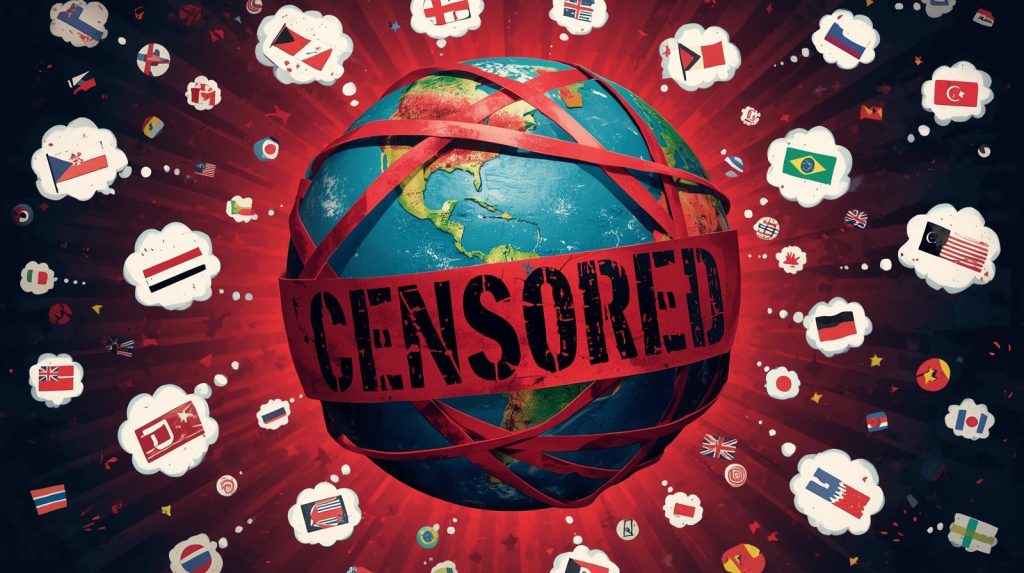
China responded swiftly and decisively. Authorities banned South Park across the country, wiping episodes, clips, and discussions of the show from Chinese streaming platforms and social media sites. Even fan pages and references to the episode disappeared almost overnight as censors moved to erase the controversy entirely.
Rather than apologize, Trey Parker and Matt Stone doubled down. They released a sarcastic “apology” online, joking that they too loved money more than freedom and welcoming Chinese censors into their homes and hearts. The defiant response only amplified the story, turning Band in China into one of the rare television episodes that triggered an international censorship crackdown and proving that South Park could still spark global outrage more than two decades into its run.
1. “200” and “201” (Season 14, Episodes 5 & 6)
South Park unites two centuries of celebrities, historical figures, and controversial figures in a single explosive storyline. The town faces chaos when past grievances resurface, ultimately centering on the long-standing tension over the depiction of the Prophet Muhammad. Cartman’s antics escalate the situation, forcing the town and the show itself into increasingly absurd territory.
The episodes reignited the global Muhammad controversy that South Park had previously stirred in Cartoon Wars. This time, the show attempted to depict Muhammad openly, angering religious leaders and prompting renewed debate about depictions of Islamic figures in media. The storyline also satirized celebrity lawsuits and Hollywood hypocrisy, further inflaming critics who felt the series crossed ethical lines in multiple directions at once.
Comedy Central reacted by heavily censoring both episodes before airing. In some scenes, Muhammad appears only as a blacked-out silhouette with a text warning, and key dialogue about him was removed entirely. Several websites refused to host the episodes, and the controversy triggered threats and widespread media coverage.
Despite the backlash, the episodes became a defining example of South Park’s fearless approach to satire. Parker and Stone intentionally provoked outrage, highlighting the tension between creative freedom and religious sensitivities. The incident reinforced the show’s reputation as a lightning rod for cultural debate, proving that no topic or figure is ever off limits in South Park’s world.
Why South Park Survives Global Outrage and Censorship
South Park doesn’t just rely on shock value for laughs. Time and again, the series uses outrageous scenarios, offensive jokes, and taboo subjects to deliver sharp social commentary, forcing viewers to examine politics, religion, and pop culture in ways few shows dare to attempt.
Despite decades of controversies, boycotts, and even international censorship, South Park has endured. Trey Parker and Matt Stone continue to push boundaries, proving that fearless satire can survive and even thrive, amid outrage. The show remains as culturally relevant and unapologetically bold today as it was in its first season.
Which South Park controversy do you think went too far and which one was justified? Are there any outrage, worthy episodes we missed that deserve a spot on this list? Share your thoughts in the comments!