
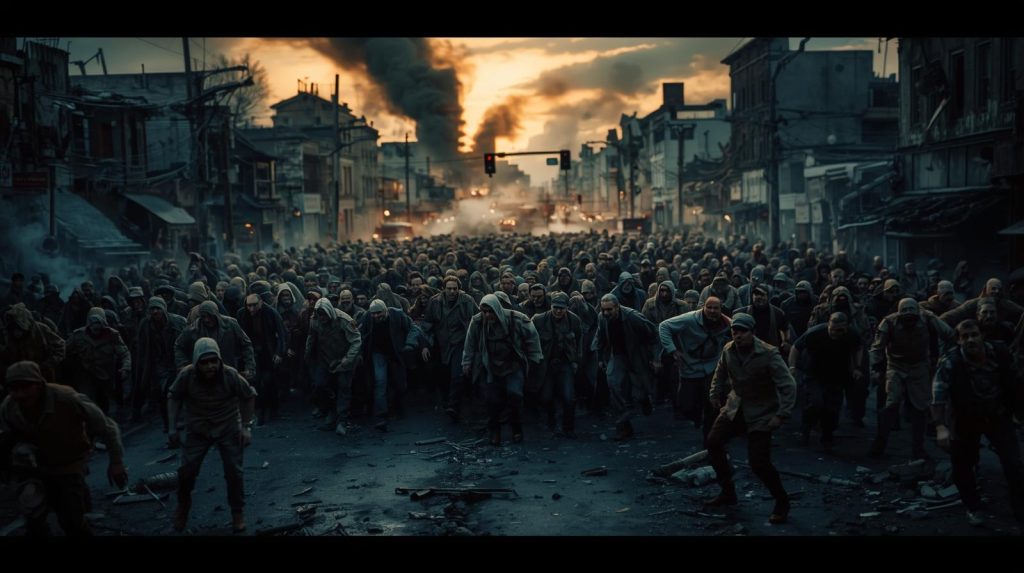

Zombies have always captivated audiences, from Romero’s slow shamblers that shuffle through desolate towns to the sprinting, rage-fueled infected of the 21st century. Their relentless hunger and the collapse of society they bring tap into primal fears, making zombie movies a perfect blend of horror, suspense, and social commentary. Whether you crave gore, suspense, or dark humor, the undead continue to mesmerize fans worldwide.
In 2026, the zombie genre has evolved dramatically. With a surge of new hits, international films, and groundbreaking practical effects, it’s the perfect time to revisit the classics and see how they hold up against modern masterpieces. This list re-evaluates the most influential, terrifying, and entertaining zombie films, ranking them for both longtime horror aficionados and newcomers looking for the ultimate undead experience.
How We Ranked the Top Zombie Movies:
- Cultural Impact: How the film shaped the genre and influenced future works, from iconic set pieces to memorable characters.
- Scare Factor: The effectiveness of suspense, horror, and gore in delivering chills, jump scares, and unforgettable moments.
- Rewatchability: The film’s ability to remain engaging and thrilling even after multiple viewings, combining story, practical effects, and pacing.
With these criteria, we’ve compiled the definitive list of the 10 best zombie movies of all time, updated for 2026. Prepare to dive into claustrophobic bunkers, blood-soaked streets, and sprawling apocalyptic landscapes as we countdown the ultimate undead experiences.
Quick Look: Top 10 Zombie Movies Ranked
| Our Rating | Movie Title | Year | Best For… |
|---|---|---|---|
| 1 | Dawn of the Dead | 1978 | Social Commentary & Classic Horror |
| 2 | Night of the Living Dead | 1968 | Original Siege Horror |
| 3 | World War Z | 2013 | Global Scale & Blockbuster Spectacle |
| 4 | 28 Days Later | 2002 | Fast-Paced Modern Zombie Horror |
| 5 | Train to Busan | 2016 | Tense Confined Action |
| 6 | The Return of the Living Dead | 1985 | Punk Energy & Talking Zombies |
| 7 | [REC] | 2007 | Claustrophobic Found Footage Horror |
| 8 | Zombieland | 2009 | Comedy & Survival Rules |
| 9 | Dead Alive | 1992 | Over-the-Top Gore & Dark Comedy |
| 10 | Day of the Dead | 1985 | Underground Bunker Horror & Practical Effects |
10. Day of the Dead (1985)
Director: George A. Romero
Starring: Lori Cardille, Terry Alexander, Joseph Pilato
Runtime: 101 minutes
In an underground military bunker, scientists and soldiers clash over how to handle the zombie apocalypse raging above. As tensions explode and discipline collapses, the last remnants of human society spiral toward self destruction while the undead press closer, testing whether intelligence or brutality will define humanity’s final days.
Hardcore horror fans know this is where Romero went mean, claustrophobic, and gloriously grotesque. The bunker setting turns the film into a pressure cooker, stripping away escape routes and exposing pure human rot beneath the surface. Tom Savini’s practical effects remain jaw dropping even in 2026, with rubbery entrails, arterial sprays, and tactile decay you can practically smell through the screen. Unlike flashier zombie films, this one lingers in moral gray zones, daring you to sympathize with monsters over men. It is bleak, cerebral, and punk as hell, the ultimate no hope left chapter of the original zombie trilogy.
Standout Scene:
The infamous dismemberment sequence where a character is torn apart, screaming as his voice distorts while his vocal cords are literally ripped away, remains one of the most savage practical effects moments ever put on film.
9. Dead Alive (1992)
Director: Peter Jackson
Starring: Timothy Balme, Diana Peñalver, Elizabeth Moody
Runtime: 104 minutes
A shy young man’s overbearing mother is bitten by a rare creature at the zoo, triggering a grotesque transformation that unleashes a plague of flesh hungry undead. As the infection spreads through their home and beyond, he struggles to contain the chaos before his quiet life is completely devoured.
Before he conquered Middle earth, Jackson delivered the most unhinged splatter comedy ever filmed. The house setting becomes a blood soaked war zone, functioning like a domestic bunker as the outbreak spirals out of control. The practical effects are gloriously excessive even by today’s standards, with gallons of fake blood, puppet work, and tactile creature gags that CGI could never replicate. It is disgusting, inventive, and weirdly charming, proving that zombie horror can be both terrifying and hysterically funny when pushed to operatic extremes.
Standout Scene:
The legendary lawnmower massacre, in which the hero plows through a horde of zombies in a single delirious gush of gore, remains one of the most outrageous practical effects sequences in horror history.
8. Zombieland (2009)
Director: Ruben Fleischer
Starring: Jesse Eisenberg, Woody Harrelson, Emma Stone, Abigail Breslin
Runtime: 88 minutes
After a zombie outbreak devastates America, a cautious college student teams up with a ruthless survivor on a cross country journey toward rumored safe zones. Along the way, they join two crafty sisters, and together they navigate abandoned cities, deserted highways, and the constant threat of the undead.
While most zombie films lean into despair, Zombieland thrives on momentum and personality. The film repeatedly uses temporary safe havens that function like makeshift bunkers, which in turn highlight how fragile survival really is. Moreover, the practical makeup effects give the zombies a gritty texture that keeps the stakes grounded despite the comedy. At the same time, the rule based narration cleverly guides the chaos, making the apocalypse feel strangely survivable. Therefore, it earns its spot by balancing laugh out loud humor with genuine tension, proving the genre can evolve without losing its bite.
Standout Scene:
The amusement park finale stands out because the bright lights and open spaces contrast sharply with the usual claustrophobic survival tactics. As a result, the chaos feels both exhilarating and terrifying, especially when the characters are forced to fight without anywhere left to hide.
7. [REC] (2007)
Director: Jaume Balagueró, Paco Plaza
Starring: Manuela Velasco, Ferran Terraza, Jorge-Yamam Serrano
Runtime: 78 minutes
A television reporter and her cameraman follow firefighters into a Barcelona apartment building after a mysterious emergency call. Once inside, authorities seal the exits and quarantine the structure. Panic spreads among residents as a violent infection takes hold, turning the building into a vertical trap with no clear explanation and no escape.
Few zombie films weaponize confinement like this one. The apartment complex functions as a stacked bunker, each floor a new circle of hell as the infection spreads upward and downward at the same time. The handheld camera style amplifies the suffocating atmosphere, while the practical effects keep the violence raw and immediate. Every injury feels chaotic and uncontrolled, as if captured by accident rather than staged. It is relentless, intimate, and terrifyingly plausible, stripping the genre down to pure survival horror.
Standout Scene:
The night vision attic sequence delivers a final descent into absolute dread, revealing what has been hiding in the darkness and transforming the film from outbreak thriller into something far more sinister.
6. The Return of the Living Dead (1985)
Director: Dan O’Bannon
Starring: Clu Gulager, James Karen, Thom Mathews, Linnea Quigley
Runtime: 91 minutes
When a toxic gas leak at a medical supply warehouse reanimates the dead, a group of employees and punk rockers find themselves trapped in a nightmarish outbreak. As the contagion spreads to a nearby cemetery, the survivors scramble to contain the chaos before the entire town is overrun.
This film flips the zombie rulebook and sets it on fire. The warehouse and mortuary become an improvised bunker as characters desperately try to control a situation that keeps escalating in grotesque ways. The practical effects are legendary, blending rubber suits, animatronics, and tar soaked corpses into creatures that feel both absurd and horrifying. These zombies talk, strategize, and refuse to stay down, which adds a cruel sense of inevitability to the siege. It is loud, nihilistic, and soaked in punk energy, proving the genre can reinvent itself without losing its underground bite.
Standout Scene:
The introduction of the half corpse on the examination table is pure nightmare fuel, a twitching cadaver that begs for brains while revealing just how unstoppable the outbreak has become.
5. Train to Busan (2016)
Director: Yeon Sang-ho
Starring: Gong Yoo, Jung Yu-mi, Ma Dong-seok, Kim Su-an
Runtime: 118 minutes
A work obsessed father boards a high speed train with his young daughter, hoping to deliver her safely to her mother. Mid journey, a violent outbreak erupts on board, trapping passengers in speeding metal carriages as the infection tears through each compartment with terrifying speed.
The train setting functions as a high velocity bunker, compressing survival horror into narrow aisles and sealed doors where every decision has immediate consequences. The film relies heavily on stunt work, contortionist performers, and practical crowd choreography to create swarming undead that feel dangerously physical. Each carriage becomes its own battleground, forcing characters to push forward through human panic as much as zombie aggression. Beneath the relentless action sits a sharp social commentary about selfishness and sacrifice, giving the carnage emotional weight that lingers long after the final stop.
Standout Scene:
The desperate push through multiple infected train cars, where survivors time their movements in darkness to slip past the undead, delivers one of the most nerve shredding sequences the genre has produced in decades.
4. 28 Days Later (2002)
Director: Danny Boyle
Starring: Cillian Murphy, Naomie Harris, Brendan Gleeson, Christopher Eccleston
Runtime: 113 minutes
A bicycle courier awakens from a coma to find London eerily deserted after a fast spreading rage virus collapses society. As he joins other survivors, they navigate abandoned streets and rural hideouts in search of safety, only to discover that the remaining pockets of humanity may be as dangerous as the infected.
This is the film that redefined zombies for the modern era by making them fast, feral, and terrifyingly plausible. The military compound in the final act operates as a fortified bunker, exposing how fragile authority becomes when civilization disappears. Boyle’s use of digital video gives the apocalypse a raw, documentary texture, while the practical effects keep the violence immediate and shocking. The infected move like a tidal force rather than shambling corpses, turning every open space into a potential death trap. It is lean, vicious, and deeply unsettling, dragging the genre into the 21st century with zero mercy.
Standout Scene:
Jim’s silent walk through an empty London at dawn remains iconic, a haunting vision of total societal collapse that proves the absence of life can be just as terrifying as the presence of monsters.
3. World War Z (2013)
Director: Marc Forster
Starring: Brad Pitt, Mireille Enos, Daniella Kertesz
Runtime: 116 minutes
A former United Nations investigator races across the globe as a mysterious pandemic collapses governments within days. From overcrowded cities to isolated military facilities, he searches for the origin of the outbreak and a way to slow humanity’s extinction before the fast moving hordes overwhelm the last defenses.
While famous for its massive scale, the film earns its ranking through moments of intense confinement that mirror bunker horror on a global level. The Jerusalem walls, the aircraft cabin, and the World Health Organization facility all become sealed pressure chambers where one breach means total annihilation. The blend of practical effects, stunt work, and large scale coordination sells the overwhelming force of the swarms even when enhanced digitally. These zombies behave like a natural disaster, piling and surging with insect like determination. It is blockbuster spectacle fused with survival panic, proving the genre can go big without losing its primal fear.
Standout Scene:
The towering zombie pile scaling the walls of Jerusalem delivers a staggering visual of unstoppable momentum, a living avalanche that transforms human engineering into a fragile illusion of safety.
2. Night of the Living Dead (1968)
Director: George A. Romero
Starring: Duane Jones, Judith O’Dea, Karl Hardman
Runtime: 96 minutes
Strangers take refuge in a rural farmhouse as the recently dead begin returning to life and attacking the living. With communication collapsing and rescue uncertain, the group barricades themselves inside, struggling to survive both the growing undead siege outside and the paranoia brewing within.
This is ground zero for modern zombie cinema and still one of the most suffocating siege films ever made. The farmhouse operates as the original bunker, a fragile shelter where splintering personalities become as dangerous as the creatures outside. Romero’s raw black and white aesthetic heightens the documentary realism, while the practical effects feel disturbingly tactile despite their simplicity. Every boarded window and hammer strike carries a sense of desperation that later films would imitate for decades. It is bleak, confrontational, and historically seismic, the blueprint for everything that followed.
Standout Scene:
The slow collapse of the barricades as hands tear through wood and glass delivers a primal image of safety being literally ripped apart, culminating in a chaotic invasion that changed horror forever.
1. Dawn of the Dead (1978)
Director: George A. Romero
Starring: David Emge, Ken Foree, Scott Reiniger, Gaylen Ross
Runtime: 127 minutes
Dawn of the Dead secures the number one spot because it masterfully combines survival horror with biting social commentary, setting a standard that few films have matched. The shopping mall setting works as a sprawling, semi-bunker environment, creating constant tension as the survivors navigate barricades, supply runs, and increasingly volatile interpersonal dynamics.
Romero’s practical effects are unmatched, from grotesque zombie makeup to visceral gore, ensuring every encounter feels dangerous and immediate. Unlike other films that rely solely on shock, Dawn of the Dead emphasizes pacing, strategic suspense, and layered storytelling, making every scene count. It also explores human nature under extreme stress, showing that fear, greed, and selfishness can be as deadly as the undead.
The combination of large-scale zombie swarms, claustrophobic tension in smaller corridors, and authentic performances gives this film a perfect balance between spectacle and intimacy. Even in 2026, it remains thrilling, horrifying, and intellectually engaging, proving why it continues to be the definitive zombie film.
Legacy:
Dawn of the Dead redefined the zombie genre, popularizing the “bunker-in-a-large-space” concept and inspiring countless filmmakers. It cemented Romero’s reputation as the father of modern zombie cinema and demonstrated that zombies could be used as mirrors for society. The film’s practical effects, crowd choreography, and social satire influenced everything from blockbuster spectacles to indie horror, making it a timeless blueprint for both scares and commentary.
Frequently Asked Questions About Zombie Movies
What is the first zombie movie ever made?
The earliest recognized zombie film is White Zombie, starring Bela Lugosi. It introduced the concept of reanimated corpses controlled by voodoo, establishing many of the visual and thematic elements that would evolve into modern zombie horror. While primitive by today’s standards, it laid the groundwork for decades of undead storytelling.
Are the “infected” in 28 Days Later technically zombies?
Not in the traditional sense. The creatures in 28 Days Later are humans infected with the “Rage” virus. They retain some biological functions, exhibit extreme aggression, and can run at terrifying speeds. Unlike classical zombies, they are not reanimated corpses—they are living humans driven mad by infection—but they fulfill the same narrative role as relentless, lethal antagonists.
Which zombie movie has the highest kill count?
World War Z holds the record for sheer zombie casualties. The global scope and massive CGI-enhanced hordes allow for tens of thousands of on-screen undead deaths, from city streets to fortified compounds. Practical effects, stunt work, and large-scale coordination amplify the carnage, creating one of the most devastating and cinematic zombie outbreaks ever filmed.
Conclusion:
From claustrophobic bunkers to sprawling cityscapes, the top 10 zombie movies of all time showcase the genre’s evolution, blending practical effects, social commentary, and pulse-pounding action. Whether you crave gore, dark humor, or edge-of-your-seat suspense, this list has something for every horror fan in 2026.
Disagree with our number one pick? Let us know in the comments below.