
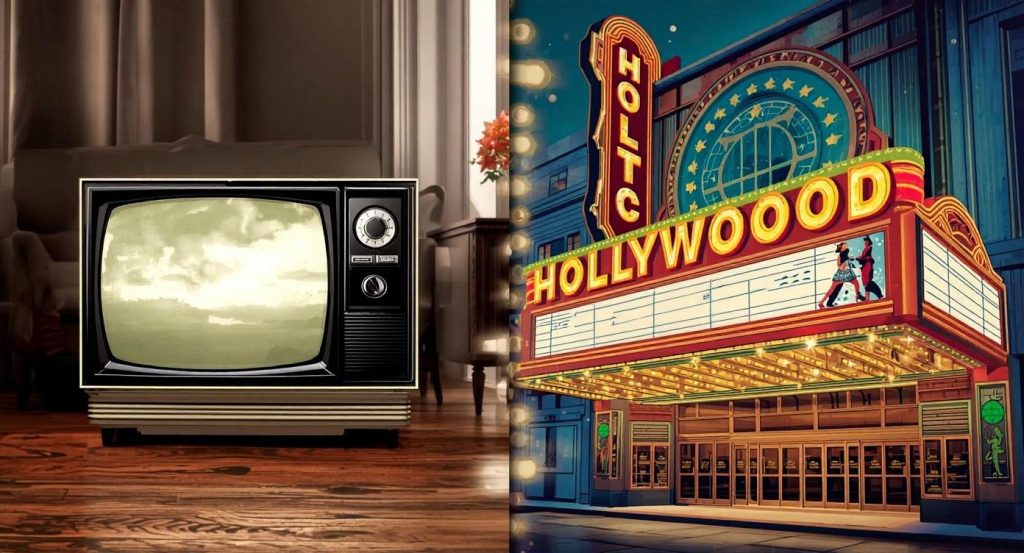

In the 1930s and 1940s, Hollywood sat at the center of global entertainment like an untouchable empire. The Golden Age of cinema was in full swing, with packed movie palaces, shimmering premieres, and studio systems that controlled every step of filmmaking from script to screen. Stars were larger than life, stories were meticulously crafted, and going to the movies was not just entertainment, it was a cultural ritual. For decades, the industry believed its dominance was permanent.
Then came the post war boom, and with it, a quiet invention that would upend everything. Television sets began appearing in American living rooms at a staggering pace, transforming domestic life almost overnight. Families who once planned evenings around cinema visits suddenly had a glowing screen at home offering news, comedy, sports, and drama on demand. The living room became a new kind of theater, and it never required tickets.
This shift triggered an existential crisis in Hollywood. Television did not merely compete for attention; it rewired audience behavior itself. Viewers no longer had to leave home to be entertained, and that simple change threatened the entire foundation of the film industry. What followed was not just competition, but a complete transformation. Television forced Hollywood to rethink how movies were made, how they were marketed, and how they reached audiences, reshaping cinema into a more spectacular, strategic, and survival driven art form.
1. 1947: The First Televised World Series
In 1947, something quietly revolutionary flickered to life in American living rooms: the first televised World Series. Major League Baseball, once the exclusive domain of radio waves and packed stadiums, suddenly became a visual, communal experience at home. Families gathered around tiny black-and-white screens to watch the New York Yankees face off against the Brooklyn Dodgers, without buying a ticket, without leaving the couch.
This was television’s opening salvo. It proved that live events, once thought immune to disruption could be siphoned away from public venues and delivered directly into the home. If America’s pastime could survive (and thrive) on TV, what chance did movie theaters have? Why pay for a night out when entertainment was suddenly… free, immediate, and personal?
The Hollywood Adaptation
Hollywood didn’t panic…at least, not outwardly. But behind the scenes, executives recognized the existential threat. Television wasn’t just competition; it was convenience weaponized. So the film industry made a calculated pivot: if audiences could stay home for everyday entertainment, then movies had to become extraordinary events.
The response was twofold.
First, studios doubled down on spectacle. Historical epics, lavish musicals, and larger-than-life productions began to dominate development slates. The idea was simple: television could show you a baseball game, but it couldn’t transport you to ancient Rome or a biblical desert with hundreds of extras and sweeping vistas.
Second, Hollywood began rethinking the very concept of “going to the movies.” It wasn’t just about the film anymore, it was about the experience. Plush theaters, grand premieres, and a sense of occasion became part of the package. Studios leaned into the idea that cinema was something you did, not just something you watched.
In hindsight, the 1947 World Series broadcast wasn’t just a sports milestone, it was a warning shot. Television had proven it could capture mass audiences in real time. Hollywood’s answer? Go bigger, go bolder, and turn every movie into something television simply couldn’t replicate… at least, not yet.
2. 1948: The Paramount Consent Decrees
By 1948, television was no longer a novelty. It was a rapidly spreading presence in American homes, offering a steady stream of free entertainment that required no planning. Families who once filled ornate movie palaces were beginning to stay in, drawn by the simple pleasure of turning a dial and being entertained instantly.
This shift came at the worst possible moment for Hollywood. Studios still operated under the old system, controlling production, distribution, and exhibition. Companies like Paramount Pictures and Warner Bros. owned vast theater chains, ensuring their films always had a place to play. But television was quietly eroding the need for that system. If audiences were no longer guaranteed to show up, owning the theater did not guarantee success.
How Hollywood Fought Back Against TV
Then came the ultimate blow. The United States v. Paramount Pictures, Inc. decision forced studios to divest their theater chains and dismantle the vertically integrated system that had defined Hollywood’s golden age.
At first glance, this looked like a disaster. Studios lost control over where and how their films were shown. Block booking practices were outlawed. The safety net was gone. And all that while, television continued to lure audiences away.
But here is where Hollywood adapted with surprising agility.
Without guaranteed screens, studios had to compete for attention in a way they never had before. Quantity gave way to quality. Films became more ambitious, more polished, and more event driven. Each release had to earn its place in theaters rather than simply being slotted in.
At the same time, independent producers gained power, leading to a more diverse range of stories and styles. Hollywood, once a tightly controlled machine, became more flexible and creative. This shift allowed filmmakers to take risks and explore new ideas, something television at the time struggled to match.
In a twist of irony, the breakup of the studio system helped Hollywood survive the rise of television. By forcing the industry to innovate and compete, the Paramount Consent Decrees ensured that cinema would evolve rather than stagnate. Television may have changed how people consumed entertainment, but Hollywood learned how to make sure its stories still felt worth the trip.
3. 1951: The I Love Lucy Innovation
By 1951, television had found its first true masterpiece in I Love Lucy. Starring Lucille Ball and Desi Arnaz, the show did something revolutionary. It perfected a production method that made television feel polished, cinematic, and endlessly rewatchable.
Instead of broadcasting live like most early programs, I Love Lucy used a three camera setup in front of a live studio audience, all captured on high quality film. This meant episodes could be edited, preserved, and re-run with consistent quality. In short, television had cracked the code for scalability. It was no longer disposable entertainment. It was content that could live on.
For Hollywood, this was alarming. Television was not just convenient anymore. It was starting to look good. The visual gap between movies and TV was shrinking fast.
The Film Industry’s Counterattack
Hollywood responded by sharpening its biggest advantage. If television could now deliver polished storytelling on a small screen, then cinema needed to widen the gap again in a way that TV simply could not match.
The answer was scale and immersion.
Studios accelerated their push toward widescreen formats and visual grandeur. This period helped pave the way for innovations like CinemaScope, which stretched the image far beyond the square frame of television. Movies became visually expansive, designed to overwhelm the senses in a way no living room screen could replicate.
Simultaneously, Hollywood leaned into richer production values. Color filmmaking became more prominent, sound design became more sophisticated, and stories grew more ambitious. If television was mastering efficiency, film would master spectacle.
There was also a quieter adaptation behind the scenes. Hollywood began to take television seriously as a medium rather than dismissing it. Talent started to move between both worlds, and studios began to study what made shows like I Love Lucy so effective at holding audience attention.
The innovation of I Love Lucy proved that television was not just a passing trend. It could evolve, improve, and compete on quality. Hollywood’s response was to evolve even faster, ensuring that while TV could make you laugh at home, the movies would still give you something you could not experience anywhere else.
4. 1952: The Debut of Cinerama
The following year in 1952, television had settled comfortably into the American home. Its small square screen and steady stream of programming had turned casual viewing into a nightly ritual. Families no longer needed a special reason to be entertained. They simply sat down, turned a knob, and the show began.
For Hollywood, this was a nightmare scenario. The magic of cinema had always relied on the idea of escape, but television was quietly redefining what audiences expected. Entertainment was no longer an event. It was a habit. Worse still, it was happening on a screen that fit inside a cabinet.
The danger was not that television looked better. It was that it was easier.
Hollywood Strikes Back: The Cinema Survival Plan
Hollywood’s response was bold, expensive, and impossible to ignore. Enter Cinerama.
Unlike anything audiences had seen before, Cinerama used three synchronized projectors to create a massive, deeply curved image that wrapped around the viewer’s field of vision. This was not just watching a movie. It was stepping inside it. The debut film, This Is Cinerama, famously opened with a simple scene on a standard screen before expanding into a breathtaking panoramic experience that left audiences stunned.
It was a direct challenge to television’s limitations. While TV offered convenience, Cinerama offered immersion. You could watch a show at home, but you could not replicate the sensation of a roller coaster ride unfolding across a screen that seemed to stretch beyond your peripheral vision.
Of course, there was a catch. Cinerama required specialized theaters, complex projection systems, and significant investment. It was not a universal solution. But that was not the point. The goal was to remind audiences why movies were worth leaving the house for.
In many ways, Cinerama was Hollywood planting its flag. If television wanted to dominate the living room, then cinema would dominate spectacle. It marked the beginning of a widescreen arms race, one that would soon lead to even more practical innovations.
Cinerama did not just compete with television. It redefined what the theatrical experience could be, turning a simple night at the movies into something unforgettable.
5. 1953: The 3D Craze Hits its Peak
Just when television seemed unstoppable, Hollywood decided subtlety was overrated. By 1953, TV had become the king of convenience, delivering news, sitcoms, and live events straight into the home with effortless regularity. Its small black and white screen may not have been impressive, but it did not need to be. It was always there, always on, and always easy.
Audiences were drifting away from theaters not because films had lost their magic, but because television had changed the rules. Entertainment was no longer something you planned your evening around. It was something that filled the evening by default. For Hollywood, the challenge was no longer just quality. It was urgency. Why should someone leave the house tonight instead of staying in?
Changing the Cinematic Experience
Hollywood’s answer came flying straight out of the screen. The 3D boom of 1953 turned movies into an experience that felt immediate, physical, and impossible to ignore.
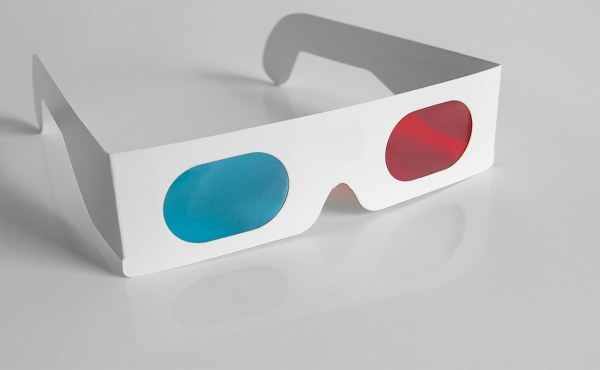
Films like House of Wax, starring Vincent Price, became the face of the movement. Audiences donned special glasses as objects appeared to leap into the theater. Paddles, spears, and even clouds of smoke seemed to extend beyond the screen and into the audience’s personal space. It was gimmicky, yes, but it was also thrilling.
This was Hollywood leaning into something television could not replicate. TV kept everything safely behind the glass. 3D broke that barrier. It turned passive viewing into something almost interactive, demanding attention in a way television simply could not match.
Studios rushed to produce more 3D films, hoping to capitalize on the novelty and draw crowds back into theaters. For a brief moment, it worked. Audiences returned, curious and excited to experience something new.
But like many rapid innovations, the craze burned bright and fast. Technical limitations, viewer discomfort, and inconsistent quality caused the trend to fade almost as quickly as it appeared. Still, the impact was lasting.
The 3D boom proved that spectacle could still pull audiences away from their living rooms. It showed Hollywood was willing to experiment, even recklessly, to maintain its edge. Perhaps most importantly, it reinforced a growing truth. If television owned convenience, then cinema would have to own sensation.
6. 1953: The Robe Introduces CinemaScope
Television had firmly established its visual identity. It was small, square, boxy 4:3 aspect ratio that fit neatly into the corner of a living room. Yet, despite its limitations, audiences were perfectly content. Why not be? The stories kept coming, the laughs kept landing, and the effort required was minimal.
For Hollywood, this was a frustrating paradox. Television looked modest, even inferior, but it was winning on convenience and consistency. The danger was clear. If audiences were willing to accept a smaller experience, then cinema needed to make “small” feel unacceptable.
The Evolution of Cinema in the 1950s
Hollywood’s response was nothing short of transformative. With the release of The Robe, the industry revolutionized CinemaScope (technology that stretched the image into a breathtaking panoramic view).
Using anamorphic lenses, filmmakers could compress a wide image onto standard film and then expand it during projection. The result was a screen that felt vast, immersive, and dramatically different from anything television could offer. Where TV boxed you in, CinemaScope opened the world up.
Audiences immediately noticed the difference. Epic landscapes felt grander. Crowd scenes felt larger. Even simple conversations gained a new sense of space and composition. Watching a film was no longer just about following a story. It was about being surrounded by it.
Studios quickly embraced the format, rushing to produce more widescreen films. Theaters adapted as well, installing larger screens and promoting the experience as something truly special. CinemaScope became both a technological upgrade and a marketing weapon, often advertised as the reason to return to the movies.
In one decisive move, Hollywood had redefined the battlefield. Television could keep its small screen and steady programming. Cinema would offer scale, immersion, and visual storytelling on a level that simply could not fit inside a living room.
7. 1954: Walt Disney Embraces the Enemy
By the mid 1950s, television was no longer knocking on Hollywood’s door. It had moved in, rearranged the furniture, and invited the entire country to sit down and stay awhile. Weekly programming kept audiences hooked, creating habits that movie studios struggled to break.
For most of Hollywood, television was still the enemy. It pulled viewers away, shrank box office numbers, and threatened the traditional model of entertainment. The instinct was to resist it, to treat it as a rival that needed to be outperformed or ignored.
But one man saw something different.
Cinema’s Cure for the Television Threat
Enter Walt Disney, who made a decision that seemed almost unthinkable at the time. Instead of fighting television, he partnered with it.
Through a groundbreaking deal with ABC, Disney launched the television program Disneyland. The show was not just entertainment. It was a strategic masterstroke. Each episode served as both a self contained story and a promotional platform for Disney’s films and the upcoming Disneyland theme park.
While other studios feared television would cannibalize their audience, Disney used it to expand his reach. He turned the small screen into a gateway rather than a competitor. Viewers who tuned in weekly became invested in Disney’s brand, his characters, and his vision. When a new film was released, the audience was already waiting.
This approach changed the rules of the game. Television was no longer just a threat. It could be a marketing engine, a storytelling extension, and a way to build long term audience loyalty.
Hollywood took notice. Slowly but surely, other studios began to explore television rather than reject it outright. The wall between the two mediums started to crack.
In embracing television, Disney did something revolutionary. He proved that survival did not always mean resistance. Sometimes, it meant adaptation in its purest form. Instead of competing for attention, he learned how to guide it.
8. 1955: RKO Sells Its Film Library to TV
Television had evolved from a novelty into a content hungry machine by 1955. Networks needed programming, and lots of it. Original shows could only fill so many in the day, and re-runs were still a developing concept. What television needed was a vast library of proven entertainment.
Hollywood, meanwhile, was sitting on exactly that. Decades of films, many of which were no longer generating significant theatrical revenue, were gathering dust in studio vaults. But there was a long held belief in the industry that movies should remain exclusive to theaters. Letting them air on television felt like giving away the crown jewels.
The threat was clear. If television could not get new films, it would eventually create its own content to rival them. But if it did get access to Hollywood’s back catalog, it could keep audiences at home indefinitely.
The Movie Industry’s New Business Model
Then came the turning point. RKO Radio Pictures made a bold and controversial move by selling its film library to television.
It was a decision that sent shockwaves through Hollywood. Suddenly, classic films were being broadcast directly into living rooms. Audiences could watch polished, star driven productions without buying a ticket. The very thing studios feared was now reality.
And yet, this move revealed an unexpected opportunity.
By licensing older films to television, studios discovered a new revenue stream. Movies that had already completed their theatrical runs could now generate profit all over again. Instead of competing with television at every turn, Hollywood found a way to monetize it.
This also led to a shift in how films were valued. The life cycle of a movie expanded beyond its initial release. A film was no longer a one time event. It became an asset that could be re-used, redistributed, and re-introduced to new audiences.
Other studios soon followed RKO’s lead, and the relationship between film and television began to change. What started as a defensive move became a foundational business model that continues today through syndication, licensing, and streaming.
In a twist worthy of a Hollywood script, the sale of RKO’s film library did not weaken the film industry. It helped redefine it. Television may have gained access to the past, but Hollywood gained a new way to profit from it.
9. 1956: The Era of the Technicolor Epic
The following year in 1956, television still lived in a world of black and white. Its images were clear enough, its stories engaging enough, but visually it remained limited. Living rooms were filled with shades of gray, and audiences accepted it because it was convenient and constant.
For Hollywood, this limitation was not a weakness. It was an opportunity hiding in plain sight.
Television could deliver stories, but it could not deliver spectacle in full color. It could inform, amuse, and entertain, but it could not overwhelm the senses. And as more households embraced TV, the film industry needed a way to remind audiences what they were missing.
Hollywood’s Strategy to Beat Free Television
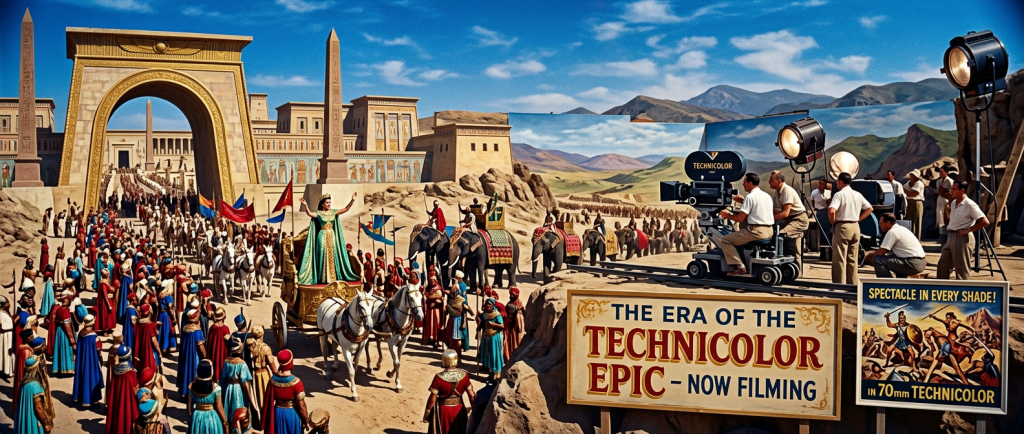
Hollywood responded by going all in on color, scale, and grandeur. This was the age of the Technicolor epic, where every frame was designed to dazzle.
Films like The Ten Commandments, directed by Cecil B. DeMille, became the gold standard. Vast sets, enormous casts, and richly saturated colors turned biblical and historical stories into visual spectacles. Robes shimmered in deep reds and golds, deserts stretched in warm hues, and iconic moments like the parting of the Red Sea became unforgettable not just for their scale, but for their color.
This was not subtle filmmaking. It was cinema as a sensory experience. Hollywood leaned into what television lacked and amplified it to the extreme. If TV offered familiarity, film would offer awe.
Studios invested heavily in color production, marketing it as a must see feature. Audiences were not just invited to watch a movie. They were invited to witness something vibrant and larger than life, something that could never be replicated on the small monochrome screens at home.
The Technicolor epic era proved that visual innovation could be a powerful weapon. By embracing color and spectacle, Hollywood created a clear divide between what you could see at home and what you could only experience in a theater.
Television may have owned convenience, but in 1956, cinema owned wonder.
10. 1961: Saturday Night at the Movies
By 1961, television had stopped behaving like a newcomer and started acting like the main event. The living room had become the new theater, and prime time was its most valuable real estate. Networks were no longer just experimenting with content. They were curating entire evenings designed to keep audiences glued to the screen.
Then came a particularly disruptive idea. Instead of only producing shows, television began broadcasting full length Hollywood films during peak viewing hours. Suddenly, the very movies that once demanded a trip to the cinema were arriving directly in the home, scheduled and packaged for maximum convenience.
For Hollywood, this was the nightmare scenario fully realized. Not only was television competing with film, it was now showcasing it, repackaging it, and making it part of the weekly routine.
How Movies Adapted to the Rise of Television
The response from the film industry was not a single invention or format. It was a strategic evolution.
Studios began to rethink exclusivity as their strongest weapon. If movies could be shown on television, then theatrical releases needed to feel even more special, more limited, and more event driven. The concept of the “first run” experience became central to marketing. Seeing a film in theaters was positioned as the definitive way to experience it before it ever reached the small screen.
On the flip side, television’s use of films unexpectedly helped Hollywood in another way. When classic movies aired on programs like Saturday Night at the Movies, audiences rediscovered older titles and stars. This revived interest in back catalogs, reinforcing the long term value of film libraries and encouraging studios to preserve and monetize their archives more aggressively.
The relationship between the two mediums shifted again. Competition remained, but so did coexistence. Television became a secondary window for films rather than an immediate rival, while cinema leaned further into exclusivity, spectacle, and prestige.
The battle lines had changed in 1961. Television had proven it could host Hollywood itself. But instead of destroying the film industry, it forced it to adapt into something more layered and strategic. Cinema was no longer just about release day. It was about lifecycle, timing, and the art of making audiences feel like they were part of something they could not simply wait for.
The New Normal: How Hollywood and TV Learned to Coexist
Looking back across this early clash between television and cinema, one thing becomes clear. Hollywood did not survive by standing still. It survived by escalating. Every time television gained ground, the film industry responded by making the theatrical experience harder to ignore.
When TV shrank the screen, Hollywood widened it with formats like CinemaScope. TV entered living rooms with comfort and routine, cinema countered with spectacle, from Technicolor epics to immersive experiments like Cinerama and 3D. When television became polished and professional, film doubled down on scale, color, sound, and the idea that going to the movies was not just viewing, but participating in an event.
Just as importantly, Hollywood learned to sell the experience, not just the story. The theater became a destination again, a place where audiences went for something they could not replicate at home.
The Legacy of the Hollywood vs. Television Rivalry
The long term legacy of this era is the blueprint for modern entertainment itself.
What began as a defensive reaction to television eventually evolved into a fully integrated ecosystem. Hollywood learned that old films still had value, which led to licensing deals, syndication, and eventually the idea that content could live multiple lives across multiple platforms. The decision by studios like RKO Radio Pictures to release film libraries to television was once controversial, but it helped establish a secondary market that still defines the industry today.
Even more importantly, the battle shaped how entertainment is consumed now. The idea of “windows” between theatrical release, television broadcast, and later home viewing all trace back to this period of adaptation and experimentation.
Today’s streaming era, where films and shows move fluidly between theaters, televisions, and handheld devices, is the direct descendant of those early struggles. What once felt like a threat has become a system of layers, each platform serving a different audience moment.
In the end, television did not destroy Hollywood. It forced it to evolve into something more complex, more strategic, and more resilient. And cinema, rather than fading away, redefined itself as the place where entertainment still goes when it wants to feel larger than life.