
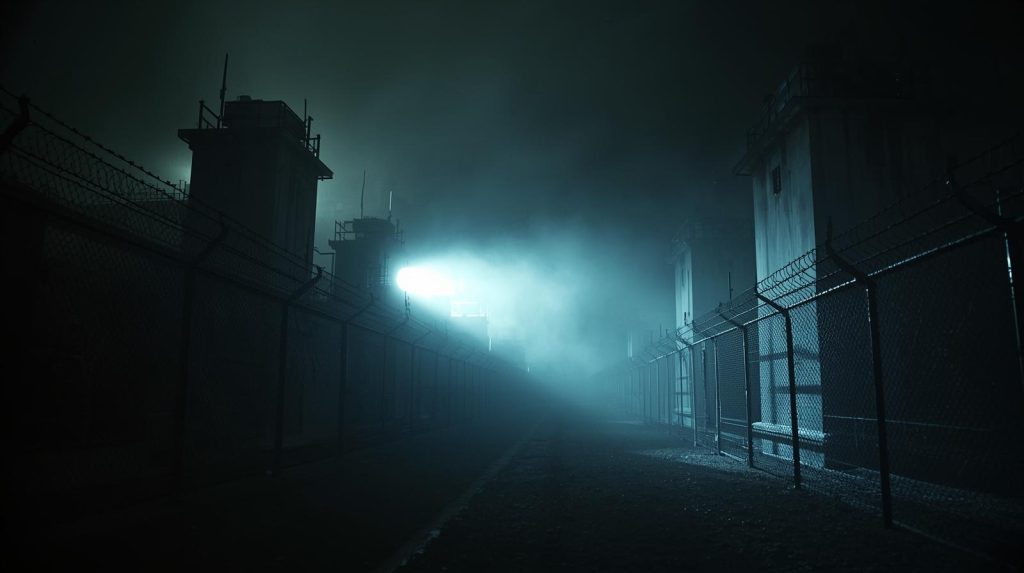

Prison escape movies hold a universal appeal because they combine tension, ingenuity, and the classic underdog story. We watch with clenched jaws as characters face impossible odds, yet somehow find a way to turn desperation into a plan. The best entries in the genre do more than entertain; they make the audience feel the pressure of every locked door and the weight of every moment spent waiting for a chance.
We love these films because they are not just about breaking out of a cell. They are about resilience, patience, and the human spirit refusing to be erased. Whether the escape is built on quiet discipline or daring rebellion, the emotional payoff comes from seeing a person reclaim their freedom against a system designed to crush them. In the most memorable examples, the prison becomes a character itself, and the escape becomes a moral victory as much as a physical one.
In this list, the movies are ranked by a combination of realism, narrative impact, and lasting cultural influence. While some entries lean toward meticulous planning and authenticity, others deliver high stakes action and unforgettable cinematic moments. Each film earns its place based on how well it balances suspense, character, and the mechanics of escape.
Grab your rock hammer and turn off the lights—here are the 10 best prison escape movies ever made.
| Rank | Movie Title | Year | Primary Escape Method |
| 1 | The Great Escape | 1963 | Tunnels & Motorcycles |
| 2 | The Shawshank Redemption | 1994 | Long-Con & Geology Hammer |
| 3 | Escape from Alcatraz | 1979 | Utility Corridor & Raft |
| 4 | Papillon | 1973 | Coconut Raft & Endurance |
| 5 | Cool Hand Luke | 1967 | Sheer Willpower (Run & Hide) |
| 6 | A Man Escaped | 1956 | Ropes & Hooks (Solo) |
| 7 | Le Trou (The Hole) | 1960 | Tunneling Through Floor |
| 8 | Midnight Express | 1978 | Opportunity & Disguise |
| 9 | Stalag 17 | 1953 | Espionage & Distraction |
| 10 | The Count of Monte Cristo | 2002 | Body Bag Switch |
10. The Count of Monte Cristo (2002)
Director: Kevin Reynolds
Starring: Jim Caviezel & Guy Pearce
Runtime: 131 minutes
A young sailor is betrayed by jealous friends and imprisoned without trial in a brutal island fortress. As years pass, he forms an unlikely alliance that changes his fate and reshapes his future.
The escape hinges on mentorship and substitution rather than brute force. The plan involves intellectual preparation, physical endurance, and a daring body swap that turns death itself into the key to freedom. It is elegant, theatrical, and deeply satisfying.
This adaptation transforms Alexandre Dumas’ classic into one of the best prison escape movies by emphasizing strategy over spectacle. The prison sequence is brief but unforgettable, serving as the crucible that forges the hero.
9. Stalag 17 (1953)
Director: Billy Wilder
Starring: William Holden, Don Taylor and Otto Preminger
Runtime: 120 minutes
Inside a German prisoner-of-war camp, American airmen struggle to survive boredom, suspicion, and fear during World War II. When multiple escape attempts end in deadly failure, paranoia spreads, and the men become convinced there is a traitor among them. One cynical prisoner finds himself at the center of the blame.
Unlike tunnel-driven spectacles, this escape hinges on deception, misdirection, and psychological warfare. The plan relies on exploiting routine, bribing guards with small comforts, and hiding intent behind humor and apathy. It exemplifies why audiences remain fascinated with POW escape movies based on true events, where ingenuity mattered more than force.
Billy Wilder blends tension and dark comedy with surgical precision. William Holden delivers an Oscar-winning performance that keeps viewers guessing until the final act. The escape feels grounded, realistic, and dangerous because failure carries real consequences, making every small victory feel earned.
8. Midnight Express (1978)
Director: Alan Parker
Starring: Brad Davis, John Hurt and Randy Quaid
Runtime: 121 minutes
Billy Hayes is an American student arrested in Turkey for attempting to smuggle drugs out of the country. What begins as a short sentence spirals into a nightmare of brutal prisons, corrupt officials, and psychological breakdown. The film charts his slow erosion under a system designed to crush hope.
This escape is raw, desperate, and painfully human rather than elegant or heroic. There is no grand tunnel or synchronized breakout—only relentless endurance, careful timing, and the willingness to risk everything when the smallest opening appears. It stands among the best prison escape movies based on true stories because the escape feels accidental, fragile, and terrifyingly real.
Midnight Express earns its ranking through sheer intensity. Alan Parker’s direction is claustrophobic and unflinching, while Brad Davis delivers a performance that makes the audience feel every blow and betrayal. The escape resonates not as triumph but as survival, which makes it linger long after the credits roll.
7. Le Trou (The Hole) (1960)
Director: Jacques Becker
Starring: Michel Constantin, Jean Keraudy and Philippe Leroy
Runtime: 132 minutes
Five inmates share a cell in a Paris prison and quietly begin to trust one another as days blur into routine. However, when a new prisoner arrives, suspicion threatens their fragile alliance. Meanwhile, the men commit to a single goal that demands absolute secrecy and patience.
This escape is built step-by-step through relentless realism rather than cinematic flair. Therefore, every scrape of concrete, every whispered decision, and every improvised tool carries weight. Moreover, the plan unfolds in near silence, which heightens tension and pulls the viewer into the labor itself.
Le Trou earns its stature through authenticity and discipline. In fact, several actors were former prisoners, which gives the film an almost documentary texture. Furthermore, Becker refuses shortcuts or sentimentality, choosing instead to honor process, trust, and consequence. As a result, the suspense feels earned and enduring.
6. A Man Escaped (1956)
Director: Robert Bresson
Starring: François Leterrier & Charles Le Clainche
Runtime: 101 minutes
During World War II, a French Resistance fighter is imprisoned by the Nazis in Lyon. From the outset, he studies his surroundings with quiet intensity while awaiting execution. At the same time, his internal resolve grows stronger with each passing day.
Discipline and repetition define this escape, along with faith in small actions. As a result, every movement matters, from loosening a door frame to memorizing guard patterns. Instead of spectacle, the film leans on restraint and sound, which in turn amplifies suspense. Because of this stripped-down approach, it stands as a benchmark among prison escape films in foreign languages.
A Man Escaped is a masterclass in cinematic minimalism. Notably, Bresson replaces conventional drama with observation, which draws the viewer deeper into the prisoner’s mindset. In addition, the film’s spiritual undercurrent elevates the escape beyond mechanics into an act of belief. Consequently, the tension feels profound rather than loud.
5. Cool Hand Luke (1967)
Director: Stuart Rosenberg
Starring: Paul Newman, George Kennedy and Strother Martin
Runtime: 126 minutes
Luke Jackson is sent to a Southern chain gang for a petty crime and quickly refuses to bend to authority. As time goes on, his quiet defiance inspires fellow inmates while antagonizing the guards. Eventually, the prison becomes less a place of punishment and more a battleground of wills.
Rather than relying on a single flawless breakout, this film reframes escape as an ongoing act of rebellion. Time and again, Luke runs not because freedom is guaranteed, but because resistance matters. Consequently, every escape attempt becomes symbolic, which is why it consistently ranks among the top 10 prison break movies.
What elevates this entry is its mythic quality and unforgettable lead performance. In particular, Paul Newman turns Luke into a folk hero whose repeated escapes redefine victory itself. Meanwhile, the mounting tension between individuality and control gives the story lasting power. As a result, the film transcends genre and becomes cultural shorthand for defiance.
4. Papillon (1973)
Director: Franklin J Schaffner
Starring: Steve McQueen & Dustin Hoffman
Runtime: 151 minutes
Henri Charrière is sentenced to life imprisonment in a brutal French penal colony, despite maintaining his innocence. From the beginning, he clings to the single idea of freedom while enduring years of isolation, betrayal, and punishment. Over time, the prison system tests not only his body but also his identity.
This escape unfolds as a long war of attrition rather than a single daring act. As a result, every failed attempt, every transfer, and every alliance feeds the next plan. At the same time, Charrière’s refusal to surrender becomes the engine of the story.
Papillon earns its place through sheer endurance and scope. In particular, Steve McQueen’s physical performance communicates suffering without melodrama. Meanwhile, Dustin Hoffman provides a fragile counterbalance that deepens the emotional stakes. Ultimately, the film treats escape not as an event but as a lifelong obsession, which gives it uncommon gravity.
3. Escape from Alcatraz (1979)
Director: Don Siegel
Starring: Clint Eastwood & Patrick McGoohan
Runtime: 112 minutes
Frank Morris arrives at the infamous Alcatraz Federal Penitentiary and quickly learns the island is built to break men. However, he remains calm and methodical, slowly studying the prison’s rhythms and the guards’ routines. Eventually, he begins assembling a plan that will test the limits of both patience and precision.
What makes this escape legendary is that it is engineered through sheer attention to detail. First, Morris exploits the prison’s bureaucracy by creating a fake routine and disguising his absence. Then, he builds a makeshift raft from raincoats and uses improvised tools to carve his way out. This is because the plan relies on timing, noise control, and the island’s unique geography.
The film’s power comes from its relentless realism and Eastwood’s restrained performance. Moreover, the tension never comes from explosions or dramatic speeches, but from the constant possibility of being caught. In addition, the setting itself feels like a character, as the prison’s walls and surrounding water become part of the escape’s danger. As a result, the movie feels both grounded and unforgettable.
2. The Shawshank Redemption (1994)
Director: Frank Darabont
Starring: Tim Robbins & Morgan Freeman
Runtime: 142 minutes
Andy Dufresne is sentenced to life in Shawshank State Penitentiary for a crime he insists he did not commit. Over time, he builds a quiet reputation as a man of steady intelligence and calm resolve. As he adapts to prison life, he also begins to quietly reshape it from the inside.
The escape is a masterpiece of patience and long-term planning rather than sudden action. For years, Andy works in plain sight, using his skills and reputation to gain access to the prison’s inner workings. Then, he slowly carves a tunnel through concrete, using only a rock hammer and a careful cover story. Because of this deliberate, hidden method, the film belongs among the best prison escape movies with smart, intricate plans.
What makes this film endure is its emotional depth and structural brilliance. The story is not just about breaking out, but about reclaiming dignity in a place designed to strip it away. In addition, the friendship between Andy and Red provides the moral core that elevates the escape from mere technique into a human triumph. Consequently, the final reveal hits with both surprise and satisfaction.
1. The Great Escape (1963)
Director: John Sturges
Starring: Steve McQueen, James Garner and Richard Attenborough
Runtime: 172 minutes
Allied prisoners of war are held in a high-security German camp where escape seems impossible. Yet, a determined group of men quietly builds a culture of resistance, using ingenuity and camaraderie to stay hopeful. As their plan grows, so does the risk, and every small step brings them closer to a breakout.
This escape is defined by scale and coordination. The prisoners dig three tunnels in secret, each with a different purpose, and then synchronize their efforts to maximize their chances. Along the way, they develop forged documents, civilian clothing, and an intricate system of communication to avoid detection. Because the entire operation is built around digging, it remains one of the most iconic movies about tunneling out of prison.
The Great Escape stands out for its blend of suspense, character, and sheer ambition. The ensemble cast brings distinct personalities to life, and the film balances humor with the constant threat of capture. Additionally, the true story behind the operation gives the movie a historic weight that makes every moment feel consequential. Ultimately, it is the definitive example of prison escape cinema.
Honorable Mentions
- The Escapist (2008) – A tense and gritty breakout story where a dying inmate rallies fellow prisoners for one last meticulously planned escape.
- The Hurricane (1999) – Based on a true story, this film follows Rubin Carter’s fight for freedom after being wrongfully imprisoned, blending legal drama with emotional intensity.
- Escape Plan (2013) – A high concept prison thriller that pairs two stars in a battle of wits as they attempt to break out of a maximum security facility designed to be unbreakable.
- The Birdman of Alcatraz (1962) – More character study than action, yet still essential for its portrayal of resilience and the quiet human spirit within the prison system.
- The Next Three Days (2010) – A modern take on the prison break genre, focusing on a husband’s desperate and escalating plan to free his wrongfully accused wife.
What Makes a Great Prison Escape Movie?
Realism vs Hollywood Spectacle:
When choosing an escape movie, the first question is whether you want realism or pure entertainment. Some viewers prefer painstaking tunneling scenes that feel grounded in logistics and human endurance. In these films, the tension comes from slow progress and the constant threat of discovery. On the other hand, many audiences enjoy Hollywood spectacle with explosions, daring stunts, and last-second heroics. These movies deliver adrenaline and instant satisfaction, even if the escape stretches believability. Ultimately, the best escape films strike a balance, offering enough realism to make the stakes feel real while still delivering cinematic momentum.
The Planning Montage. Why the Setup is Often Better Than the Escape:
In great escape movies, the setup is frequently the most compelling part. This is because planning reveals character, skill, and personality in a way the escape itself rarely can. For instance, the montage of tools being smuggled or routines being memorized creates a sense of inevitability and builds suspense. Furthermore, it lets the audience invest in the outcome, since every detail matters. Often, the escape becomes a payoff rather than the main event, and that is why planning scenes remain some of the most memorable moments in the genre. When the setup is strong, the escape feels earned, and the entire story becomes more satisfying.
Conclusion
Prison escape movies thrive on tension, ingenuity, and the human desire for freedom. Whether you prefer realistic tunneling operations, clever disguises, or high-stakes action, the best films in the genre deliver both suspense and emotional payoff. From methodical planning to daring breakouts, these stories remind us that escape is rarely just physical, but also a fight for dignity and hope.
Did we miss your favorite jailbreak flick? Tell us in the comments below which prison escape movie you think deserves a spot on the list.
FAQ
What is the most realistic prison escape movie?
Many film fans point to A Man Escaped as the most realistic prison escape movie because it focuses on meticulous planning, daily survival, and the slow accumulation of small actions. Additionally, its minimalist style and reliance on real timing and logistics make the escape feel believable rather than cinematic.
Is The Great Escape based on a true story?
Yes, The Great Escape is based on a real event. It draws from the true story of a mass escape by Allied prisoners of war from a German camp during World War II, although the film adapts and dramatizes several details for cinematic impact.
What is the movie where they escape through the sewer?
The most famous example is The Shawshank Redemption, where the protagonist escapes through a long tunnel and into the prison sewage system. This sequence has become one of the genre’s most iconic moments and is often the first movie people think of when sewer escapes are mentioned.