
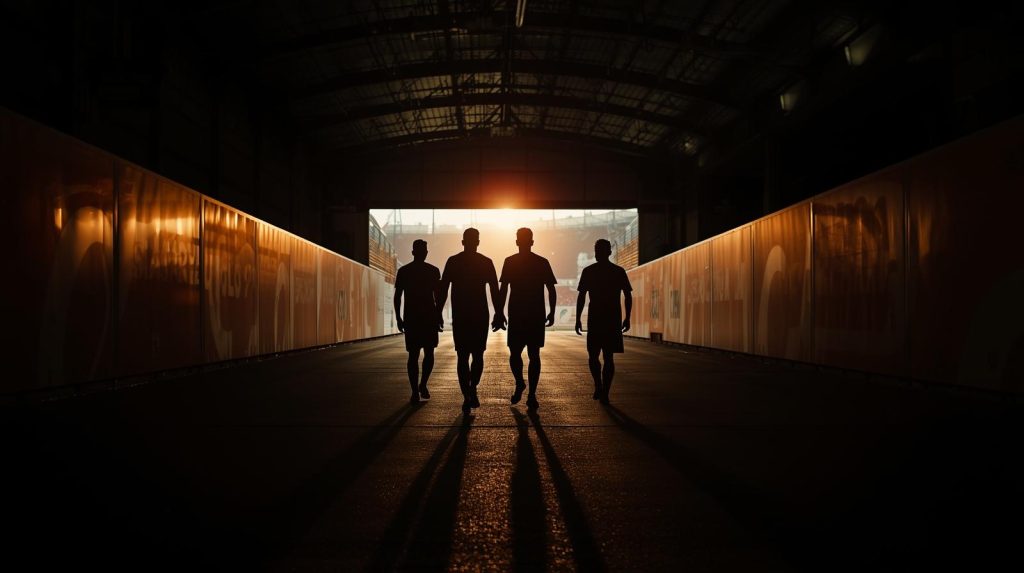

The 2026 World Cup promises to be unlike any other. For the first time, the tournament expands to 48 teams and spans three North American countries, an ambitious stage set for both spectacle and history. Yet beyond the records and the new formats, it carries a deeper significance: this will likely be the final stage for football’s “Golden Generation.” Players born in the mid‑to‑late 1980s, including Lionel Messi, Cristiano Ronaldo, and Luka Modrić, will be nearing the twilight of their careers. Their presence reminds fans that eras in football, no matter how glorious, inevitably pass.
Even though some athletes seem to defy the limits of age, Father Time is undefeated. These icons have thrilled stadiums for decades, lifting trophies, breaking records, and inspiring countless fans. Still, the 2026 World Cup represents their “Last Dance,” a final chance to showcase mastery on the world’s grandest stage. Consequently, every pass, goal, and save carries the weight of history.
Furthermore, this tournament will be a crossroads where emerging talent collides with the seasoned brilliance of veterans. Young stars are ready to rise, yet the spotlight will inevitably fall on the legends who defined a generation. In many ways, the 2026 World Cup is both a curtain call and a celebration—a farewell that honors careers that reshaped modern football. By the final whistle, fans will have witnessed not only thrilling matches but also the emotional closure of one of the sport’s most revered eras.
This list highlights ten soccer legends most likely to retire after FIFA World Cup 2026, reflecting on their careers, legacies, and the passing of the torch to the next generation.
Methodology
To create this list, we focused on a combination of objective and contextual factors. First, age played a central role—players approaching or over 33–34 years are generally considered to be in the twilight of their careers, especially in high intensity positions like midfield or forward. Second, contract status and club commitments were considered, since those with contracts ending around 2026 or already signaling reduced playing time are more likely to step away from international duty.
Additionally, recent interviews and public statements were analyzed for hints about retirement or the desire to mentor younger teammates. Media reports, press conferences, and social media statements often provide subtle clues about a player’s intentions.
Finally, we accounted for national team dynamics and the rise of younger stars, since a transition toward new talent frequently accelerates veteran retirements. By combining these factors, we identified ten players who are most plausibly approaching the end of their international careers, creating a list that balances insight with statistical likelihood.
10. Casemiro (Brazil)
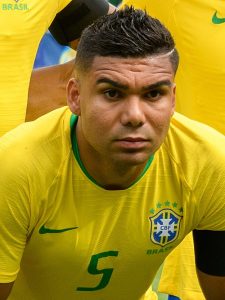
Age in June 2026: 34
Current Status: Midfielder at Manchester United and Brazil.
Retirement Probability Score: 8/10
There was a time when Casemiro stood as the immovable foundation of the greatest midfields in Europe. After lifting Europe’s most coveted trophies with Real Madrid, he carried that same warrior spirit into the Premier League. Yet the last few seasons have shown the unmistakable signs of wear that come for even the toughest of midfield generals. His form has fluctuated, and injuries have begun to tug at him with familiar persistence.
With his contract at Manchester United ending in 2026, the timing aligns almost poetically with FIFA World Cup 2026. Reports continue to linger that the club might move toward a younger midfield core. Brazil’s national setup is shifting too, with Carlo Ancelotti expected to prioritize a more athletic and press resistant midfield. All these threads weave into a picture that suggests Casemiro may treat the tournament as his final great march.
Brazil’s next midfield anchor looks increasingly like João Gomes, whose rise from Flamengo to Premier League prominence has marked him as the natural heir to Casemiro’s role.
9. Son Heung-min (South Korea)

Age in June 2026: 33
Current Status: Forward at Los Angeles FC and captain of South Korea.
Retirement Probability Score: 7/10
In the grand theatre of modern football there are few figures as beloved or as relentlessly driven as Son Heung-min. Yet even icons feel time brush against their shoulders. As he approaches FIFA World Cup 2026 he will have carried South Korea on his back for more than a decade, often as their creator, finisher, and emotional heartbeat all at once. The physical demands on his game remain immense since he plays with a style built on acceleration repeated runs and tireless movement.
Moreover as the next generation of Korean attackers continues to emerge his role is shifting. Recent interviews suggest he has begun reflecting on the arc of his career. He has spoken about cherishing the remaining time he has with the national team which seasoned observers often read as a subtle sign that the end is approaching. By the summer of 2026 he will have completed two full decades of professional football. This naturally invites the possibility that he may choose to let the World Cup serve as his final grand chapter.
South Korea appears ready to usher in its next attacking leader with Lee Kang in from Paris Saint Germain rising as the creative force expected to inherit the mantle.
8. Virgil van Dijk (Netherlands)

Age in June 2026: 34
Current Status: Centre back at Liverpool FC and captain of Netherlands.
Retirement Probability Score: 8/10
There are defenders who impose themselves on a match, and then there is Virgil van Dijk, the towering statesman who restored calm to both Liverpool FC and the Oranje. Yet even the most majestic centre backs eventually feel the weight of time pressing on their stride. By the 2026 soccer World Cup he will be thirty four and approaching the natural twilight of a position that asks for constant concentration, perfect timing, and physical command.
Furthermore he has already hinted in subtle ways that he is contemplating the arc of his legacy. While he remains a formidable presence, the Netherlands are steadily preparing their succession plan. Emerging defenders are arriving with youthful urgency and they are doing so in a system that demands quick recovery runs and aggressive pressing. Consequently the whispers around the Dutch camp grow louder that 2026 might serve as van Dijk’s final grand bow, especially since captains of his stature often choose to depart on the sport’s highest stage.
Moreover his journey at club level is evolving too. As Liverpool refresh their squad and move into a new era, van Dijk has begun to occupy the role of mentor rather than the perpetual defensive anchor. That shift naturally leads observers to believe that the World Cup could offer the perfect closing chapter to a career framed by leadership poise and defensive mastery.
The Netherlands appear ready to hand the future to Matthijs de Ligt, whose blend of strength and anticipation positions him as the natural heir to van Dijk’s throne.
7. Kevin De Bruyne (Belgium)
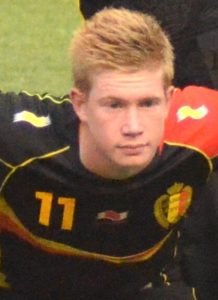
Age in June 2026: 34
Current Status: Midfield creator at Napoli and senior leader for Belgium.
Retirement Probability Score: 8/10
Kevin De Bruyne has long been the conductor of Belgiums greatest era, a player whose passing range feels touched by something rare. Yet as the 2026 World Cup approaches, even he cannot escape the truth that every artist eventually confronts the quiet pull of time. As Belgium continues to shift toward a new cycle, the conversation around the golden generation of players retiring after 2026 World Cup grows increasingly natural. Consequently De Bruyne stands at the center of that discussion.
Additionally his last few seasons have carried an unmistakable physical toll. He has remained brilliant whenever he steps onto the pitch, yet interruptions have become more frequent. As a result many observers believe he may view 2026 as the fitting moment to complete his journey in the national shirt. The demands of his creative role ask for constant movement and sharp changes of pace, qualities that inevitably age faster for players who shoulder so much responsibility.
Moreover his club future is entering a reflective stage. He still orchestrates matches at a mesmerizing level for Napoli, but he has also spoken openly about thinking more carefully about each remaining season. With Belgium entering a generational turnover and with De Bruyne carrying the emotional weight of years spent chasing a major trophy, the idea of a graceful farewell after the next global tournament feels increasingly likely.
Belgium is already nurturing its next midfield leader in Jérémy Doku, who brings relentless dribbling energy and creative spark that can anchor the new era.
6. Guillermo Ochoa (Mexico)

Age in June 2026: 40
Current Status: Goalkeeper for AEL Limassol and Mexico.
Retirement Probability Score: 9/10
Guillermo Ochoa is more than a goalkeeper for Mexico. He is a folk hero whose performances at global tournaments have become part of the country’s sporting folklore. As he approaches forty during the 2026 World Cup, admiration for his longevity only grows. Yet the whispers around him grow louder as well because the tournament is widely expected to mark the last World Cup for 80s born soccer players who defined an entire generation.
The demands of modern goalkeeping have evolved. Keepers are asked to sweep behind the defensive line, play with their feet, and launch quick attacks. Ochoa still provides extraordinary shot stopping reactions, but these additional responsibilities require mobility and stamina that naturally decline at his age. Consequently many within Mexico’s football community believe he is preparing for his final chapter with El Tri. There is a reverent sense that he wants to close his story on home soil since Mexico co hosts the tournament.
Ochoa himself has reflected publicly on the idea of legacy. He has hinted that each passing year brings more gratitude and more awareness that he is nearing the end. When a player begins speaking in such reflective tones, retirement usually stands somewhere on the horizon. The 2026 soccer stage gives him the chance to exit with the same grace that carried him through five tournaments.
Mexico already sees Luis Malagón as the natural successor. His improving command of the area and comfort in possession position him as the next long term guardian of the national team goal.
5. Neymar Jr. (Brazil)

Age in June 2026: 34
Current Status: Forward at Al Hilal and senior figure for the Brazil national team.
Retirement Probability Score: 7/10
Neymar Jr. remains one of the most gifted attackers of his generation. His touch still amazes and his vision still unlocks defenses. Yet injuries have become a steady companion in recent years. He has endured long layoffs, and each return demands more patience and more recovery time. As a result many observers believe the 2026 tournament could arrive at a natural crossroads in his career.
At the same time, Brazil is moving toward a younger and faster attacking group. The next generation no longer waits. It pushes forward with confidence and with a style that suits the evolving modern game. Neymar now operates more as a mentor, which signals a shift in his long term role. He has also hinted that he thinks often about life after football. Those small remarks suggest a growing awareness that his final chapter may be coming soon.
In addition, he has carried the expectations of a nation for more than a decade. That weight takes its toll. The 2026 World Cup might allow him to close his international journey with calm rather than pressure. It could also offer a moment of peace after years spent in the spotlight. Shorter matches, new priorities, and the desire to stay healthy all point toward retirement as a real possibility.
Brazil is already looking to Estêvão Willian. His pace and direct style give the team a new foundation and a clear future without Neymar.
4. Robert Lewandowski (Poland)

Age in June 2026: 37
Current Status: Striker at Barcelona and captain of Poland.
Retirement Probability Score: 9/10
Robert Lewandowski has defined a generation of Polish football. His finishing, positioning, and leadership are second to none. Yet by the time the 2026 World Cup begins, he will be approaching forty. The conversation around veterans saying goodbye to international football in 2026 naturally includes Lewandowski. His consistency has been remarkable, but even the most disciplined striker feels the weight of time on his body.
At club level, he remains effective but increasingly focuses on efficiency rather than covering every inch of the pitch. Poland’s younger forwards are ready to step up, and their energy contrasts with the veteran’s measured pace. Interviews suggest Lewandowski is aware that this tournament could mark the final chapter of his international story. He has spoken about the pride of representing his country while also acknowledging that the torch must eventually pass.
His leadership off the pitch remains crucial. He mentors rising stars and helps set the tone in training sessions. Still, the stage of the World Cup is ideal for a farewell that matches the grandeur of his career. Fans expect a respectful sendoff for a player who has scored countless decisive goals over nearly two decades.
Poland looks to players like Kacper Kozłowski to gradually inherit Lewandowski’s role as a clinical finisher and focal point of the attack.
3. Luka Modrić (Croatia)
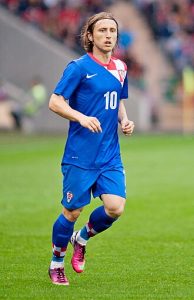
Age in June 2026: 40
Current Status: Midfielder at AC Milan and captain of the Croatia national team.
Retirement Probability Score: 9/10
Luka Modrić has been the heartbeat of Croatia for over a decade. His vision, intelligence, and precise passing have orchestrated some of the nation’s greatest moments. As the 2026 World Cup approaches, many see him among the soccer stars playing their last dance in 2026. Despite advancing age, he remains technically brilliant, but his body no longer recovers with the same speed it once did.
Croatia is preparing to hand more responsibility to younger midfielders. Modrić has hinted in interviews that this next tournament could be his final bow on the international stage. Fans and pundits alike are watching closely, expecting him to savor every touch and every pass while knowing the conclusion of a storied career is near.
Off the pitch, Modrić continues to mentor the next generation, sharing his experience and guiding Croatia’s rising stars. Yet even with his influence, it is clear that 2026 might serve as the ultimate farewell, a fitting capstone to a career that has redefined Croatian football.
Croatia looks to players like Josip Juranović and Mateo Kovacic to gradually take over the creative responsibilities in midfield, ensuring continuity after Modrić’s departure.
2. Lionel Messi (Argentina)
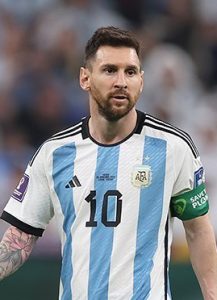
Age in June 2026: 39
Current Status: Forward at Inter Miami and captain of Argentina.
Retirement Probability Score: 9/10
Lionel Messi has transcended football. He is not only a symbol of Argentina’s golden era but also one of the most influential players in the sport’s history. By FIFA World Cup 2026, he will be approaching forty, and the whispers surrounding the twilight of his international career will reach a crescendo. With Argentina preparing for a generational shift, it is increasingly clear that this tournament could serve as Messi’s final bow.
Even at Inter Miami, Messi continues to dazzle with moments of genius, yet the pace of professional football is relentless. Consequently, the physical demands of international tournaments and the grueling schedule leave little margin for extended campaigns. Argentina’s young talents are rising quickly, and they are already taking on more responsibility. For Messi, the allure of concluding his World Cup journey on his own terms may outweigh the desire to continue indefinitely.
He has also spoken openly about legacy, family, and the joy of mentoring younger teammates. Therefore, his leadership role is evolving naturally. Each match is not just a game but a chance to shape the future of Argentina’s squad while savoring the final stages of his personal story. Fans are bracing for a farewell that will resonate far beyond the pitch.
Who Will Replace Messi as Argentina’s Captain After 2026?
Argentina already has potential successors ready to step into Messi’s shoes. Players like Lautaro Martínez and Enzo Fernández are emerging as leaders capable of carrying both the creative and emotional burden of the team. Their combination of skill, tactical awareness, and composure under pressure positions them as natural heirs to Argentina’s captaincy.
All signs point to FIFA World Cup 2026 being Messi’s last international tournament, though he may continue at club level if his body allows.
1. Cristiano Ronaldo (Portugal)
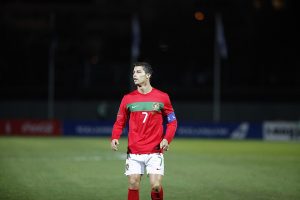
Age in June 2026: 41
Current Status: Forward at Al Nassr and captain of Portugal.
Retirement Probability Score: 9/10
Cristiano Ronaldo has been a defining figure of modern football, blending extraordinary athleticism with unrelenting ambition. As FIFA World Cup 2026 approaches, he will be forty one, making him one of the oldest players to participate at this stage. Yet even as age begins to temper his speed and recovery, his determination and leadership remain formidable. Many football analysts expect this tournament to mark the natural conclusion of his international career.
Portugal is also preparing for a generational shift. Young forwards and midfielders are increasingly taking central roles, and Ronaldo’s presence is as much about mentorship as goal scoring. Consequently, this World Cup is likely to be his final international showcase, allowing him to bow out gracefully on the world stage. Fans and pundits alike are already anticipating an era’s end—one that has seen Ronaldo dominate, inspire, and transform football for nearly two decades.
His club career at Al Nassr continues, but the intensity of global tournaments makes sustained participation challenging. Ronaldo has publicly reflected on legacy and the honor of representing Portugal, hinting that he wants his farewell to coincide with the sport’s biggest stage. In this way, the 2026 World Cup may serve as the ultimate capstone to an unparalleled career.
End of the Ronaldo vs Messi era World Cup 2026
The potential simultaneous retirement of both Ronaldo and Messi will close one of football’s most storied rivalries. Portugal is already identifying future leaders such as João Félix to carry the team forward. The World Cup in 2026 will not just crown a champion; it will mark the final chapter of a duel that defined a generation.
João Félix is expected to take on a larger role in Portugal’s attack, combining creativity, pace, and finishing to fill the void left by Ronaldo.
Ronaldo’s longevity is extraordinary, but FIFA World Cup 2026 is widely expected to be his last international tournament.
Likely Retirements After World Cup 2026
| Player Name | Country | Age in 2026 | Probability of Retirement |
|---|---|---|---|
| Cristiano Ronaldo | Portugal | 41 | 9/10 |
| Lionel Messi | Argentina | 39 | 9/10 |
| Luka Modrić | Croatia | 40 | 9/10 |
| Robert Lewandowski | Poland | 38 | 9/10 |
| Neymar Jr. | Brazil | 34 | 7/10 |
| Guillermo Ochoa | Mexico | 40 | 9/10 |
| Kevin De Bruyne | Belgium | 34 | 8/10 |
| Virgil van Dijk | Netherlands | 34 | 8/10 |
| Son Heung min | South Korea | 33 | 7/10 |
| Casemiro | Brazil | 34 | 8/10 |
This table provides a quick overview of the ten soccer legends most likely to retire following the 2026 World Cup, based on age, contract status, physical condition, and national team dynamics.
Final Thoughts
The 2026 World Cup will not only crown a new champion but also signal the end of an era. Fans around the globe may witness the final performances of some of football’s most beloved icons. From Messi’s artistry to Ronaldo’s unmatched drive, from Modrić’s orchestration in midfield to Ochoa’s legendary saves, the tournament represents both celebration and farewell. It is a moment to reflect on decades of brilliance, unforgettable goals, and careers that shaped the modern game.
Which retirement will hit you the hardest? Will it be Messi, Ronaldo, or another legend? Share your thoughts in the comments below and join the conversation about football’s most emotional farewells.