

Imagine the awkward silence when you tell your insurance company you crashed your car in Hell and then have to clarify that you’re calling from a local post office in Michigan. Most place names are chosen with dignity in mind, intended to honor grand history, unique geography, or legendary local figures. However, through a mix of translation quirks, ancient dialects, and a phenomenon known as “unfortunate linguistic drift,” some towns have ended up with names that are absolute gold for modern comedians.
These names were almost always completely innocent when they were first mapped out. But centuries later, as language evolved and slang shifted, peaceful meadows and quiet Viking legal fields suddenly became global internet punchlines.
What makes these towns especially hilarious is the reality check: these are very real places. Thousands of people wake up, drink their coffee, and head to work every day under signs that cause tourists to pull over for a laughing-fit selfie. While some residents simply tolerate the endless jokes with a tired sigh, others have leaned into the absurdity, turning their “unfortunate” names into thriving tourist attractions.
From awkward translations to names that sound like insults, body parts, or pure bathroom humor, these locations prove that history has a truly mischievous sense of humor.
10. Boring, Oregon, USA
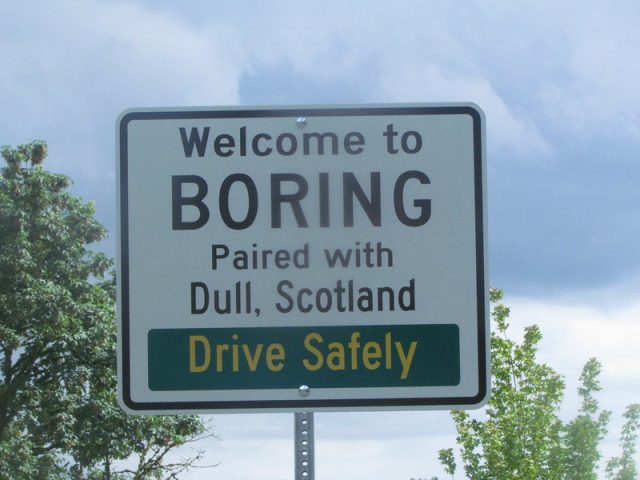
Despite its name, Boring is anything but dull. Founded in the late nineteenth century, the town was named after William H. Boring, an early settler whose surname unintentionally gave the community one of the most ironic place names in America. Over time, the name became a running joke among travelers, but instead of resisting the humor, the town embraced it fully. Boring famously partnered with Dull, Scotland, and Bland, Australia, forming the lighthearted “League of Extraordinary Communities.”
Boring is an unincorporated community located about twenty miles east of Portland. It covers roughly three square miles and is home to approximately seven thousand residents. While small in size, it functions as a quiet residential area surrounded by forests, farmland, and scenic countryside. The pace of life is relaxed, and the town retains a friendly, rural feel.
The Highlights:
- Guide Dogs for the Blind: The town is home to a world-class training campus for guide dogs, proving that while the name is a joke, the community’s contribution to the world is very serious.
- The Trinity of Tedium: In 2012, Boring officially “twinned” with the village of Dull, Scotland, and later joined Bland, Australia, to form a marketing alliance known as the “Trinity of Tedium”.
- Boring & Dull Day: Every August 9th, the town celebrates its relationship with its Scottish twin with ice cream socials and bagpipers. It is the one day of the year where being “boring” is the biggest attraction in the state.
- The Springwater Corridor: Boring is the trailhead for this 21-mile scenic path. It’s a favorite for hikers and cyclists who want to prove that a trip through Boring is actually quite beautiful.
I told my colleagues I was taking a vacation to Boring, and they asked if I was just staying at the office. I told them, ‘No, in this Boring, the views of Mt. Hood are much better than the views of my spreadsheets.
9. Dull, Scotland
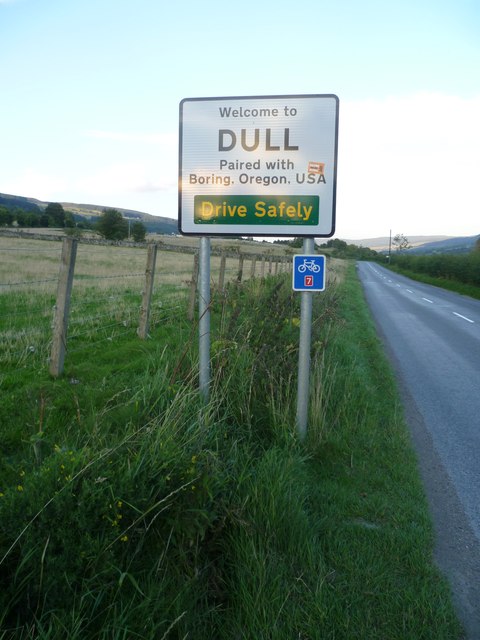
Dull is a tiny village with ancient roots dating back more than a thousand years. Its name likely comes from an old Gaelic word meaning meadow or plain, but modern English gave it an unintended punchline. For centuries it was an unremarkable rural settlement, until its name caught global attention after it twinned with Boring, Oregon. That partnership turned Dull into an international curiosity almost overnight.
Dull is extremely small, covering less than one square mile and home to fewer than one hundred residents. It sits quietly in Perth and Kinross, surrounded by rolling hills, farmland, and historic countryside. Life here moves slowly, and most residents are well accustomed to visitors stopping just long enough for a photo.
The Highlights:
- Wildlife and Hiking: The village is a perfect starting point for exploring the Tay Valley, offering some of the best red squirrel and deer spotting in Scotland.
- The Trinity of Tedium: In 2012, Dull officially “twinned” with the town of Boring, Oregon, after a traveler passing through both noticed the connection. They later welcomed Bland, Australia, into the fold, creating a global alliance of unexciting place names.
- Boring-Dull Day: The village celebrates its relationship with its American twin every August 9th. While it’s meant to be an “unexciting” celebration, it usually attracts hundreds of tourists and international media.
- Ancient History: Beyond the puns, Dull is home to a replica of the Dull Cross, an ancient sanctuary marker that dates back to the time of St. Adamnan, a 7th-century abbot.
Dull is the only place on Earth where ‘nothing happening’ is a highly successful tourism strategy. The residents live in constant fear that a street performer might show up and accidentally make the town interesting enough to get them kicked out of the Trinity of Tedium.
8. Intercourse, Pennsylvania, USA
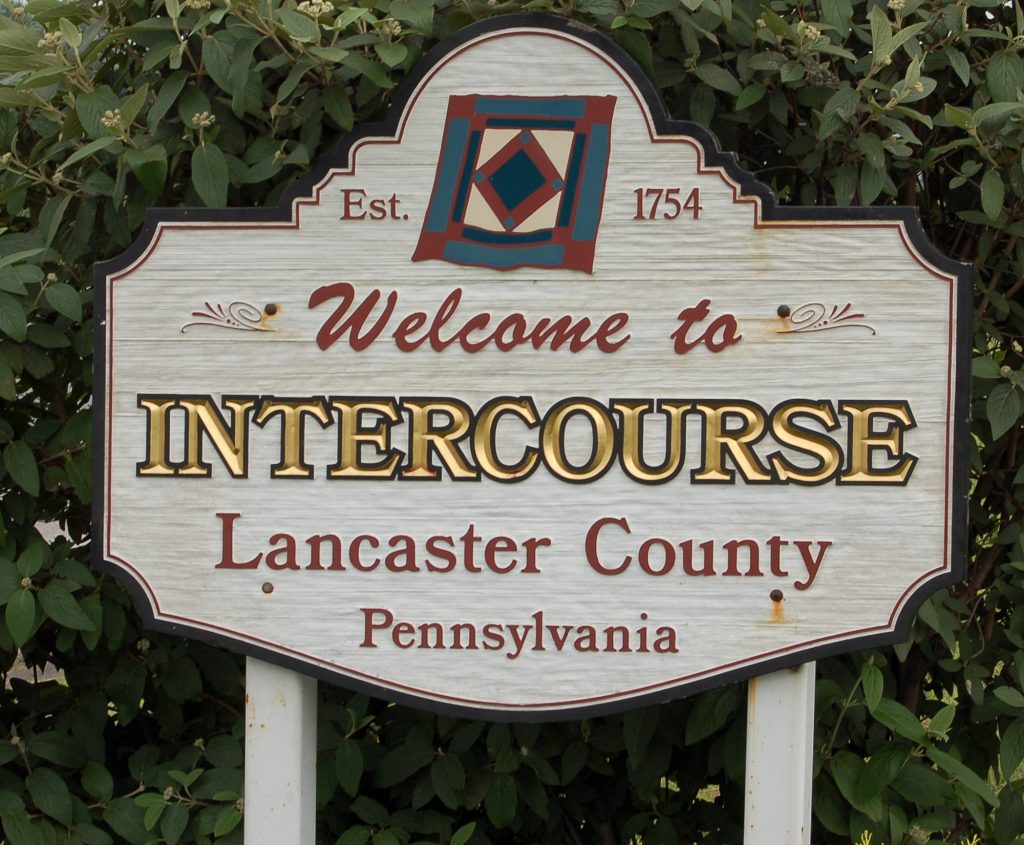
Intercourse is one of the most well known funny town names in the United States. Founded in the eighteenth century, the name originally referred to social connection or fellowship rather than anything suggestive. Over time, however, modern language transformed the town into a source of endless curiosity and humor.
The town covers about one square mile and has a population of roughly eighteen hundred people. It is located in Lancaster County, right in the heart of Amish country. Despite its playful reputation, Intercourse is a peaceful, traditional community centered on farming and craftsmanship.
The Highlights:
- Amish Craftsmanship: The town is famous for high-quality handmade quilts, furniture, and traditional baked goods that have nothing to do with the town’s modern double-entendre.
- The “Witness” Connection: Film buffs often visit because the town and surrounding farmland served as primary filming locations for the 1985 Harrison Ford blockbuster Witness.
- Suggestive Neighbors: In a strange twist of geography, Intercourse is located near the towns of Blue Ball, Paradise, and Bird-in-Hand, making for the most accidentally suggestive road trip in America.
- The Kitchen Kettle Village: A popular outdoor shopping area featuring over 40 local shops where you can watch jam-making and traditional Pennsylvania Dutch crafting in action.
I told my wife I wanted to take her to Intercourse for our anniversary. She said she’d prefer the town of Paradise just down the road—it’s a lot less crowded and has a much better view.
7. Fukui, Japan
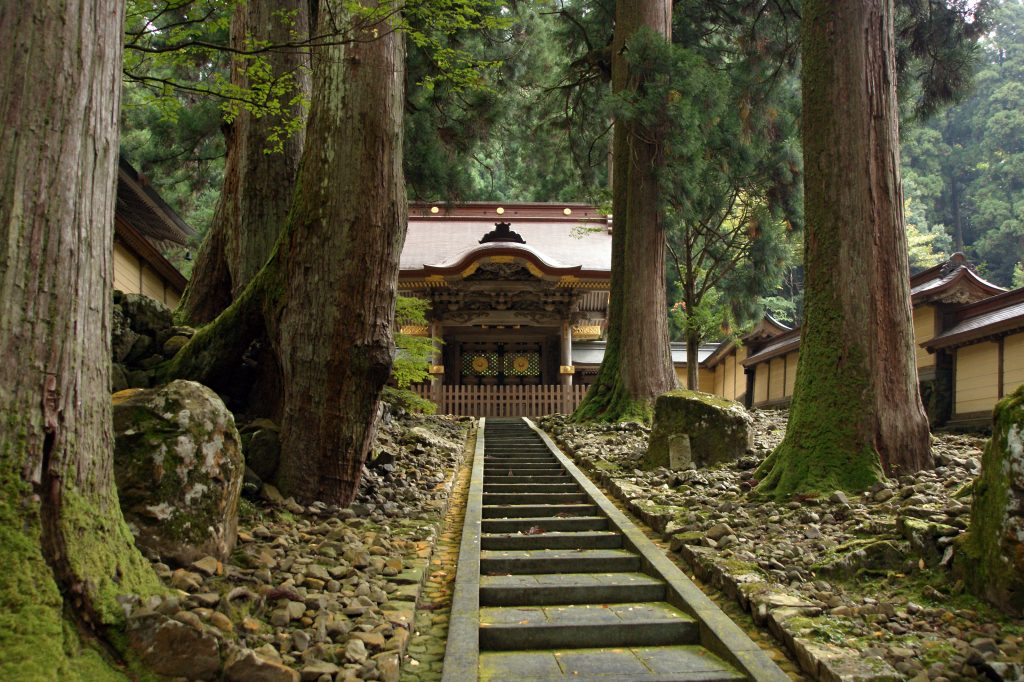
Fukui may sound amusing to English speakers, but in Japanese it is completely ordinary and carries a positive meaning. The name is written as 福井, using the characters for good fortune or blessing (fuku) and well or water source (i). It is pronounced foo koo ee, with each syllable spoken clearly and evenly, not blended together as it often is in English.
Despite the unintended humor abroad, Fukui is a respected prefecture with a long cultural and historical identity. The name reflects traditional Japanese values tied to prosperity and natural resources rather than anything comedic.
Fukui Prefecture covers more than sixteen hundred square miles and is home to approximately seven hundred and fifty thousand people. It lies along the Sea of Japan coast and includes a mix of rugged mountains, quiet rural towns, and historic religious centers. The region is known for its slower pace of life compared to major Japanese cities.
The Highlights:
- Traditional Crafts: The region is a hub for ancient craftsmanship, particularly Echizen Washi (handmade paper) and Echizen Uchihamono (forged knives), which have been produced here for over 700 years.
- Eiheiji Temple: One of the most important Zen Buddhist temples in Japan and a functioning monastery where monks still train.
- Dinosaur Capital: Fukui is world-famous for its dinosaur fossils and houses one of Japan’s most impressive dinosaur museums.
- Tojinbo Cliffs: A stunning stretch of rugged, basaltic cliffs along the Sea of Japan coast, famous for their unique hexagonal pillar formations.
I told my boss I was taking a week off to visit Fukui for a spiritual reset. He didn’t know whether to wish me ‘good fortune’ or call Human Resources.
6. Condom, France
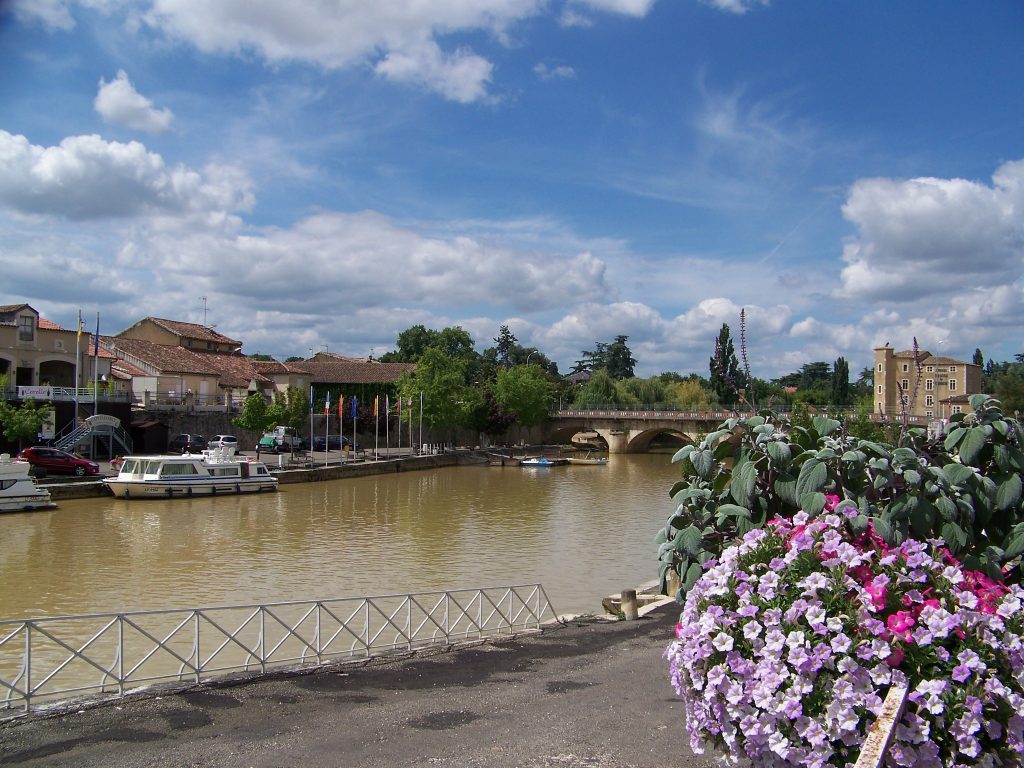
Condom is a historic town in southwestern France whose name comes from an ancient word related to land ownership. Unfortunately, modern English changed how outsiders perceive it. Rather than avoiding the humor, the town has leaned into it with playful marketing and curiosity driven tourism.
Condom covers roughly four square miles and has a population of about seven thousand residents. It sits in the Gers department, surrounded by vineyards and rolling countryside.
The top highlight is visiting the Armagnac Museum, dedicated to the region’s famous brandy. Visitors can also explore the medieval cathedral and stroll along quiet riverbanks. Condom balances refined French culture with a name that guarantees attention.
The Highlights:
- The Contraceptive Museum: Taking advantage of the name, the town’s mayor opened a museum of contraceptives in 1995. Although it closed in 2005, its legacy remains a staple of the town’s trivia.
- Armagnac and Brandy: Condom is world-famous for its production of Armagnac, France’s oldest brandy. You can visit the Musée de l’Armagnac to learn how the spirit is distilled and, of course, enjoy a tasting.
- The Three Musketeers: In front of the magnificent Cathédrale Saint-Pierre, you’ll find a life-sized statue of D’Artagnan and the Three Musketeers. It’s a nod to the fact that the real D’Artagnan was born in nearby Lupiac.
I told my parents I was going to Condom for the weekend. They didn’t know whether to give me travel advice or a talk about safety.
5. Hell, Michigan, USA
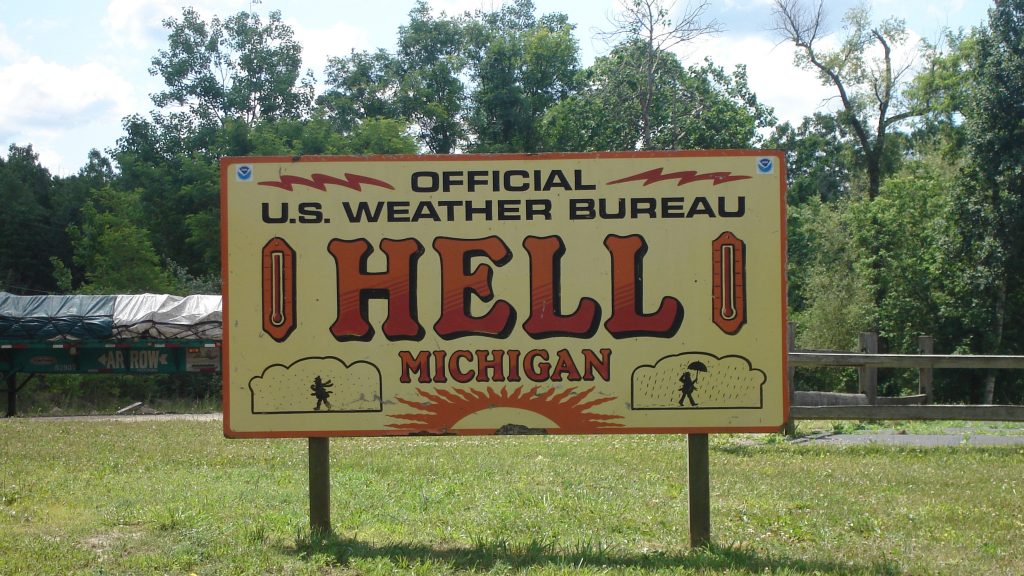
Hell is a small town that has fully embraced its unforgettable name. The origin of the name is debated, with stories ranging from difficult terrain to colorful frontier humor, but what matters most is how the town turned it into a branding triumph.
Hell has leaned into the joke with enthusiasm, offering novelty experiences and merchandise that make it one of Michigan’s most talked about small towns.
Hell covers less than one square mile and has a permanent population of under one hundred residents. It is located in southeastern Michigan, surrounded by lakes, forests, and recreational land that attract visitors year round. Despite its size, Hell receives a steady flow of tourists drawn by curiosity and humor.
The Highlights:
- Recreational Escape: Beyond the novelty, the area is a gateway to the Pinckney Recreation Area, offering miles of hiking trails and lakes that prove Hell is actually quite scenic.
- Mayor for a Day: The top highlight for visitors is the chance to become the official “Mayor of Hell” for a day (or even an hour), complete with a proclamation and a piece of “property”.
- Postmarked from Hell: Visitors can send postcards directly from the local post office to ensure their friends receive mail postmarked from the underworld.
The “Hel” Double: Interestingly, there is another place pronounced exactly the same way: Hel, spelled with one “L,” located in northern Poland. Hel sits on a narrow peninsula that stretches into the Baltic Sea, forming a long, thin strip of land that looks like a spear pointing into the water. While it shares the name, the experience is entirely different—swapping Michigan’s forest humor for sandy beaches, fishing harbors, and maritime history.
I told my boss I was going to Hell for the weekend to ‘cool off.’ He started a long speech about my attitude until I showed him my flight confirmation to Michigan and my application to be Mayor for a Day.
4. Climax, Minnesota, USA
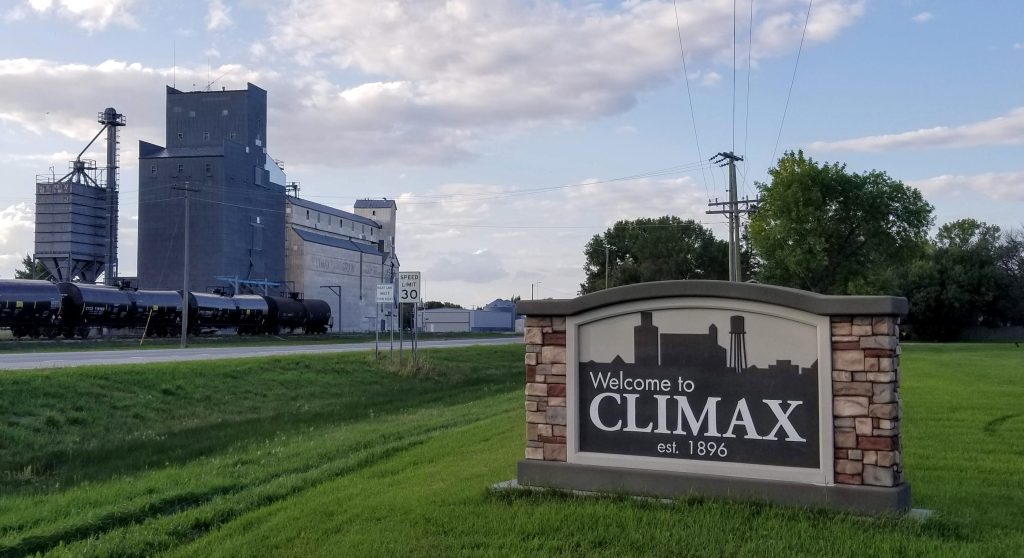
Climax was founded during the railroad expansion era, and its name was meant to suggest a peak or high point on the rail line. At the time, it sounded ambitious and forward looking. Today, modern interpretation has done what it does best and turned Climax into an unavoidable punchline that practically writes itself.
Climax covers about one square mile and has a population of roughly two hundred and fifty people. It sits in northwestern Minnesota, surrounded by flat farmland and wide open skies, which only adds to the irony of a place called Climax having absolutely no dramatic buildup at all. Life here is calm, quiet, and very much grounded. The town has heard every joke imaginable and, to its credit, rarely pretends otherwise.
The top highlight is attending local festivals and events that openly acknowledge the town’s name with a wink and a smile. Visitors passing through enjoy friendly locals, classic small town charm, and the inevitable stop to photograph the town sign. For many travelers, reaching Climax is less about the destination and more about the story they get to tell afterward.
We finally made it to Climax. Turns out it’s a lot quieter than we expect.
3. Wetwang, England
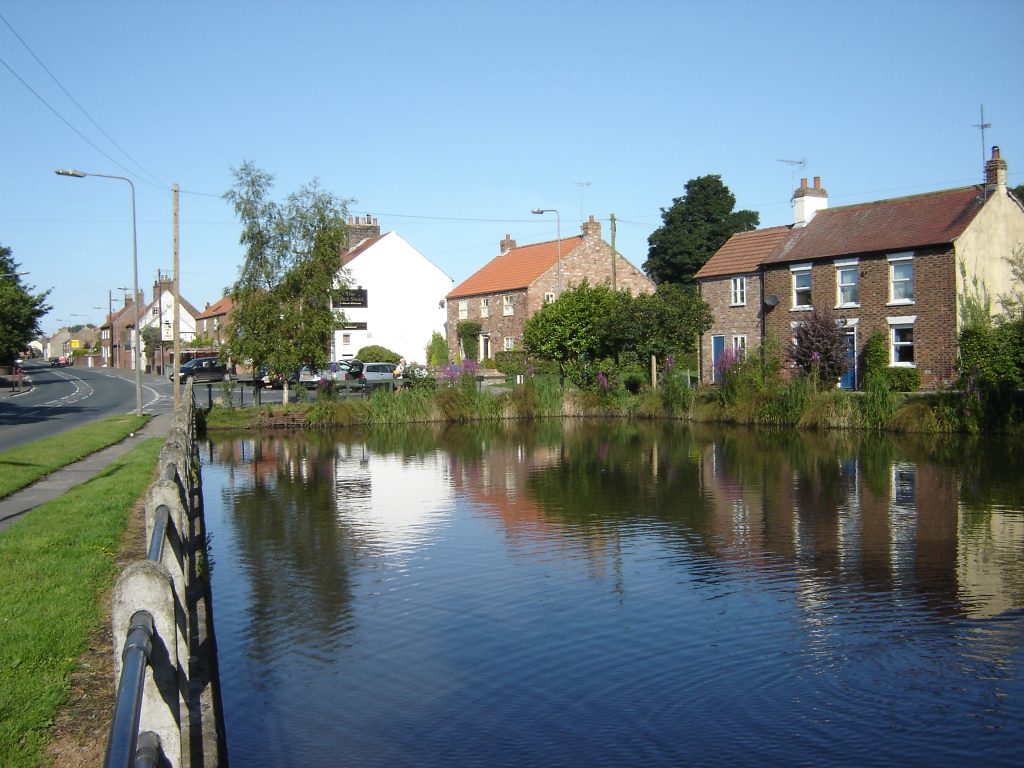
Wetwang is a village in East Yorkshire with a name that sounds like a modern internet meme, but it actually has deep roots in Viking history. The name most likely derives from the Old Norse vaett-vangr, meaning a “field for the trial of a legal action.” Essentially, it was a Viking courtroom. Others suggest the more literal “Wet Meadow,” used to distinguish it from the nearby (and presumably drier) town of Driffield.
Wetwang covers just over one square mile and has a permanent population of around seven hundred people. It sits in the heart of the Yorkshire Wolds, surrounded by rolling hills and traditional rural charm, which only adds to the irony of a place called Wetwang. While the name inspires endless puns today, for the locals, life is quiet, historic, and very much grounded in the English countryside.
Travelers from all over the world make the pilgrimage here, including many from East Asia where “Wang” is one of the most common surnames.
The Highlights:
- Local Events: Visitors passing through enjoy friendly locals, classic small-town charm, and community festivals that openly acknowledge the town’s name with a wink and a smile.
- The Tobacco Connection: While the railroad theory is popular, local lore also suggests the town was named after a popular brand of chewing tobacco at the time, which was marketed as the “peak” of quality.
- The Centennial Slogan: For the town’s 100th anniversary, the community leaned into the humor with the official slogan: “Climax. More than just a feeling.”
- The Photo Op: The top highlight is the inevitable stop to photograph the town sign, which stands proudly against the backdrop of massive grain elevators, perfectly capturing the “peak” of small-town Americana.
Traveling from Beijing, Mr. Wang was proud to see his name on every Yorkshire signpost, until he noticed the ‘Wet’ prefix.
2. Muff, Ireland
/ CC BY-SA 2.0
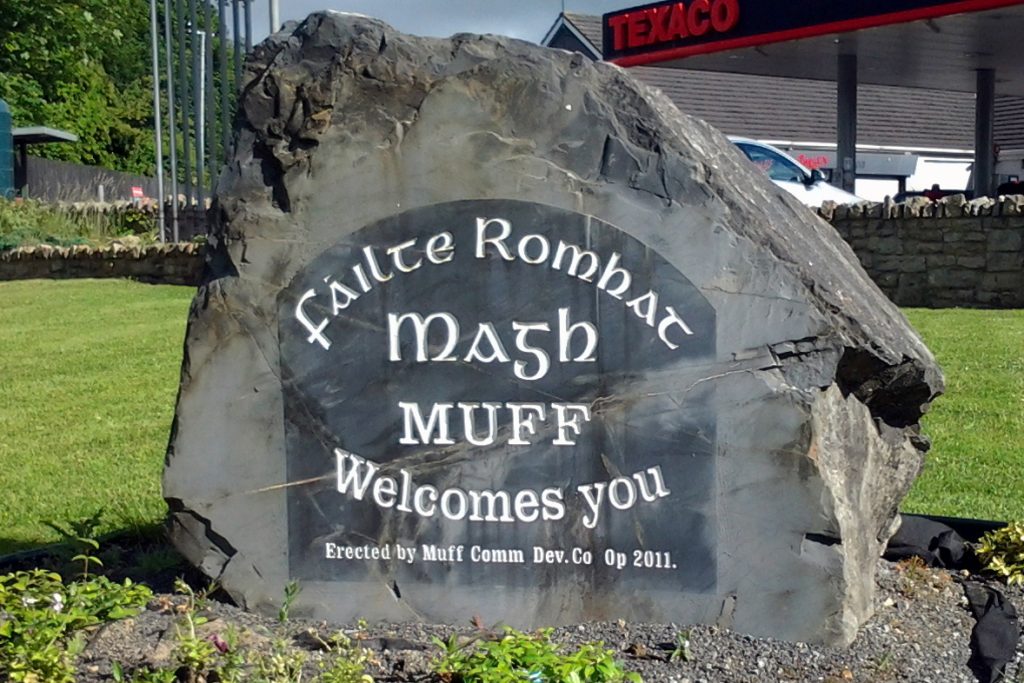
Muff is a village in County Donegal whose name often sparks a giggle, but its origins are strictly geographical. The name is an anglicization of the Irish word Magh, which translates to “plain” or “field”. Historically, this referred to the flat, open landscape surrounding the village near the ancient Kingdom of Aileach.
The village has grown into a bustling border community with approximately 1,418 residents. It sits directly on the border between the Republic of Ireland and Northern Ireland, serving as a gateway to the scenic Inishowen Peninsula. While the name describes a marshy plain in Irish, its modern English meaning provides an unavoidable layer of humor for visitors.
Why is it funny? For those unfamiliar with the slang, a “muff” is a traditional winter hand warmer, but it has evolved into a well-known euphemism for female pubic hair or genitalia. This double entendre is something the locals have embraced with “mischievous” Irish wit. The village statement has even acknowledged that while they are tired of the same old jokes, they know the sexual connotations are world-famous.
The Highlights:
- The Muff Diving Club: Perhaps the town’s most famous institution, this real scuba diving club was founded in the 1990s and became a global sensation for its name. Their membership cards and “Muff Diver” t-shirts are sought-after souvenirs by tourists with a sense of humor.
- Muff Liquor Company: This award-winning distillery leans into the pun with products like “Muff Gin” and slogans like “#MakeMineaMuff”. It was even visited by celebrity investors like Rita Ora.
- The “Muffia”: The local residents’ association has been jokingly referred to as “The Muffia,” a nod to the fact that you haven’t really visited Donegal until you’ve survived a trip through Muff.
“Do you prefer gin, whiskey, or vodka? We prefer Muff.” — A cheeky marketing slogan used by the local liquor brand.
1. Lick Fork, Kentucky, USA
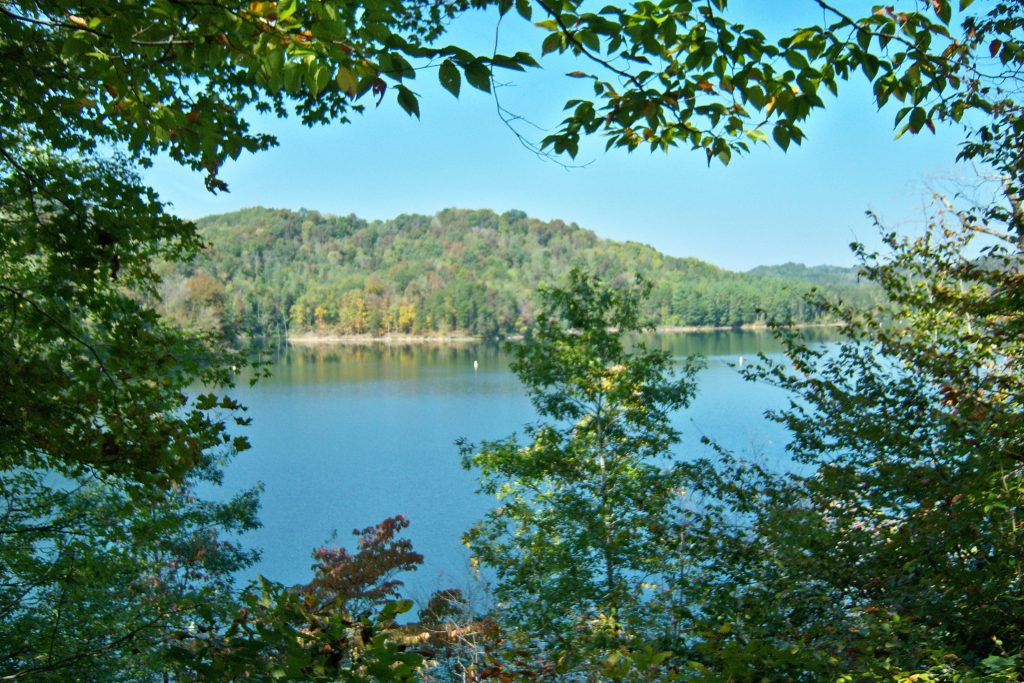
Lick Fork earns the top spot for sheer absurdity, but its name is actually a relic of early frontier survival. In the 18th century, “licks” were natural salt springs or mineral deposits where wildlife gathered to lick the salty mud.
Combined with its location at the “fork” of a mountain stream, the name was purely geographical to early Appalachian settlers. However, modern ears rarely hear a geography lesson when they see the sign; they hear a very different, much more suggestive invitation.
Lick Fork is an unincorporated community tucked away in eastern Kentucky’s rugged Appalachian region. With a population of fewer than one hundred people, it remains a quiet, rural area defined by deep valleys and dense forests. While the world of internet memes has made the name a viral sensation, for the locals, it’s simply a peaceful home with roots that stretch back to the era of Daniel Boone.
The Highlights:
- The “Lick” Legend: Kentucky is famous for its licks (like the nearby Big Bone Lick), which were once the backbone of the region’s economy because salt was used to preserve meat before refrigeration.
- The Photo Op: The primary activity for visitors is the “Sign Sprint”—pulling over safely to grab a selfie with the community sign before the next truck comes around the mountain bend.
- Appalachian Scenery: Beyond the joke, the area offers stunning views of the Kentucky hills, particularly in the fall when the foliage turns vibrant shades of orange and red.
I told my GPS to take me to Lick Fork, and it asked if I wanted to pull over and get a room first.
Before You Head Out (to Hell or Elsewhere)
Traveling to a town with a funny name is a unique experience, but keep these three things in mind:
- Respect the Locals: Remember that for the people living there, “Intercourse” or “Condom” is just where they pick up their groceries and mail their taxes.
- Support the Business: If you’re stopping for a photo with the sign, consider buying a coffee or a souvenir (like a Muff Liquor cap) to give back to the community.
- Check the History: Every “funny” name has a serious origin story waiting to be discovered.
Do you know any funny place names? Share them in the comments below!