
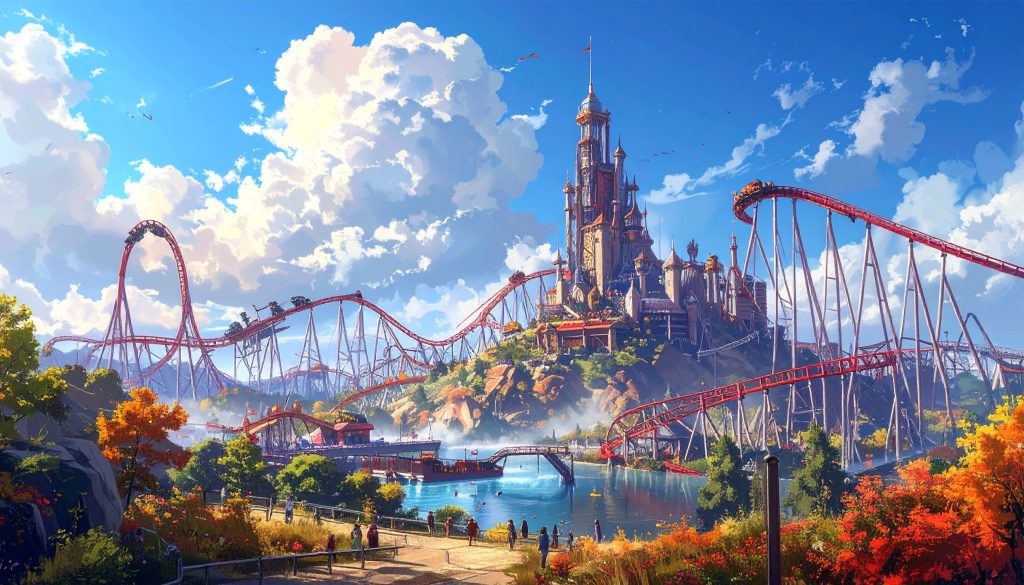

Six Flags is known today for record-breaking roller coasters, summer crowds, and fast-paced thrills, but the company’s origins are far more unusual than most visitors realize. The name Six Flags actually refers to six different nations that have ruled over Texas throughout its history. When the first park opened in 1961, it wasn’t a generic theme park. It was designed specifically to celebrate Texas culture, history, and identity.
Over time, the original concept expanded into a massive amusement park empire with parks across the United States, Mexico, and Canada. The cowboy shows, historical reenactments, and themed villages slowly gave way to superheroes, water parks, and extreme rides. Yet the name stayed, carrying the legacy of that original idea.
These ten facts uncover the surprising story behind the Six Flags brand, from its humble beginnings to its biggest expansions. Even longtime fans of the parks will learn something new about how this entertainment empire came to be.
10. The Name “Six Flags” Has a Real Historical Meaning
The original Six Flags Over Texas park was not a random name. It was conceived as a historical and cultural concept built entirely around the six nations whose flags have flown over Texas throughout its turbulent history.
Those six flags represented:
- Spain
- France
- Mexico
- The Republic of Texas
- The Confederate States of America
- The United States of America
This historical connection was the park’s founding identity. Each of these flags became a dedicated themed area in the original park, complete with costumes, décor, and shows that reflected the era. The name stuck, becoming the official brand even as the company expanded far beyond Texas and transitioned its focus from history to thrill rides.
9. The First Park Was a “Regional” Answer to Disneyland
The very first park, Six Flags Over Texas, opened in Arlington in 1961. It was the vision of real estate developer Angus Wynne Jr., who wanted to create a high quality, family friendly experience accessible to the local Texas population. Crucially, the park was not the thrill ride capital we know today. It offered gentle attractions like riverboat rides, puppet shows, and immersive themed villages dedicated to the six flags of Texas.
This model proved to be an immediate success. It demonstrated that there was a massive market for regional theme parks, high quality parks that were not massive, sprawling destination resorts like Disneyland, but could be visited multiple times a year by the surrounding population. This strategy established the blueprint for every regional amusement park built in the following decades.
8. The Original Parks Were About History, Not Coasters
Early Six Flags visitors weren’t looking for high speed coasters; they were seeking an immersive historical experience. The main draws were attractions designed to bring the past to life. These included scenic riverboat journeys and spectacular live action gunfight reenactments staged throughout the day.
Every single themed area showcased a different historical period of Texas, turning the park into a historical park disguised as an amusement center. Thrill rides only began to take a central focus in the 1970s and 1980s, marking the slow but deliberate transition toward the adrenaline driven company we know today.
7. The 1990s Saw Six Flags Become a Global Empire
The 1990s were marked by an aggressive and debt-fueled acquisition strategy that fundamentally reshaped the entire company. The driving force behind this expansion was Premier Parks, a company that bought Six Flags and then rapidly rebranded its own large portfolio of existing amusement parks under the famous Six Flags name.
This strategy was simple but powerful: rather than building new parks from the ground up, Premier Parks bought struggling or regional parks—like those owned by Time Warner and the former Six Flags Great America chain—and instantly applied the globally recognizable Six Flags brand and its lucrative DC Comics licensing. This rapid expansion created a massive empire.
By the late 1990s and early 2000s, the company operated well over thirty parks across North America, quickly making it one of the largest regional theme park operators in the world. This period cemented the modern brand, but the financial strain of the expansion would later lead to major problems.
6. The “Coaster Wars”: Battling for World Records
The Six Flags brand is synonymous with extreme thrills because, in the late 1990s and early 2000s, its flagship parks entered an intense “coaster arms race” to claim the title of tallest, fastest, or steepest in the world.
This resulted in the construction of legendary, record-breaking rides, many of which are now retired, fitting perfectly into the park’s wild history:
- Kingda Ka (Six Flags Great Adventure): This massive “stratacoaster” was the world’s tallest roller coaster for nearly two decades. It was retired after its final operating day on November 10, 2024.
- Superman: Escape from Krypton (Magic Mountain): This ride, the first coaster to break the 400-foot mark (in 1997), was permanently retired in late 2025. It closed to make way for a new, record-breaking attraction announced for the park’s 2026 season, marking the end of its nearly three decades of operation.

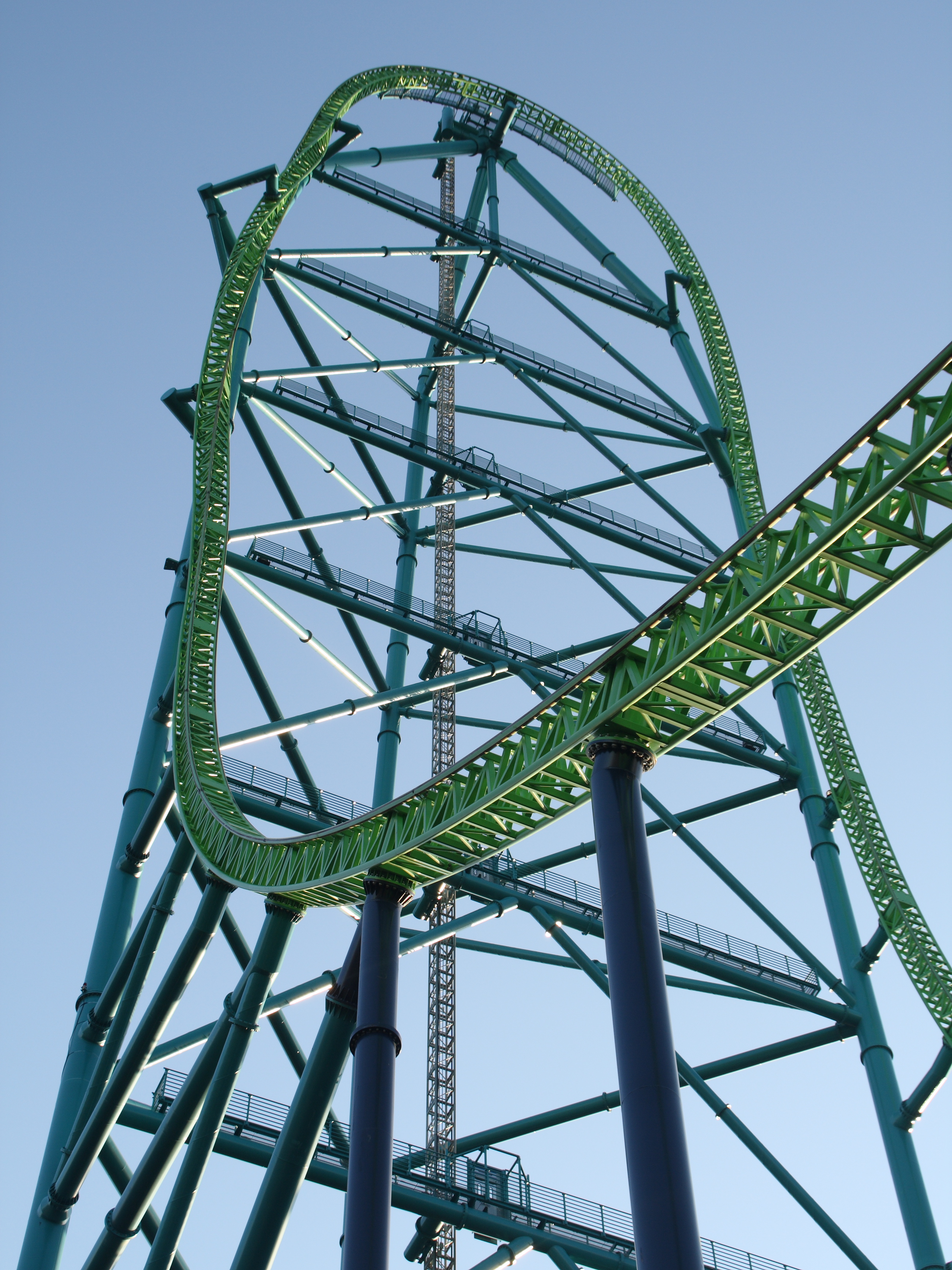
The closure of these giants marks the end of an era, but Six Flags Magic Mountain remains the undisputed coaster king, holding the title for the most roller coasters in a single park (over 20), solidifying its status as a global destination for dedicated thrill-seekers.
5. Aggressive Expansion Led to Chapter 11 Bankruptcy in 2009
The aggressive, debt-fueled expansion of the late 1990s and early 2000s proved financially unsustainable. Burdened with massive debt and declining attendance during the economic downturn, Six Flags faced major financial struggles. The company officially filed for Chapter 11 bankruptcy on June 13, 2009, a shocking but necessary move to survive.
The bankruptcy was not the end; it was a drastic financial reset. Six Flags emerged a year later with new leadership and a streamlined strategy. The financial restructuring allowed the company to shed nearly US$1.1 billion in debt and refocus on its core, most profitable assets.
The subsequent post-bankruptcy strategy centered on improving the overall guest experience, prioritizing family attractions alongside the famous thrill rides, and heavily promoting highly profitable seasonal events like Fright Fest to maximize year round revenue. This drastic corporate shift ensured the company’s long term survival.
4. Licensing with Looney Tunes and DC Comics Transformed the Brand
The licensing deals struck with Looney Tunes and DC Comics were a masterstroke that fundamentally transformed Six Flags. These partnerships provided the company with instant, globally recognizable characters and IPs (intellectual properties) that streamlined park theming and marketing.
- Looney Tunes (Acquired 1984/1985): Six Flags first acquired the rights to the Looney Tunes characters in 1984 when it purchased the Great America park in Gurnee, Illinois, from the Marriott Corporation. By 1985, the license was expanded across the entire Six Flags chain, and Bugs Bunny became the official mascot. This instantly allowed the parks to create universal, family-friendly themed areas.
- DC Comics (Expanded in the 1990s): The DC Comics partnership grew in importance, especially after Time Warner acquired a large stake in Six Flags in 1990 (later becoming the sole owner for a period). This gave the parks an endless source of powerful, recognizable names for their biggest coasters. This collaboration notably spawned Batman: The Ride (the world’s first inverted roller coaster in 1992), followed by massive attractions themed to Superman and Wonder Woman.
These powerful partnerships helped expand the brand’s appeal, cementing its identity as the home of both family favorites and character driven thrill machines.
3. They Pioneered “Fright Fest” and Other Seasonal Events
Seasonal events were a major strategic innovation that allowed Six Flags to profit from the traditional “shoulder seasons.” This strategy began with “Fright Nights” at a Texas park in 1986, which quickly expanded across the chain and was officially rebranded as Fright Fest in the early 1990s.
These events quickly became a signature of the brand and a massive revenue driver. Fright Fest (for Halloween) and Holiday in the Park (for winter) are high margin, themed events that draw huge crowds outside of the traditional summer peak season.
This successful model proved that the parks could be profitable nearly year-round by offering themed entertainment for every season. The consistent attendance from these events provides a vital financial lift, transforming the traditional summer amusement park business into a stable, year-long entertainment calendar.
2. The Original Flags Were Removed After Public Controversy
The inclusion of the Confederate States of America flag in the original six nation display became an intense and unavoidable point of controversy. This debate highlighted the conflict between celebrating historical accuracy and honoring modern cultural sensitivities.
Following major public outcry in August 2017, Six Flags made a decisive corporate policy change. The company announced it would no longer fly any flags related to the original six nations at its park entrances. Instead, it adopted a new policy to fly only the flag of the United States across all parks.
A company spokesperson stated that the decision was made to “focus on celebrating the things that unite us versus those that divide us.” While the iconic name remains, the visual display now reflects a contemporary, unified image, marking a significant moment in the brand’s history.
1. The Original Texas Park Remains the “Flagship”
Despite the company’s massive growth and the fame of parks like Magic Mountain, the Arlington, Texas location still stands as the original and the symbolic heart of the entire brand. It is the birthplace of the chain and continues to be treated with significant corporate investment.
Management has characterized the current spending as a “golden renaissance” for the original park. This is exemplified by the massive new Tormenta Rampaging Run Giga Dive Coaster, which is scheduled to open in 2026 as a centerpiece for the park’s 65th-anniversary celebration.
While continuously updating attractions, the park ensures it preserves clear nods to its historical roots and Texas heritage. Visiting the original Six Flags Over Texas offers a compelling glimpse into how a regional park based on culture grew into one of the most recognizable and thrilling theme park chains in the world.