

Born: July 17, 1894 Charleroi Belgium
Died: June 20, 1966 Leuven Belgium
Known For: Proposing the Big Bang theory decades before it was accepted
Roles: Catholic priest cosmologist World War I artillery officer professor of physics
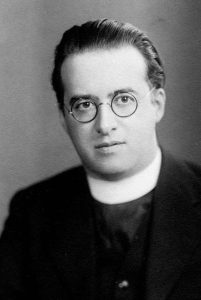
Georges Lemaître was born in Charleroi, Belgium, an industrial city that would later stand in stark contrast to the cosmic questions he would dedicate his life to answering. He lived through one of the most turbulent periods in human history and died on June 20, 1966, in Leuven, Belgium, just months after seeing decisive proof of the theory that made him famous.
Ordained as a Catholic priest in 1923, Lemaître spent most of his adult life in Belgium, particularly in Leuven, where he taught physics and mathematics at the Catholic University of Leuven. He also studied and worked abroad, including time at Cambridge University and the Massachusetts Institute of Technology, placing him at the center of early twentieth century scientific thought.
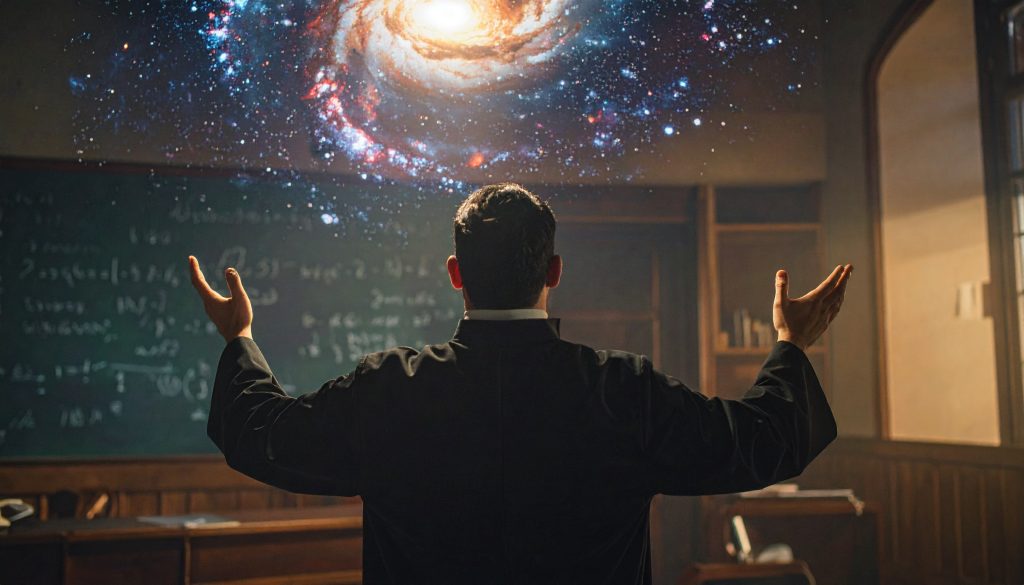
The Big Bang theory is now one of the pillars of modern cosmology, yet few people realize that its original architect lived a quiet, disciplined life shaped by war, faith, and scholarship. Long before the term “Big Bang” existed, Lemaître had already proposed that the universe was expanding from an extremely dense initial state, an idea he described as the “primeval atom.”
At a time when science and religion were often framed as irreconcilable rivals, Lemaître rejected that narrative entirely. He believed they addressed different questions and should never be used to validate one another. Reserved by nature and uninterested in personal fame, he allowed his equations to speak for him.
These ten facts explore the life, work, and character of Georges Lemaître, the priest, war veteran, and cosmologist whose ideas forever changed how humanity understands the origin of everything.
10. Georges Lemaître Proposed the Big Bang Before It Had a Name
In 1927, Georges Lemaître published a scientific paper proposing that the universe was expanding and had originated from what he called a “primeval atom.” This idea directly contradicted the widely accepted belief that the universe was static and eternal.
At the time, his work received little attention, partly because it was published in French in an obscure journal. Years later, when similar ideas gained traction, the concept would be mockingly labeled the “Big Bang” by astronomer Fred Hoyle during a radio broadcast. The name stuck, even though Hoyle himself did not believe in it.
Lemaître never objected to the term, nor did he push to be credited as the theory’s originator. He simply continued his work, confident that evidence would eventually speak louder than reputation.
9. He Calculated the Expansion of the Universe Before Hubble
Edwin Hubble is widely credited with discovering that the universe is expanding, but Lemaître reached the same conclusion first. Using existing observational data and Einstein’s equations of general relativity, Lemaître calculated a relationship between the distance of galaxies and their recessional velocity.
This relationship later became known as Hubble’s Law. For decades, Lemaître’s contribution was largely ignored. Only in recent years has the scientific community formally acknowledged his role, with the law now often referred to as the Hubble Lemaître Law.
Lemaître never publicly complained about the oversight. He believed scientific discovery was a collective process, not a competition.
8. Albert Einstein Initially Rejected Georges Work
When Georges Lemaître first shared his expanding universe model with Albert Einstein in the late 1920s, the reception was chilly. Einstein acknowledged that Lemaître’s mathematics were sound, but he rejected the physical interpretation, famously dismissing the idea of a dynamic universe. At the time, Einstein strongly favored a static cosmos and had even introduced the cosmological constant to force his equations to support it.
Despite this early rejection, the relationship between the two men remained professional and respectful. They met multiple times at scientific conferences and corresponded indirectly through academic circles. As observational evidence mounted, particularly through Edwin Hubble’s galaxy measurements, Einstein reconsidered his position. By the early 1930s, he openly accepted cosmic expansion and praised Lemaître’s insight.
There was no rivalry between them. Lemaître never framed the disagreement as personal, viewing it instead as a natural part of scientific progress. Their relationship ultimately reflected mutual respect between two thinkers grappling with ideas far ahead of their time.
7. He Believed Science and Religion Should Stay Separate
Lemaître’s religious life was central to who he was, but he was deeply opposed to using science as theological proof. As a Catholic priest, he practiced his faith quietly and traditionally, celebrating Mass and living within the Church, while maintaining a strict intellectual boundary between belief and empirical inquiry.
He argued that religious texts addressed meaning and purpose, not physical mechanisms. For Lemaître, the Big Bang described how the universe evolved, not why it existed. This position placed him at odds with both religious leaders seeking scientific validation of scripture and scientists suspicious of his clerical role.
His stance was principled rather than defensive. He believed that mixing theology with cosmology risked weakening both. This intellectual discipline earned him respect across ideological lines and remains a model for dialogue between science and faith today.
6. Georges Was Also a War Veteran
Before Georges Lemaître became known as a cosmologist and priest, he experienced the brutality of modern warfare firsthand. When World War I broke out in 1914, Lemaître was still a young university student. Like many of his generation in Belgium, he put his academic ambitions on hold and enlisted in the Belgian Army, serving as an artillery officer.
His role placed him close to the front lines, where he witnessed sustained bombardments, mass casualties, and the mechanical destruction that defined trench warfare. Unlike many intellectuals who encountered war only indirectly, Lemaître lived through its daily realities. The experience left a lasting impression on him, shaping both his temperament and his worldview. Friends later noted that he emerged from the war quieter, more reflective, and deeply aware of human fragility.
Remarkably, even during wartime, Lemaître continued to study mathematics and physics whenever conditions allowed. He carried books with him and used rare moments of calm to work through equations. This habit reflected a discipline that would define his later scientific life.
After the war ended, Lemaître returned to academic study with renewed focus. Some historians believe his exposure to destruction and impermanence influenced his interest in cosmic origins and large scale questions about time, beginnings, and endings. While he never explicitly linked his war service to his cosmological ideas, the contrast between human violence and universal order likely sharpened his philosophical clarity.
Few figures who transformed humanity’s understanding of the universe also stood in the mud and chaos of the First World War. That lived experience adds an often overlooked dimension to Lemaître’s intellectual depth and emotional restraint.
5. He Helped Lay the Foundation for Modern Cosmology
Before Lemaître, cosmology occupied an uncertain space between philosophy and physics. He helped transform it into a quantitative science grounded in mathematical models and observational predictions. His application of general relativity to the universe as a whole was revolutionary.
Modern cosmology now studies cosmic inflation, dark matter, dark energy, and the large scale structure of the universe. All of these fields assume an expanding universe with a definable origin, an assumption rooted in Lemaître’s early work. The cosmic microwave background, galaxy formation models, and universe age estimates all trace their conceptual lineage back to his primeval atom hypothesis.
While later scientists refined and expanded these ideas, Lemaître established the framework that made them possible.
4. He Was Known for His Humility
Lemaître lived a modest, almost austere life. He never married and had no children, devoting himself to teaching, research, and pastoral duties. He avoided public debates and declined opportunities for self promotion, even when recognition was overdue.
Colleagues described him as gentle, disciplined, and quietly humorous. He enjoyed classical music, long walks, and mathematical puzzles. Fame seemed to make him uncomfortable. When honors arrived late in life, including his election as president of the Pontifical Academy of Sciences, he accepted them without ceremony.
This humility was not performative. It reflected a genuine belief that scientific truth mattered more than personal legacy.
3.Lemaître Witnessed Proof of His Theory Late in Life
It took nearly forty years for decisive observational evidence to confirm Lemaître’s theory. In 1965, astronomers Arno Penzias and Robert Wilson accidentally discovered cosmic microwave background radiation while working on a radio antenna. This faint afterglow of the early universe was exactly what the Big Bang model predicted.
Lemaître was informed of the discovery shortly before his death in 1966. By then, he was in his seventies and in declining health. Those close to him reported that he reacted with calm satisfaction rather than celebration. The universe had behaved as his equations said it would.
Several books and biographies explore this moment, including works on the history of cosmology that credit Lemaître as the theory’s true originator. His vindication was quiet, but complete.
2. He Influenced Generations of Scientists Without Fame
As a professor at the Catholic University of Leuven, Lemaître trained students in both physics and mathematics, emphasizing rigor and intellectual honesty. While none achieved the fame of Einstein or Hubble, many went on to contribute meaningfully to European scientific institutions.
His influence also extended indirectly. By establishing cosmology as a legitimate field, he enabled later scientists to pursue careers that would not have existed otherwise. Researchers working on cosmic background radiation, galaxy evolution, and relativistic cosmology all built upon foundations he laid.
His greatest influence may have been cultural rather than personal. He demonstrated that revolutionary ideas could emerge from patience, discipline, and restraint rather than self promotion.
1. How Georges Lemaître Changed Humanity’s Understanding of the Universe
Lemaître fundamentally altered humanity’s conception of the universe. He introduced the idea that time itself had a beginning that could be studied scientifically. This shifted cosmic origins from myth and speculation into measurable reality.
He expressed his views with clarity and restraint. One of his most cited reflections captures his philosophy well: “The evolution of the world can be compared to a display of fireworks that has just ended. We stand on a cooled cinder, seeing the slow fading of the suns.”
Rather than framing the universe as miraculous or mysterious, he presented it as intelligible. That shift continues to shape how we understand existence today.
Conclusion
Georges Lemaître never sought to be remembered as a revolutionary, yet he became one. As a priest, a mathematician, a war veteran, and a cosmologist, he lived a life defined by intellectual courage and personal restraint. His ideas reshaped science, but his character shaped how those ideas were delivered.
In a century dominated by loud personalities and ideological conflict, Lemaître stands out as a reminder that humility and rigor can coexist with world changing insight. The universe may have begun with a bang, but its discovery began quietly, in the mind of a man content to let truth speak for itself.