
Movie studios will greenlight almost anything to squeeze an extra dollar out of a major blockbuster. We’ve all seen the standard cash grabs: the lunchboxes, the graphic tees, the endless wall of action figures. But sometimes, a piece of merchandise slips past the marketing department that is so baffling, inappropriate, or outright nonsensical that you have to genuinely wonder who signed off on it. From adult-novelty-adjacent popcorn buckets to terrifying toddler toys, the history of cinema is littered with promotional disasters.
Because mega-corporations are notoriously litigious, and fiercely protective of their most embarrassing mistakes, we can’t legally paste the copyrighted photos of these monstrosities here. Instead, we’ve used AI to safely recreate the unhinged, chaotic vibe of these very real marketing fails. Trust us: the products below actually exist in the real world, and they are every bit as absurd as they look.
10. The Avengers Cologne Series (2012)
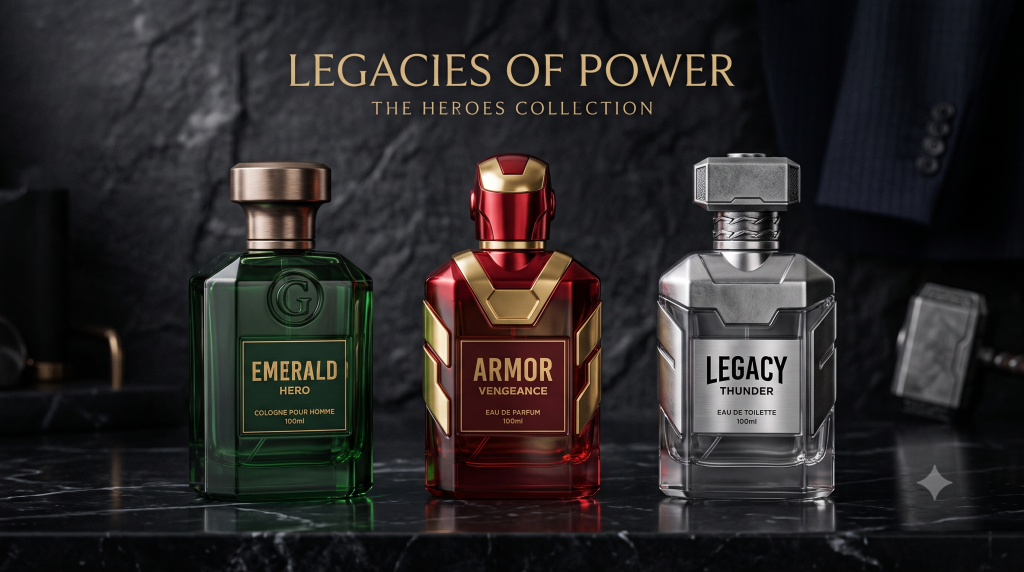
When Marvel’s The Avengers smashed box office records in 2012, it inspired an avalanche of tie in products. Action figures, clothing, video games, and collectibles made perfect sense. Then someone decided Earth’s Mightiest Heroes also needed their own line of fragrances. The Avengers Cologne Series featured scents inspired by iconic heroes like Iron Man, Captain America, Hulk, and Thor, allowing fans to literally wear the “essence” of their favorite superhero.
At least, that was the idea.
There is something wonderfully bizarre about trying to bottle the aroma of comic book characters who spend most of their time punching aliens, crashing through buildings, or sweating inside armored suits.
Iron Man’s fragrance promised sophistication and confidence, despite the character spending much of the film flying around inside a metal suit that probably smelled more like engine oil than expensive cologne.
Captain America’s scent was marketed as bold and patriotic. One can only assume it contained notes of fresh laundry, leather boots, and 1940s optimism.
Thor’s fragrance was perhaps the funniest of all. How exactly do you recreate the smell of an immortal Norse god from another realm? Apparently the answer involved woody notes, citrus, and enough marketing buzzwords to convince fans that Asgard somehow smelled like a luxury department store.
Then there was Hulk. The giant green rage monster known for smashing cities somehow became the face of a fragrance described as energetic and masculine. Unless “Eau de Gamma Radiation” suddenly became fashionable, this one required a serious suspension of disbelief.
The entire concept perfectly captured Hollywood’s merchandising philosophy: if fans love a movie, they’ll probably buy almost anything with the logo on it.
Unlike many infamous movie merchandise disasters, The Avengers Cologne Series was not recalled or pulled from shelves. The fragrances were released through specialty retailers as officially licensed products and quietly disappeared once the promotional cycle ended.
Today, unopened bottles have become quirky collector’s items among Marvel memorabilia enthusiasts. While they rarely command the astronomical prices of rare action figures or promotional toys, complete fragrance sets are sought after because of their sheer novelty and limited production.
More than a decade later, the line remains one of Marvel’s strangest licensing decisions. It serves as a hilarious reminder that during the height of the superhero boom, no merchandising idea was considered too weird if it might sell a few extra products.
Sometimes saving the world simply isn’t enough. Apparently, you also have to smell fantastic while doing it.
9. The Infamous Batman Water Pistol (1990s)
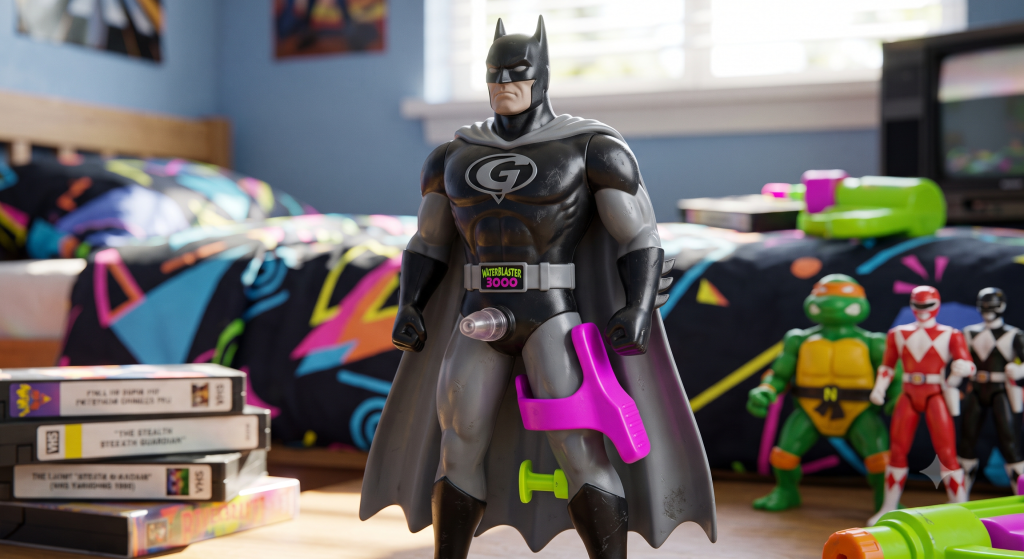
Batman has always been famous for one defining rule: he does not use guns. Ever since the character evolved into the modern Dark Knight, firearms have represented the very thing he fights against. That made the arrival of a licensed Batman Water Pistol during the 1990s all the more baffling. Sold as a brightly colored squirt gun for kids, it plastered Batman’s image across a toy shaped unmistakably like a handgun.
On paper, it was just another summer toy. In practice, it completely misunderstood the character it was supposed to celebrate.
Imagine asking Batman what merchandise best represents his lifelong crusade against crime.
A detective kit? Great choice.
A Batmobile? Absolutely.
A grappling hook toy? Makes perfect sense.
A gun?
That’s where everything falls apart.
Bruce Wayne’s refusal to use firearms isn’t a minor personality quirk. It is the emotional foundation of Batman’s entire story, stemming from the murder of his parents in Crime Alley. Seeing the Caped Crusader’s logo slapped onto a pistol, even a harmless water gun, felt like selling a Superman Kryptonite lunchbox or a vegetarian cookbook hosted by Hannibal Lecter.
The toy wasn’t even particularly “Batman-like.” Instead of resembling one of his gadgets, it looked much closer to a conventional handgun with Batman branding added on top. Parents, comic fans, and collectors were left scratching their heads over how such a product ever made it through the licensing process.
It became one of those rare pieces of movie merchandise that made people wonder whether anyone involved had actually read a Batman comic.
The Batman Water Pistol was sold as an officially licensed children’s toy during the 1990s, but it quickly earned criticism from fans who pointed out the obvious contradiction between Batman’s anti-gun philosophy and a firearm themed product.
While it was not formally recalled, the toy gradually disappeared from store shelves as licensing shifted toward gadgets, vehicles, and roleplay accessories that better reflected Batman’s character. Today, surviving examples have become unusual collector’s pieces precisely because of their ironic place in Batman history.
Rather than being remembered as a beloved toy, the water pistol is often cited as one of the most tone deaf superhero merchandise ideas ever produced. It’s proof that even the World’s Greatest Detective couldn’t always solve the mystery of questionable movie licensing decisions.
8. Jakks Pacific’s Meat Carcass Action Figure (Rocky, 2007)
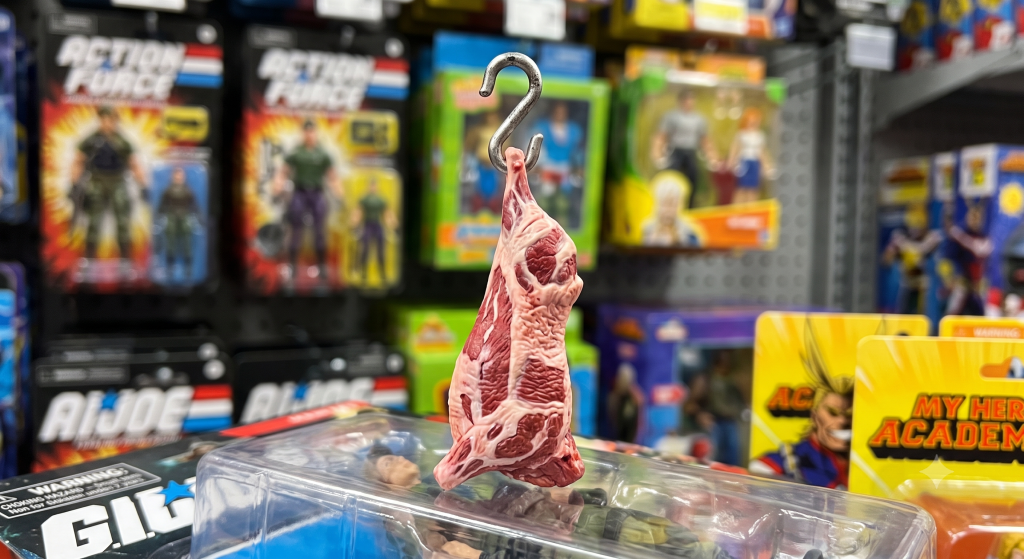
Most Rocky merchandise celebrates the underdog boxer’s greatest moments. Fans can buy action figures of Rocky throwing punches, raising championship belts, or standing triumphantly atop the Philadelphia Museum of Art steps.
Then Jakks Pacific introduced something nobody expected: a plastic side of beef.
Inspired by the famous training montage from the original Rocky (1976), the accessory recreated the hanging meat carcass that Rocky punches inside a freezer. Some versions even included the slab of meat alongside a Rocky action figure, allowing fans to reenact one of the franchise’s most iconic scenes right from their living rooms.
Technically, the idea sounds faithful to the film. In reality, it feels completely unhinged.
Children usually imagine their action figures battling villains, saving the day, or embarking on daring adventures. Rocky’s toy encouraged kids to spend their afternoon repeatedly punching a dead cow hanging from a hook.
Even adults had to pause for a second.
Imagine explaining the toy to someone unfamiliar with the movie.
“This isn’t a monster.”
“It’s not an alien.”
“It’s… a frozen animal carcass.”
The accessory looked surprisingly realistic, making the whole package less like a boxing toy and more like something from the butcher’s shop. Without the movie’s context, the meat slab seemed bizarre enough to leave parents wondering whether they had accidentally wandered into the wrong aisle.
It perfectly captured one of Hollywood’s strangest merchandising habits: if an object appeared in an iconic movie scene, someone somewhere believed it deserved its own toy.
Jakks Pacific officially released the meat carcass as part of its Rocky Balboa action figure line in 2007. The toy never sparked a major public controversy, nor did the company recall it. Instead, fans greeted it with equal parts amusement and disbelief.
Over time, the figure evolved into one of the most memorable oddities in movie merchandise history. Collectors now actively seek complete sets that include the infamous meat accessory, largely because it represents such an absurdly literal interpretation of an iconic scene.
Nearly two decades later, the plastic side of beef remains a cult favorite among toy collectors. It proves that sometimes Hollywood does not just think outside the box. It throws the entire freezer aisle into the toy aisle instead.
7. The Monolith Action Figure (2001: A Space Odyssey, 2010)
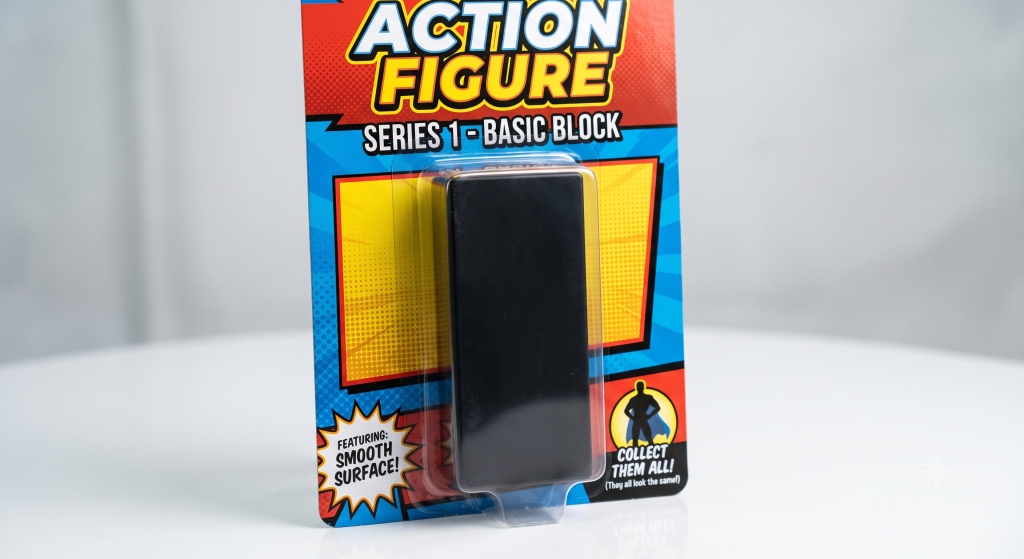
Stanley Kubrick’s 2001: A Space Odyssey gave cinema one of its most mysterious and iconic objects: the Monolith. The towering black slab never speaks, never moves, and never explains itself. Instead, it silently appears at pivotal moments, nudging humanity’s evolution while leaving audiences scratching their heads for decades.
In 2010, ThinkGeek embraced the joke by releasing an officially licensed Monolith Action Figure. Calling it an “action figure” stretched the definition to its absolute limit because the product was, quite literally, a solid black plastic rectangle packaged like a traditional toy.
This may be the greatest piece of self aware movie merchandising ever created.
Most action figures promise dozens of points of articulation, interchangeable hands, detailed accessories, or dramatic battle poses. The Monolith offered absolutely none of those things.
It did not bend.
It did not transform.
It did not light up.
It did not even have a face.
Instead, ThinkGeek leaned fully into the gag. The packaging proudly advertised “Zero points of articulation!” as though complete immobility were a premium feature. Technically, the marketing told the truth. The Monolith never moved in the film, so an action figure that could not move actually captured the source material with remarkable accuracy.
Collectors essentially paid for a black plastic brick inside a blister pack, and somehow that made perfect sense. The joke worked because everyone understood they were buying the least action packed action figure ever produced.
Unlike many bizarre movie tie ins, the Monolith Action Figure was intentionally designed as a parody collectible rather than a serious toy. ThinkGeek licensed the product officially, marketed it with tongue in cheek humor, and won over fans who appreciated the company’s commitment to the bit.
The figure never faced recalls or public backlash. Instead, it quickly became a cult favorite among science fiction collectors and ThinkGeek enthusiasts. After ThinkGeek ceased operations, surviving unopened examples became even more desirable on the secondary market.
More than a decade later, the Monolith Action Figure remains one of the cleverest movie collectibles ever made. It proves that sometimes the funniest merchandise is the product that does absolutely nothing, and proudly tells you so.
6. Kenner’s 18-Inch Xenomorph for Toddlers (Alien, 1979)
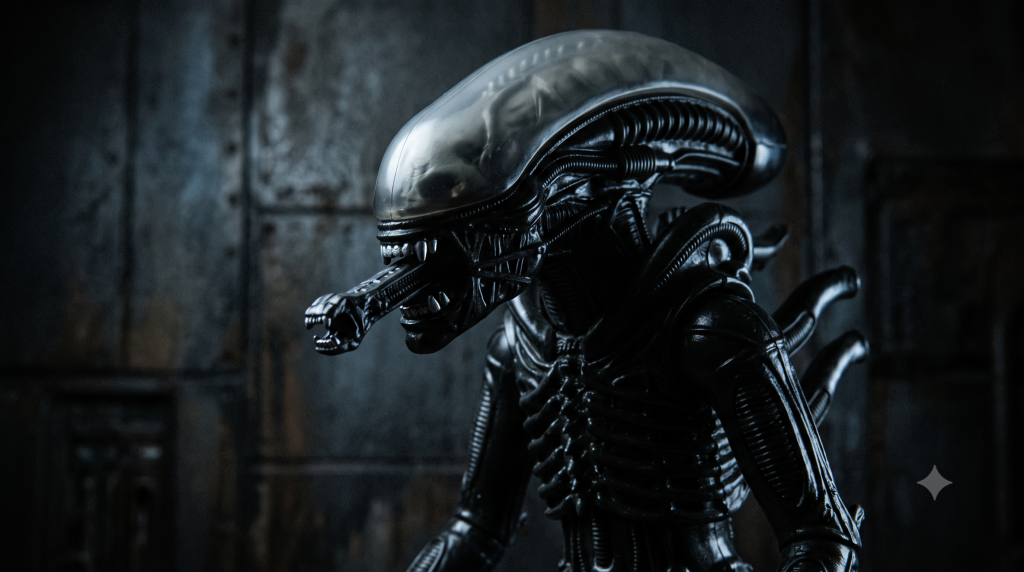
Ridley Scott’s Alien terrified audiences in 1979 with its claustrophobic atmosphere, grotesque creature design, and one of the most shocking chest bursting scenes in movie history. It was an unapologetically R rated sci-fi horror film aimed squarely at adults.
A year later, toy company Kenner somehow concluded that the nightmarish Xenomorph deserved an oversized action figure for children. Standing roughly 18 inches tall, the creature featured glowing details, bendable limbs, and a button that launched its signature inner jaw. On its own, it looked like an impressive collectible. As a children’s toy, it was a spectacular mismatch.
Someone looked at a movie filled with body horror, acid blood, and parasitic aliens and thought, “Kids will love this.”
That decision remains one of the most baffling licensing moves in movie history.
The Xenomorph was not a misunderstood antihero or a cool movie monster in the Godzilla tradition. It was a relentless killing machine designed by H. R. Giger to make audiences deeply uncomfortable. Giving it the deluxe action figure treatment felt like releasing a bedtime plush based on your worst nightmare.
The toy’s most infamous feature only made things stranger. Pressing a button caused the creature’s inner jaw to snap forward, recreating one of the film’s most disturbing attacks. Children probably thought it was awesome. Parents mostly thought it was horrifying.
Unlike today’s collector focused horror figures, Kenner marketed the Xenomorph as part of its regular toy lineup. That meant it shared shelf space with superheroes, cartoon characters, and other products aimed at young kids. The disconnect between the source material and the target audience could hardly have been bigger.
Parents quickly complained that the toy promoted a brutally violent horror film to children. Retailers responded by removing it from shelves after a relatively short production run, and Kenner quietly ended the line before it could expand further.
That commercial failure eventually became the toy’s greatest strength. Because relatively few survived in their original packaging, the 18 Inch Xenomorph transformed into one of the most coveted pieces of movie merchandise ever produced. Mint condition examples regularly command premium prices among vintage toy collectors.
Today, the figure stands as both a cautionary tale and a collector’s dream. It reminds us that just because a movie monster looks unforgettable does not mean it belongs in the toy aisle next to teddy bears and Saturday morning cartoons.
5. The Official Star Trek Casket (2007)
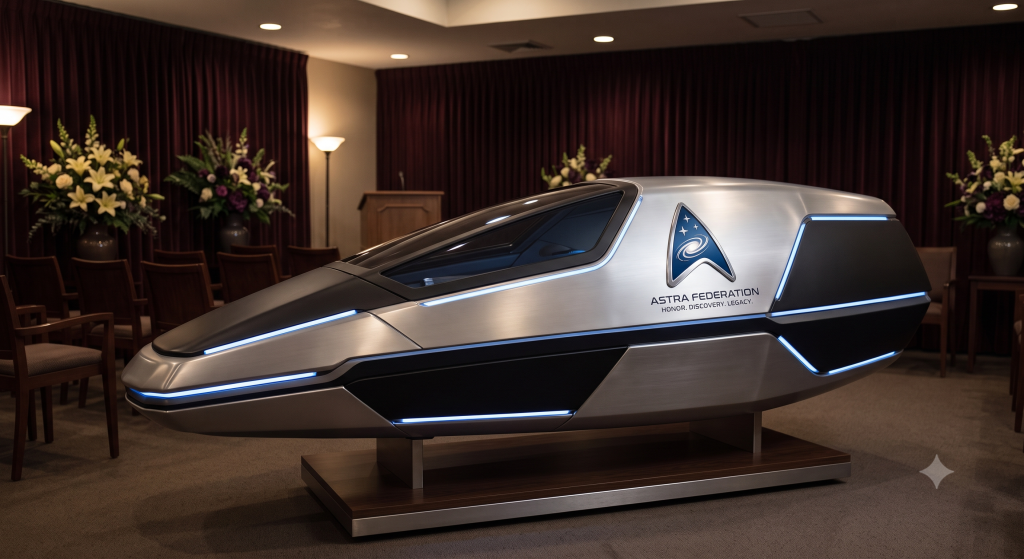
For decades, Star Trek has inspired fans to imagine a future filled with exploration, advanced technology, and humanity’s journey beyond Earth. The franchise created a passionate fanbase that collects everything from starships and uniforms to rare memorabilia.
In 2007, Eternal Image took that dedication to a place nobody expected: the afterlife.
The company released an officially licensed Star Trek casket, allowing devoted fans to make one final voyage surrounded by the imagery of the United Federation of Planets. The futuristic coffin featured a sleek metallic design inspired by a photon torpedo, complete with Starfleet branding and a look straight out of a science fiction prop department.
There are plenty of ways to show your love for Star Trek.
You can wear a Starfleet uniform.
You can build a replica bridge in your basement.
You can argue about the best captain at conventions until everyone politely walks away.
But choosing to spend eternity inside a Star Trek themed coffin takes fandom to an entirely different galaxy.
The concept created an unavoidable mental image: a funeral where mourners stand around a futuristic pod wondering whether they should salute, play the Star Trek theme, or wait for the deceased to be launched into orbit.
The photon torpedo design added another layer of weirdness. In the franchise, photon torpedoes are weapons used in starship battles. In this context, the same shape became a luxury resting place. Nothing says “peaceful eternal rest” quite like looking as though you are about to be fired out of the USS Enterprise.
Yet the strangest part might be how seriously the product took itself. While the idea sounds like a parody, Eternal Image treated it as a genuine premium memorial option for fans who wanted their final goodbye to reflect their passion.
Eternal Image officially launched the Star Trek casket line in 2007 as part of a broader collection of licensed pop culture memorial products. The company also produced themed urns and other funeral merchandise based on major entertainment franchises.
The casket did not cause a major controversy, but it certainly attracted plenty of jokes from fans and the media. Many people admired the creativity, while others found the idea of a sci-fi coffin both fascinating and hilariously excessive.
Today, the Star Trek casket remains one of the most unusual examples of fan merchandise ever created. It rarely appears on the collector market because it was a practical memorial product rather than a traditional collectible.
Ultimately, it represents the ultimate level of fandom commitment. Some fans want to watch Star Trek until the end. Others apparently want the end to look like it came straight from Starfleet Command.
4. The C-3PO Tape Dispenser (Star Wars, 1980s)
After the original Star Wars trilogy became a global phenomenon, manufacturers created nearly every type of merchandise imaginable. Fans could buy action figures, lunchboxes, bedding, clothing, and enough collectibles to fill an entire galaxy far, far away.
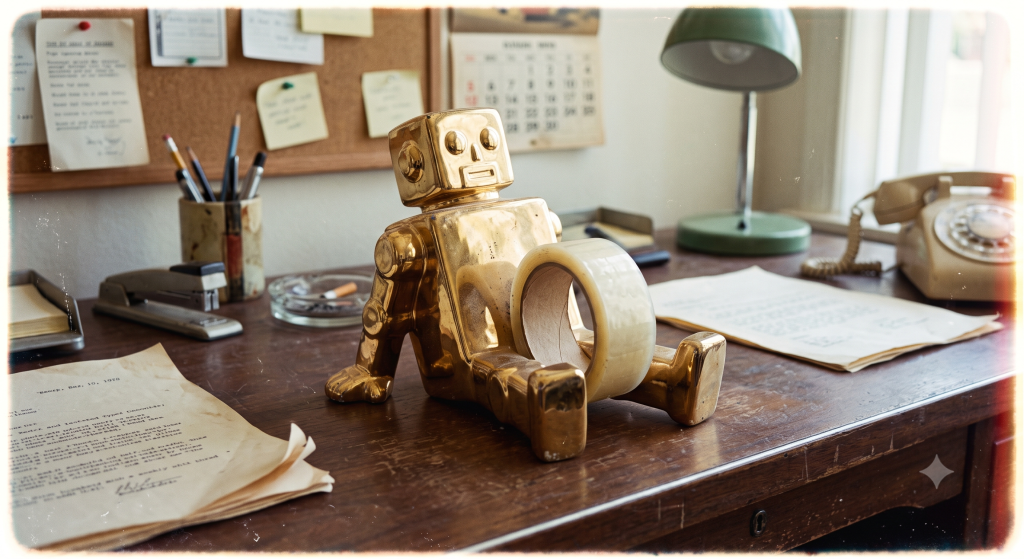
Then came the C-3PO Tape Dispenser, a ceramic desk accessory that attempted to bring the beloved protocol droid into offices and homes. The design featured C-3PO lounging in a reclined position while holding a roll of tape, turning one of the galaxy’s most recognizable characters into a piece of everyday stationery.
At least, that was the intention.
Somewhere during the design process, nobody stopped and asked the most important question:
“Where exactly should the tape come out?”
The answer created one of the strangest pieces of Star Wars merchandise ever produced.
The golden droid sits with his legs spread apart, with the tape roll positioned directly between them. Users had to pull the tape from the exact area between C-3PO’s legs, creating an awkward visual that instantly transformed a harmless office supply into something unintentionally suggestive.
C-3PO, a character known for his nervous complaints and polite manners, suddenly became the centerpiece of a desk accessory that looked like it belonged in a very different kind of collection.
The funniest part is that the product probably started with completely innocent intentions. Designers likely wanted to use the droid’s humanoid shape to create a functional tape dispenser. Unfortunately, turning a fully articulated golden robot into a stationery holder required some unfortunate placement decisions.
The result became a perfect example of how a seemingly normal merchandising idea can go hilariously wrong.
The C-3PO Tape Dispenser appeared during the 1980s wave of Star Wars licensed merchandise and never faced an official recall. However, collectors and fans eventually rediscovered the item and highlighted its bizarre design, turning it into one of the franchise’s strangest collectibles.
Today, the tape dispenser has achieved cult status among Star Wars memorabilia collectors. While it does not rank among the rarest or most valuable items from the franchise, its unusual appearance makes it one of the most memorable conversation pieces.
Decades later, it remains a hilarious reminder that even a merchandising empire as powerful as Star Wars could occasionally make a design decision that left everyone asking the same question:
“Did anyone actually look at this before approving it?”
3. The Vibrating Nimbus 2000 (Harry Potter, 2001)
When Harry Potter and the Sorcerer’s Stone arrived in theaters in 2001, the franchise exploded into a merchandising phenomenon. Naturally, toy companies wanted to capture the magic of the wizarding world and bring fans closer to Harry’s adventures.
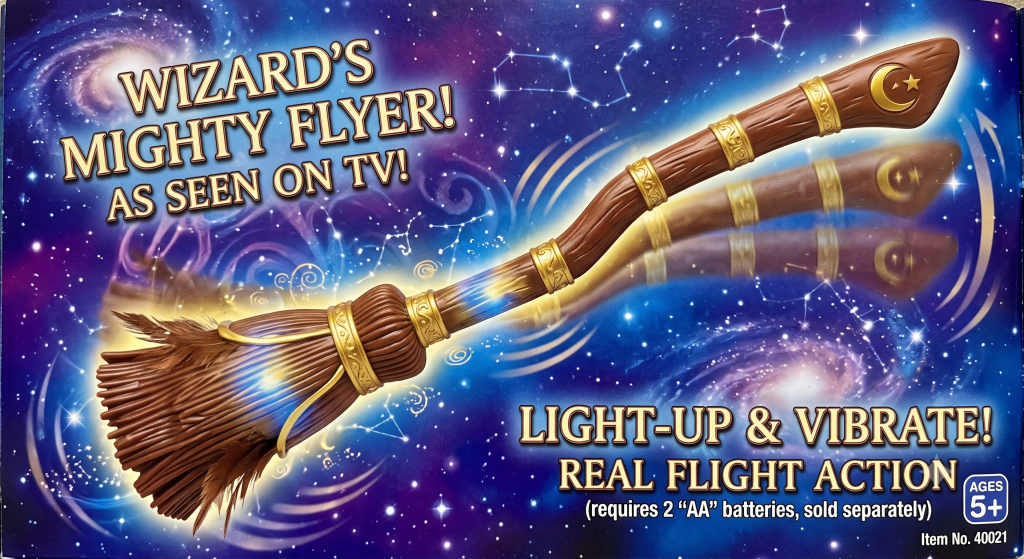
Mattel’s answer was the Nimbus 2000 Flying Broomstick toy, based on Harry’s iconic racing broom from the books and films. The idea was simple: give children a pretend broomstick that could make them feel like they were soaring through the skies during a game of Quidditch.
To create a more “realistic” experience, Mattel added a vibrating feature designed to simulate the sensation of flying.
That decision quickly turned a magical toy into one of the strangest licensed products in pop culture history.
The problem was not the broomstick itself. A toy based on a wizard’s flying broom makes perfect sense.
The problem was the placement.
The Nimbus 2000 required children to hold the vibrating broom between their legs to experience the full effect. What sounded like an innovative feature during the design meeting became an extremely awkward product once it reached the real world.
Parents immediately noticed the unfortunate implications, and the toy attracted plenty of jokes from critics and late night comedians. Instead of making kids feel like they were playing Quidditch at Hogwarts, the toy created a completely different conversation that nobody at Mattel expected.
It became a classic example of a company focusing so heavily on the technical gimmick that it forgot to consider how the product would actually look outside the conference room.
The magic was supposed to come from imagination. Instead, the vibration feature became the only thing anyone could talk about.
Mattel released the vibrating Nimbus 2000 as part of its early Harry Potter merchandise lineup, but the toy quickly became controversial because of its unintended interpretation. Following complaints and widespread ridicule, retailers stopped carrying the product, and Mattel discontinued it.
Because of its short availability and unusual reputation, the vibrating Nimbus 2000 has become a bizarre collector’s item among fans of strange movie merchandise. It is remembered less as a successful Harry Potter toy and more as one of the most awkward licensing decisions ever made.
Today, the toy stands as a reminder that even the most successful franchises can stumble when companies try too hard to add “realism” to fantasy. Sometimes a flying broomstick only needs to fly. It does not need extra features that make everyone uncomfortable.
2. Jar Jar Binks Monster Mouth Candy Dispenser (Star Wars: Episode I, 1999)
When Star Wars: Episode I The Phantom Menace arrived in 1999, the return of the franchise created one of the biggest merchandising events in movie history. Companies produced everything from action figures and video games to clothing, toys, and enough promotional items to fill an entire cantina.
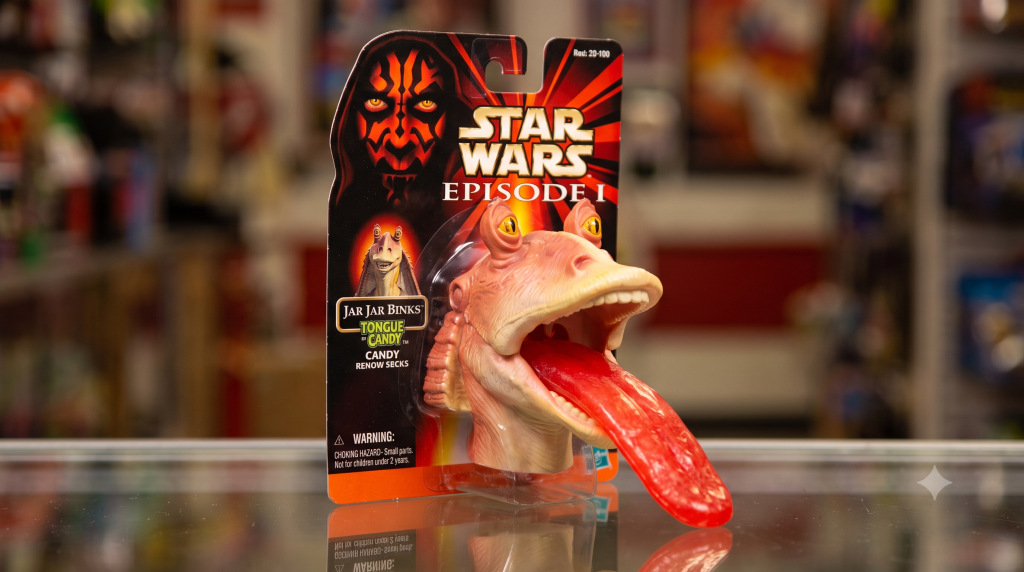
Among the strangest releases was the Jar Jar Binks Monster Mouth Candy Dispenser. The product featured a plastic replica of Jar Jar’s head with a giant red lollipop designed to stick out from his mouth. Kids could pull out the candy tongue and enjoy a sweet treat while interacting with one of the movie’s most recognizable new characters.
That description already sounds questionable.
The reality was somehow even stranger.
Jar Jar Binks was already one of the most divisive characters in Star Wars history. Some fans found him entertaining, while others considered him an irritating addition to the galaxy far, far away.
Then the merchandising department asked a very important question:
“How can we make Jar Jar even more uncomfortable?”
The answer: turn his mouth into a candy dispenser.
To eat the lollipop, children had to place the oversized candy directly into Jar Jar’s mouth and repeatedly move it in and out. The result created an accidental visual that made parents, fans, and pretty much anyone who saw it do a double take.
The problem was not that it was a candy toy. Plenty of movie characters have appeared on snack products. The issue was the design choice. Instead of putting the candy somewhere normal, like a hand or a side compartment, the product made the character’s mouth the entire delivery system.
It transformed a goofy alien sidekick into a bizarre candy experience that felt more like an awkward novelty item than something designed for children.
The Jar Jar Binks Monster Mouth Candy Dispenser appeared as part of the massive The Phantom Menace merchandising campaign in 1999. Unlike some infamous toys, it did not face an official recall, but its strange design quickly earned criticism and mockery from fans and the media.
Over time, the dispenser became a cult collectible among Star Wars enthusiasts, especially those who enjoy the franchise’s strangest and most unusual merchandise. Its value comes less from rarity and more from its legendary status as one of the most unintentionally bizarre licensed products ever created.
Decades later, the Jar Jar Monster Mouth remains a perfect example of late 1990s merchandising excess. It was a time when companies did not just want fans to enjoy their favorite characters.
They wanted fans to put those characters in their mouths. And somehow, Jar Jar Binks drew the shortest straw.
1. AMC’s Dune: Part Two Sandworm Popcorn Bucket (2024)
Movie theaters have spent years creating collectible popcorn buckets to turn ordinary snacks into must have fan merchandise. From superhero helmets to spaceship shaped containers, the strategy is simple: give audiences something memorable to take home after the credits roll.
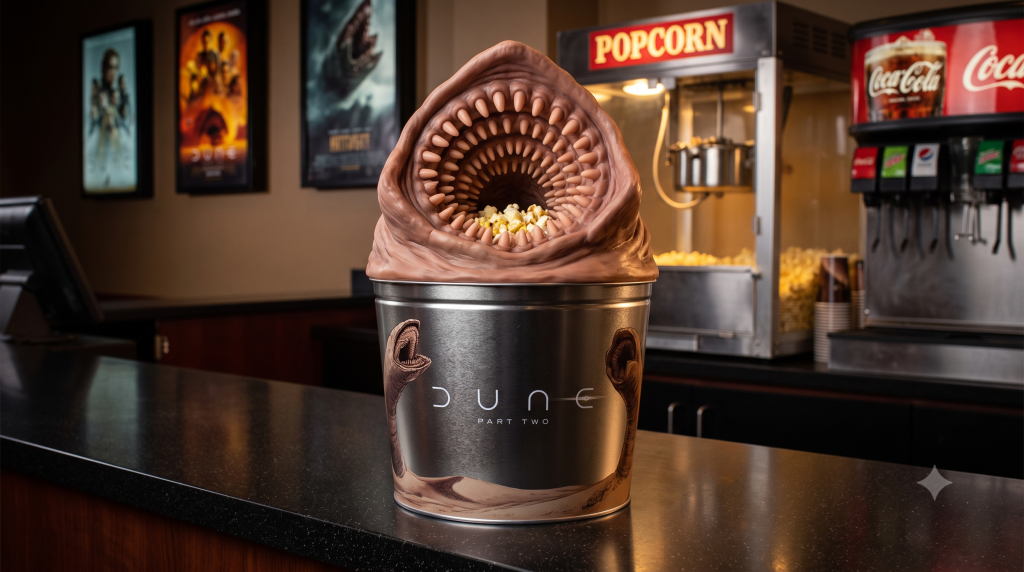
For Dune: Part Two in 2024, AMC decided to embrace one of the most iconic creatures in science fiction: Shai Hulud, the massive desert sandworm of Arrakis. The result was an officially licensed popcorn bucket shaped like the terrifying creature, complete with a detailed exterior inspired by the film’s monstrous design.
The concept sounded perfect. A legendary sci-fi creature transformed into a collectible container for movie snacks.
Then people saw where the popcorn came out.
The sandworm bucket became an instant internet sensation for all the wrong reasons.
Instead of creating a simple opening on the top or side, designers placed the popcorn access point inside the creature’s mouth. To grab a handful of popcorn, customers had to reach through a fleshy, textured opening surrounded by rubbery teeth.
The result looked less like a fearsome desert predator and more like something that belonged in a completely different kind of store.
Within hours, social media exploded with jokes, comparisons, and deeply uncomfortable observations. Fans who had expected an epic piece of Dune memorabilia suddenly found themselves discussing the logistics of putting their hand inside a sandworm’s oddly suggestive entrance.
The funniest part was the contrast. The film presented Shai Hulud as an ancient, awe inspiring force of nature. The popcorn bucket transformed that same creature into a snack container that made moviegoers question every design decision that led to its creation.
It became the rare piece of merchandise that overshadowed the movie itself for a few days. Everyone was talking about Dune, but many conversations started with, “Have you seen that popcorn bucket?”
AMC officially released the Shai Hulud popcorn bucket as a promotional collectible for Dune: Part Two in early 2024. The unusual design quickly went viral, and the cast and filmmakers faced countless questions about the infamous item during interviews and the film’s press tour.
Despite the jokes, AMC did not recall the product. Instead, the controversy helped make the bucket one of the most talked about pieces of movie merchandise in recent memory. Demand remained high among collectors, and the item became a memorable example of how unexpected designs can create massive publicity.
The sandworm popcorn bucket now holds a unique place in pop culture history. It is a reminder that sometimes the best marketing campaign is not a carefully planned advertisement.
Sometimes it is accidentally creating a snack container that makes the entire internet ask, “Who approved this?”
When Merchandising Goes Too Far
Movie merchandise can be a brilliant way for fans to keep a piece of their favorite films alive. A great collectible can capture a memorable character, iconic scene, or unforgettable moment. But sometimes, the rush to turn every piece of pop culture into a product leads to some truly bizarre creations.
From a Jar Jar Binks candy dispenser that made everyone uncomfortable to a Dune popcorn bucket that accidentally became an internet legend, these items prove that the world of movie merchandising has almost no limits. For every legendary action figure or beloved collectible, there is a strange, confusing product that makes everyone wonder who approved it in the first place.
The wild west of pop culture consumerism continues, and somewhere out there, a marketing team is probably pitching an even stranger idea right now.
Which piece of movie merchandise from this list do you find the most absurd? Would you actually own one of these bizarre collectibles, or is there another strange movie product that deserves a spot on the list? Share your thoughts in the comments!