

Football pitches are often imagined as controlled environments, but anyone who has played or watched at a high level knows the reality is far more chaotic. Players move, systems collapse under pressure, and split-second decisions decide whether a team looks like a well-drilled machine or a disjointed mess. In that chaos, most captains are defined by emotion—shouting instructions, leading by example, or making last-ditch tackles when structure breaks down.
But there exists another breed entirely.
To “manage from the pitch” means far more than wearing the armband. It means reading the game like a coach while still executing it like an elite player. These rare individuals adjust defensive lines in real time, trigger pressing traps, shift formations mid-phase, and act as the manager’s live tactical proxy when communication from the touchline is too slow to matter. They don’t just follow instructions, they interpret, refine, and often rewrite them as the match unfolds.
This article explores 10 legendary football captains who operated on that level of intelligence. From adjusting offside traps without a word from the bench to controlling tempo across an entire 90 minutes, these players possessed an elite football IQ that allowed their managers to effectively hand them the tactical keys. In many cases, the man on the pitch was not just a leader of men, but the true architect of how the team functioned in real time.
10. Patrick Vieira (Arsenal)
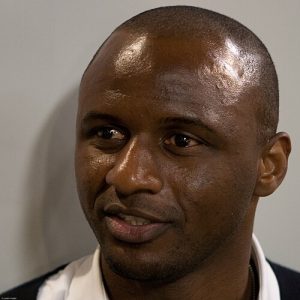
Patrick Vieira was the heartbeat, enforcer, and field marshal of Arsène Wenger’s greatest Arsenal sides. Officially, he was a central midfielder. In reality, he functioned as the team’s on-field manager, responsible for maintaining Arsenal’s tactical balance in real time. Vieira dictated tempo, organized pressing triggers, decided when Arsenal would accelerate attacks, and frequently repositioned teammates during matches.
Standing 6’4″ with extraordinary technical ability, Vieira combined physical dominance with tactical intelligence. He served as the crucial link between defense and attack, often acting as Wenger’s eyes and voice on the pitch. When Arsenal lost possession, Vieira immediately organized the team’s shape. When momentum shifted, he restored order. Few midfielders in Premier League history possessed such authority over every phase of the game.
The Dugout Connection
Vieira’s relationship with Arsène Wenger was built on complete trust. Wenger provided the philosophical framework, fluid football, technical superiority, and attacking ambition. However, Vieira was often the man responsible for implementing those ideas under match conditions.
Wenger frequently relied on his captain to read situations that coaches could not influence from the touchline. During Arsenal’s famous “Invincibles” season of 2003–04, Vieira effectively became the team’s tactical governor, ensuring that Wenger’s attacking principles never compromised defensive stability. The partnership worked because each understood the other’s role perfectly: Wenger designed the blueprint, Vieira enforced it.
Reading the Game
Perhaps the greatest evidence of Vieira’s influence came during Arsenal’s unbeaten title-winning campaign. Former teammates regularly described him as the team’s true authority figure on the field. Defender Martin Keown once remarked that Vieira’s presence gave Arsenal an extra coach during matches because he constantly directed positioning, demanded standards, and corrected mistakes instantly.
His leadership was most visible during high-pressure encounters against Manchester United. While Wenger and Sir Alex Ferguson conducted their famous managerial rivalry from the dugouts, Vieira and Roy Keane effectively fought the tactical battle on the pitch. Their famous tunnel confrontation at Highbury in 2005 illustrated how seriously Vieira viewed his responsibility for protecting and organizing his team.
Wenger later praised Vieira’s ability to understand the game beyond his position, describing him as a player capable of reading entire matches rather than individual moments. That rare combination of tactical intelligence, authority, and leadership made Patrick Vieira far more than a captain… he was Arsenal’s manager in boots.
9. Lothar Matthäus (West Germany & Bayern Munich)
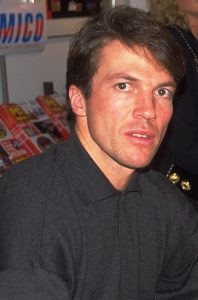
If Patrick Vieira was Arsenal’s field marshal, Lothar Matthäus was an entire command center. Few players in football history have demonstrated such complete control over every aspect of a match. During his peak years with Bayern Munich and West Germany, Matthäus evolved from a relentless box-to-box midfielder into a deep-lying orchestrator who effectively managed games from the center of the pitch.
His tactical identity was built around versatility and intelligence. Matthäus could defend, create, score, press, and organize with equal authority. Unlike specialists who dominated a single phase of play, he influenced all of them. He constantly adjusted his team’s shape, directed pressing movements, and dictated tempo depending on the match situation. Whether operating as a midfielder, sweeper, or libero later in his career, Matthäus possessed an almost managerial understanding of space and momentum.
More importantly, teammates looked to him for instructions as naturally as they would a coach. His voice was ever-present, his standards uncompromising, and his understanding of the game’s flow often appeared several moves ahead of everyone else on the field.
The Touchline Translator
Matthäus worked under several elite managers throughout his career, but his relationship with Franz Beckenbauer during West Germany’s triumph at the 1990 FIFA World Cup remains the defining example of a captain-manager partnership.
Beckenbauer, himself one of football’s greatest tactical innovators, recognized that Matthäus possessed a unique ability to interpret matches independently. Rather than micromanaging his captain, Beckenbauer gave him significant freedom to organize the team from within. The arrangement was almost symbiotic: Beckenbauer provided the overall vision while Matthäus acted as the tactical executor on the pitch.
At Bayern Munich, coaches came and went, but Matthäus remained the team’s central authority figure. His influence was so strong that many observers regarded him as the club’s de facto football leader regardless of who occupied the dugout.
The Ultimate Respect
The clearest evidence came during the 1990 World Cup. As captain, Matthäus was not merely leading by example, he was actively directing one of the most tactically disciplined teams in tournament history. Throughout the competition, television cameras frequently captured him repositioning teammates, issuing instructions, and adjusting the team’s shape in real time.
Beckenbauer himself once summarized Matthäus’s football intelligence by stating that he possessed “a computer in his head.” It was perhaps the ultimate compliment from a man renowned for his own tactical brilliance.
The final against Argentina showcased Matthäus at his managerial best. He controlled the tempo, organized the midfield, and ensured West Germany remained tactically disciplined despite the enormous pressure of the occasion. The result was a world title won by a team whose captain often appeared to be conducting operations from the pitch itself.
That ability to think like a coach while performing like a world-class player is why Lothar Matthäus remains one of football’s greatest examples of a captain who effectively managed the team from within the game.
8. Graeme Souness (Liverpool)
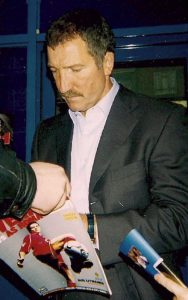
Graeme Souness was the embodiment of Liverpool’s ruthless efficiency during one of the club’s most dominant eras. While his reputation often centers on his fierce competitiveness and uncompromising tackling, Souness’s true value lay in his ability to control matches as an on-field strategist. He was not merely a midfielder; he was the central operating system of Liverpool’s machine.
From his position in midfield, Souness dictated tempo, organized pressing, and ensured that Liverpool’s famous passing game maintained its structure under pressure. He possessed an exceptional understanding of space and timing, knowing precisely when to slow a match down and when to accelerate it. His passing range allowed him to switch the point of attack instantly, while his commanding presence ensured teammates adhered to the tactical plan.
Unlike many captains who led primarily through emotion, Souness led through authority and football intelligence. Every movement carried purpose. Every instruction reinforced Liverpool’s collective discipline. He played with the conviction of a man who expected perfection and was willing to enforce it.
The Gaffer’s Extension
Souness flourished under the legendary partnership of Bob Paisley and later Joe Fagan. Liverpool’s famed “Boot Room” culture relied heavily on trusted senior players who understood the club’s football philosophy as deeply as the coaches themselves. Souness became the ultimate expression of that model.
Paisley, known for his calm and understated management style, preferred intelligent players capable of solving problems independently. Souness was exactly that. While the manager established the framework, the captain often implemented it in real time. The relationship was based on mutual trust: Paisley knew that once the whistle blew, Souness could be relied upon to make tactical decisions that aligned perfectly with Liverpool’s broader strategy.
By the early 1980s, Souness had become the on-field extension of the Boot Room itself, a player who thought like the coaches because he had absorbed their principles completely.
The Pitch-Level Proof
Former Liverpool players frequently spoke about Souness’s authority within the team. His influence extended far beyond motivational speeches or dressing-room leadership. Teammates recalled how he constantly organized shape, demanded positional discipline, and corrected mistakes immediately during matches.
The 1984 European Cup-winning campaign provided some of the strongest evidence. In high-pressure knockout ties, Souness repeatedly acted as Liverpool’s tactical stabilizer, ensuring that the team maintained control regardless of the occasion. His ability to read the flow of a match allowed Liverpool to adapt without waiting for instructions from the bench.
Bob Paisley once described Souness as the complete midfield player, a reflection not only of his technical qualities but also of his understanding of the game. Meanwhile, many opponents regarded him as Liverpool’s true on-field authority figure… the man who set standards and enforced them.
In an era before constant touchline communication, Souness effectively served as Liverpool’s tactical supervisor. He was the captain who made sure the manager’s ideas survived contact with the chaos of the match itself, which is precisely why he belongs among football’s greatest on-pitch managers.
7. Carles Puyol (Barcelona)
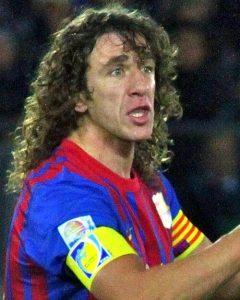
Carles Puyol was the emotional core of Barcelona’s golden era, but his real value lay in something far more structural: he was the team’s defensive regulator inside Pep Guardiola’s revolutionary positional system. While Barcelona’s midfield dictated possession, Puyol ensured that the rest of the team never lost its tactical discipline when the structure stretched under pressure.
Operating as a center-back in one of the most aggressive high-line systems ever constructed, Puyol constantly managed spacing, depth, and defensive timing. Barcelona’s full-backs pushed high, the midfield compressed play forward, and the back line often defended in vast open spaces. In that environment, Puyol functioned as the stabilizing voice, organizing the line, correcting positioning, and ensuring the team’s structure remained intact even when possession was lost in dangerous areas.
His leadership was never decorative. It was corrective, immediate, and relentless. He did not wait for breakdowns, he prevented them through constant communication and positional authority.
Executing the Vision
Under Pep Guardiola, Puyol became one of the most trusted extensions of the coaching structure on the pitch. Guardiola’s Barcelona demanded extreme positional discipline, and while the system was meticulously drilled, its success still depended on players capable of enforcing it in real time.
Guardiola trusted Puyol to maintain standards when emotional intensity threatened structural clarity. In matches where Barcelona’s attacking dominance risked lapses in concentration, Puyol acted as the on-field corrective mechanism, ensuring that the team’s shape never dissolved into improvisation.
He was not merely a captain under Guardiola’s system, he was one of its enforcement points.
The Defining Moment
One of the clearest demonstrations of Puyol’s leadership came in Barcelona’s 5–0 victory over Real Madrid in 2010. Even in a match of total dominance, Puyol was constantly visible reorganizing the back line, demanding focus, and ensuring Barcelona’s structure remained intact until the final whistle. For him, superiority never justified relaxation.
Another iconic moment came during an El Clásico in 2013 against Real Madrid, when Gerard Piqué picked up an object thrown from the crowd while appealing to the referee. Puyol immediately intervened by snatching the object from his teammate’s hand and forcing him back into defensive position before play resumed. It was a raw display of his priorities: control the structure first, react to chaos second.
Teammates often described him as the team’s “guardian of order.” Guardiola repeatedly emphasized that Puyol’s influence went beyond defending, he preserved the tactical discipline that allowed Barcelona’s attacking system to function at its highest level.
In a team defined by artistry, Puyol was the structure that made the art possible.
6. Didier Deschamps (France & Juventus)
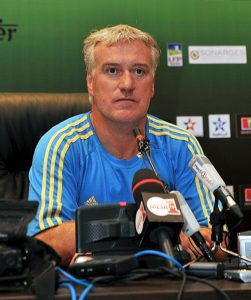
Didier Deschamps was never the most glamorous player on the field. He rarely produced highlight-reel dribbles, thunderous goals, or moments of individual brilliance that dominated headlines. Yet coaches adored him because he possessed something even more valuable: the mind of a manager.
As a defensive midfielder for both France and Juventus, Deschamps specialized in organization. His primary responsibility was not to entertain but to ensure that everyone around him functioned effectively. He controlled the team’s shape, closed dangerous spaces, coordinated pressing, and constantly communicated positional adjustments. If a teammate drifted out of position, Deschamps noticed it immediately. If the game’s rhythm needed changing, he was often the first player to recognize it.
Former France teammate Eric Cantona famously referred to him as the “water carrier” of the team, a description intended as criticism. Ironically, it highlighted precisely why coaches valued him so highly. Deschamps performed the unseen work that allowed more creative stars to shine. Like a manager on the pitch, he understood that collective success depended on structure before spectacle.
Two Minds, One System
Deschamps thrived under two legendary tacticians: Marcello Lippi at Juventus and Aimé Jacquet with France. Both men placed enormous trust in his football intelligence.
At Juventus, Lippi built one of Europe’s most disciplined teams during the 1990s. Deschamps became the captain and tactical anchor of a side that reached three consecutive Champions League finals. Lippi frequently relied on him to maintain the team’s organization during matches, effectively extending the coach’s influence onto the field.
With France, Jacquet entrusted Deschamps with captaining a squad filled with powerful personalities and extraordinary talent. While stars such as Zinedine Zidane captured public attention, Deschamps acted as the team’s internal organizer, ensuring the tactical framework remained intact.
The relationship was simple: the managers designed the system, and Deschamps enforced it.
In the Manager’s Words
The strongest evidence came during France’s triumph at the 1998 FIFA World Cup. As captain, Deschamps served as the team’s on-field coordinator, constantly directing teammates and maintaining tactical discipline throughout the tournament.
Jacquet later praised his captain’s intelligence and leadership, describing him as a player who understood exactly what the team needed in every situation. Teammates often echoed that sentiment, noting that Deschamps was effectively an extra coach during matches.
His influence was equally visible at Juventus. Lippi once remarked that having Deschamps on the field was like having another member of the coaching staff involved in the game itself. That trust was reflected in the responsibility he carried during high-pressure European nights, where he regularly adjusted positioning and organized teammates without waiting for instructions from the bench.
Perhaps the ultimate proof of his football brain is what happened after retirement. Deschamps seamlessly transitioned into management and eventually led France to victory at the 2018 FIFA World Cup, joining an elite group to win the tournament as both player and coach.
For many observers, that success was no surprise. Didier Deschamps had spent much of his playing career managing teams from the pitch long before he officially became a manager.
5. Philipp Lahm (Bayern Munich & Germany)
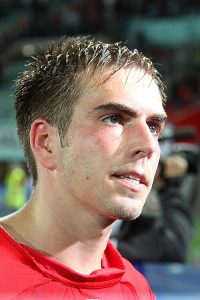
Philipp Lahm redefined what it meant to be a modern captain by eliminating the need for force and replacing it with pure intelligence. At Bayern Munich and with Germany, he operated as a positional perfectionist. He was capable of controlling matches from right-back, left-back, and even central midfield under Pep Guardiola. His role evolved into that of a tactical regulator, someone who maintained structural balance while subtly dictating tempo.
Unlike traditional full-backs who relied on physical dominance, Lahm’s game was built on anticipation and spatial awareness. He rarely made mistakes because he rarely entered chaotic situations. Instead, he prevented chaos from forming. Under Guardiola, he famously transitioned into midfield, where his understanding of angles, pressing traps, and positional rotation made him the closest thing football had to a player-coach on the pitch.
Lahm didn’t shout to control games… he adjusted them silently, one movement at a time. His intelligence allowed Bayern and Germany to execute complex tactical systems with minimal breakdowns, especially in high-pressure environments.
The Tactical Conduit
Lahm worked under some of the most influential managers of his era: Louis van Gaal, Jupp Heynckes, Pep Guardiola, and Joachim Löw. Across all of them, one theme remained consistent, total trust in Lahm’s football brain.
Guardiola in particular viewed Lahm as an extension of himself on the pitch. He regularly consulted him during matches and tactical preparations, trusting him to interpret and execute complex positional instructions in real time. The relationship was so strong that Guardiola reportedly described Lahm as “the most intelligent player I have ever coached.”
For Germany, Joachim Löw used Lahm as both full-back and midfield pivot during the 2014 World Cup, effectively giving him dual tactical responsibilities depending on the phase of play. Lahm acted as a bridge between defensive structure and attacking buildup, ensuring Germany’s system remained fluid but controlled.
The Ultimate Co-Sign
The clearest proof of Lahm’s managerial influence came during Germany’s 2014 World Cup triumph. As captain, he not only led the team emotionally but also functioned as a tactical coordinator on the pitch. Whether stationed in midfield or at full-back, he constantly adjusted Germany’s spacing and pressing structure.
In the 7–1 semifinal demolition of Brazil, Lahm’s positioning and control of tempo were instrumental in preventing emotional overextension, ensuring Germany maintained tactical discipline even in a historic moment of dominance.
Guardiola’s Bayern period provided further evidence. During matches, Lahm frequently appeared to interpret and execute tactical adjustments without needing touchline instruction, a trait that set him apart even among elite players.
By the end of his career, Lahm had become the prototype of the modern tactical captain: calm, cerebral, and structurally indispensable. He didn’t just lead teams… he optimized them from within.
4. Roy Keane (Manchester United)
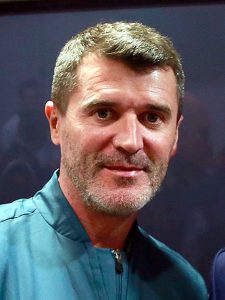
Roy Keane was Manchester United’s competitive firewall, an uncompromising central midfielder whose influence extended far beyond ball-winning and box-to-box running. Under Sir Alex Ferguson, Keane functioned as the team’s internal enforcement system, responsible for maintaining intensity, structure, and psychological edge across every phase of play.
Tactically, Keane was the ultimate transition controller. He dictated when Manchester United pressed, when they slowed the game down, and when they surged forward. His positioning shielded the back four, but his leadership extended into every line of the team. Wingers, forwards, and defenders all responded to his cues, often subconsciously adjusting their behavior based on his demands.
Keane’s presence allowed Ferguson’s United to operate with controlled aggression. While other teams relied on tactical rigidity, United thrived on emotional momentum, but only because Keane ensured that emotion never became chaos. He was the bridge between Ferguson’s strategic vision and the raw intensity required to execute it.
The Manager’s Proxy
Sir Alex Ferguson built a dynasty at Manchester United on adaptability, but he always required a player on the pitch capable of enforcing standards in real time. Keane became that player.
Their relationship was intense, direct, and at times confrontational, but fundamentally built on mutual respect. Ferguson gave Keane significant autonomy during matches, trusting him to reorganize the team when necessary. In return, Keane embodied Ferguson’s expectations of aggression, discipline, and relentless winning mentality.
One of the most famous examples of this dynamic occurred in the early 2000s, when Ferguson openly backed Keane’s on-field leadership even during heated disagreements with teammates. The manager understood that Keane’s authority was essential to maintaining United’s competitive edge.
The Masterclass in Action
The most famous illustration of Keane’s managerial influence came during the 1999 Champions League semi-final against Juventus. With United trailing 2–0 on aggregate, Keane delivered one of the most legendary captain’s performances in football history. He scored, drove the team forward, organized midfield pressure, and crucially… constantly instructed teammates on positioning and urgency.
Former teammates often described Keane as the “manager on the pitch,” with Gary Neville noting that he would correct players mid-game with the authority of a coach. His standards were non-negotiable, and even senior stars responded to his direction without question.
Ferguson himself has frequently highlighted Keane’s leadership as foundational to United’s success during their treble-winning era, emphasizing his ability to set the tone in matches where tactical discipline alone was not enough.
Keane’s influence went beyond strategy, it was psychological control. He ensured Manchester United played with belief, aggression, and structure simultaneously. In many ways, Ferguson’s tactical plans only worked because Keane enforced them in real time, making him one of the most powerful on-pitch leaders in football history.
3. Franco Baresi (AC Milan)
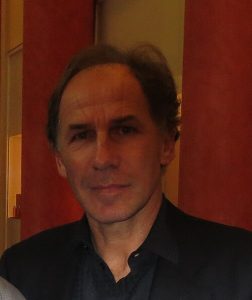
Franco Baresi was the central intelligence system of Arrigo Sacchi’s AC Milan, an elite defensive organizer who transformed the back line into a synchronized tactical unit. As a libero, he operated between defense and midfield, reading danger early and reshaping Milan’s defensive structure before attacks could fully develop.
In Sacchi’s high-pressing system, defensive coordination was non-negotiable. The back line had to move as a single organism, compressing space and executing one of the most advanced offside traps in football history. Baresi was the player who made that system function under real match conditions. He dictated timing, stepped out to intercept transitions, and constantly adjusted the defensive line to maintain perfect compactness.
Even in later years under Fabio Capello, when Milan became more pragmatic, Baresi remained the structural constant, ensuring that defensive discipline survived tactical transitions and personnel changes.
Enforcing the Blueprint
Under Arrigo Sacchi, Baresi was not simply a defender executing instructions, he was the on-field interpreter of one of football’s most demanding tactical frameworks. Sacchi’s system required total synchronization, and Baresi became its most reliable enforcement point during matches.
Rather than micromanaging the back line, Sacchi trusted Baresi to correct spacing, adjust the defensive height, and maintain collective movement without waiting for touchline input. The relationship was built on intellectual alignment: Sacchi designed the system, Baresi ensured it functioned under pressure.
This trust continued under Capello, where Baresi’s role as the defensive anchor became even more vital in high-stakes European fixtures.
Tactics in Motion
The most famous validation of Milan’s defensive system came in the 1994 UEFA Champions League Final, where Milan defeated Barcelona 4–0. However, Baresi himself did not feature in that match due to suspension, alongside Alessandro Costacurta. In his absence, Paolo Maldini and a reshuffled defensive line executed Capello’s structure flawlessly.
The significance of this moment lies not in Baresi’s presence, but in the system he helped build. Milan’s defensive organization functioned so precisely that even without its primary commander, the structure held firm on the biggest stage.
Throughout his career, opponents consistently found themselves caught by Milan’s offside trap and suffocated by their defensive timing, hallmarks of a system Baresi had effectively managed from within during his playing years.
Arrigo Sacchi himself frequently emphasized Baresi’s extraordinary reading of the game, noting that he understood not just defensive actions, but the entire rhythm of matches. In many ways, Baresi was the tactical foundation of Milan’s dominance, less a participant in the system than its internal architect.
2. Franz Beckenbauer (Bayern Munich & West Germany)
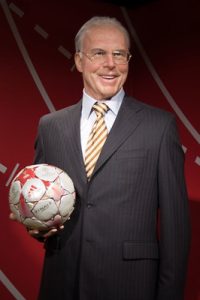
Franz Beckenbauer did not just play football, he redesigned it while it was happening. As the originator and ultimate expression of the modern libero role, “Der Kaiser” transformed defensive responsibility into strategic authorship. From the back, he controlled tempo, initiated attacks, and reorganized his entire team with a calm authority that made him look less like a defender and more like a conductor of a symphony.
At Bayern Munich and with West Germany, Beckenbauer’s influence stretched across all phases of play. Defensively, he read danger early and stepped out of the back line to intercept transitions before they fully developed. In possession, he became the first playmaker, often carrying the ball forward into midfield and dictating the rhythm of buildup play. His positioning alone forced opponents to adjust their attacking structure, because no system could account for a defender who refused to stay confined to defense.
In many ways, Beckenbauer functioned as a tactical override button, constantly adjusting his team’s shape in real time, often without waiting for instruction from the sidelines.
Voice of the Touchline
Beckenbauer’s relationship with coaches such as Udo Lattek at Bayern and Helmut Schön with West Germany was defined by extraordinary trust. Rather than treating him as a traditional defender, both managers effectively delegated significant tactical autonomy to their captain.
Helmut Schön, in particular, recognized that Beckenbauer’s understanding of the game surpassed conventional positional roles. During West Germany’s most important matches, Beckenbauer was frequently allowed to interpret tactical instructions on the pitch, adjusting defensive structure and initiating attacks based on what he observed.
Lattek, during Bayern’s rise to European dominance in the 1970s, benefited from Beckenbauer’s ability to stabilize matches without external guidance. The relationship was not hierarchical in the traditional sense. It was collaborative, with Beckenbauer acting as an extension of the coaching staff during live play.
A Case in Point
The clearest demonstration of Beckenbauer’s on-field management came during West Germany’s triumphant 1974 FIFA World Cup campaign. As captain, he did far more than organize the defense, he controlled the emotional and tactical rhythm of the entire team. His positional adjustments allowed West Germany to absorb pressure, transition smoothly, and eventually outmaneuver the Netherlands in one of the most tactically significant finals in football history.
Teammates often described how Beckenbauer would silently reorganize the team with gestures and movement alone, eliminating the need for constant verbal instruction. His authority was implicit; players instinctively adjusted to his positioning.
Even opponents recognized his influence. Johan Cruyff’s Netherlands, famed for Total Football, found their fluid system repeatedly disrupted by Beckenbauer’s ability to anticipate and neutralize space before it could be exploited.
He was later described by many coaches and analysts as a “player-manager on the field,” a phrase that captures his rare ability to merge tactical intelligence with elite execution.
Beckenbauer did not just lead teams, he rewrote their structure while playing, making him one of the most complete on-pitch tacticians the sport has ever produced.
1. Johan Cruyff (Ajax & Netherlands)
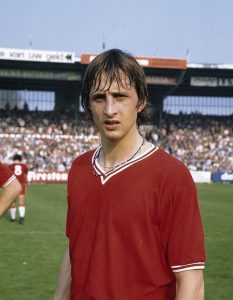
Johan Cruyff was not merely a captain who influenced matches, he was the living embodiment of “Total Football” in motion. At Ajax and with the Netherlands, his role transcended positional labels. Officially a forward or attacking midfielder, Cruyff operated as a universal connector, constantly drifting between lines, dictating tempo, and reorganizing his team’s structure in real time.
His genius lay in spatial manipulation. Cruyff didn’t just exploit space… he created it for others. He would drop deep to initiate buildup, drift wide to stretch defensive blocks, and then reappear centrally as the decisive attacking force. In doing so, he effectively acted as the tactical brain of the entire team, ensuring that every player understood when and where to move within Rinus Michels’ fluid system.
Unlike traditional captains who reacted to instructions, Cruyff generated instructions through movement. His positioning dictated Ajax’s and later the Netherlands’ entire attacking identity, turning football into a constantly evolving positional puzzle that opponents struggled to solve.
The Sideline Symbiosis
Cruyff’s defining managerial relationship was with Rinus Michels, the architect of Total Football. Michels created a revolutionary framework based on interchangeability and pressing, but it was Cruyff who brought it to life on the pitch. The relationship was intensely collaborative, built on mutual intellectual respect.
Michels famously gave Cruyff significant autonomy, trusting him to interpret tactical ideas during matches. In many ways, Cruyff acted as Michels’ on-field extension, an active translator of theory into live execution. Their partnership blurred the line between coach and captain, with Cruyff effectively functioning as a co-strategist during games.
The Verdict from the Dugout
The clearest demonstration of Cruyff’s on-field management came during Ajax’s three consecutive European Cup triumphs (1971–1973) and the Netherlands’ iconic run to the 1974 World Cup final. In both cases, Cruyff orchestrated not just attacks but the entire team’s structure, constantly repositioning teammates and dictating rhythm through movement and communication.
One of the most famous moments came in the 1974 World Cup match against Sweden, where Cruyff executed his legendary “Cruyff Turn,” a single action that symbolized his philosophy: deceive, disrupt, and reorganize space instantly. But beyond moments of skill, it was his constant tactical guidance visible even on television that defined his leadership.
Teammates often described him as the “coach on the pitch,” while Michels himself acknowledged that Cruyff understood the game at a level that allowed him to shape it independently.
Cruyff didn’t just play within a system. He was the system… constantly rewriting it in real time. That is why he stands at the pinnacle of football captains who effectively managed their teams from the pitch.
The Manager’s Dilemma: Who Missed the Cut?
Not every on-pitch general makes the top 10, but these captains came painfully close, each of them effectively acted as a secondary manager within their teams, shaping structure, mentality, and tactical discipline in real time.
Fernando Hierro (Real Madrid & Spain) was one of the most complete defender-midfield hybrids of his era, often stepping into midfield to control matches even from the back line. Under managers like Vicente del Bosque and Fabio Capello, Hierro’s range of passing and positional intelligence allowed him to function as a deep organizer, dictating build-up play and defensive shape simultaneously. At his peak, Real Madrid often looked more stable because Hierro quietly adjusted their structure without needing instruction.
Javier Zanetti (Inter Milan & Argentina) embodied tactical intelligence through relentless consistency and adaptability. Whether deployed as a full-back, wing-back, or midfielder, Zanetti under managers like José Mourinho and Roberto Mancini became Inter’s structural constant. Mourinho frequently relied on him to stabilize transitions and maintain tactical discipline in high-pressure Champions League matches, trusting Zanetti to execute game-state adjustments on the fly. His leadership was quiet but omnipresent, he rarely needed to speak loudly to control a match.
Vincent Kompany (Manchester City & Belgium) represents the modern evolution of the player-manager archetype. Under Roberto Mancini and later Manuel Pellegrini, Kompany organized Manchester City’s defensive structure, but his influence became especially significant in reading pressing triggers and controlling high lines. Even before his managerial career, he was already functioning as a tactical extension of the coaching staff, especially in title-deciding moments where City’s defensive discipline depended heavily on his in-game direction.
Each of these players operated just below the elite tier of on-pitch managers, but their influence on structure, control, and tactical clarity made them indispensable architects of their teams’ success.
The Extinction of the On-Pitch Tactician
Modern football has become increasingly centralized around the touchline. Where once captains like Beckenbauer or Vieira were trusted to interpret and adjust tactical reality in real time, today’s elite teams are often extensions of highly detailed managerial systems. Coaches such as Pep Guardiola and Mikel Arteta micro-manage structure, pressing triggers, and positional rotations with a level of precision that leaves far less room for autonomous decision-making on the pitch.
With constant sideline instruction, video-based preparation, and automated tactical patterns drilled on the training ground, the modern player is less a field strategist and more an executor of predefined roles. Even captains now often function as emotional leaders or communicators of pre-set instructions rather than independent tactical operators. The spontaneous “on-pitch manager” archetype has been gradually replaced by systems where almost every scenario has already been anticipated from the bench.
This evolution has raised overall tactical consistency in the modern game, but it has also quietly reduced the need for players who can independently redesign matches in real time. The space once occupied by footballing intellects like Cruyff, Matthäus, or Lahm now exists within coaching staffs rather than on the grass.
The Final Thought
These ten legends represent more than great captains, they represent a lost layer of football intelligence, an era when the most influential tactician in the stadium was sometimes not the man in the dugout, but the one wearing the armband.