
A Russian tsar dies suddenly. Years later, a mysterious monk appears in Siberia with knowledge he shouldn’t have. Coincidence—or one of history’s most convincing disappearances?
In November 1825, Tsar Alexander I of Russia officially died of typhus at the age of 47. However, almost nothing about the sudden demise of the man who defeated Napoleon Bonaparte made sense to the Russian public.
His lead coffin remained sealed. His grieving widow exhibited bizarre behavior. And perhaps most suspiciously, eleven years later, a mysterious Siberian hermit named Feodor Kuzmich emerged possessing an inexplicable, intimate knowledge of Romanov court politics.
Today, the theory that the “Sphinx of Europe” faked his own death to seek spiritual penance remains one of the most enduring conspiracies in royal history.
Here are ten of the most compelling historical clues that Tsar Alexander I may have successfully vanished into anonymity.
10. The Death Was Suspiciously Remote and Convenient
Alexander died in the remote southern port town of Taganrog, roughly 1,200 miles away from the watchful eyes of the St. Petersburg court. Officially, he was there to improve his wife’s failing health. However, historians point out that the timing and location were almost too perfect for a staged disappearance.
Alexander was severely depressed, heavily burdened by the guilt of his role in the assassination of his father (Emperor Paul I), and deeply disillusioned with his absolute power. A distant town with a limited royal entourage provided the exact logistical cover needed to slip away without immediate aristocratic scrutiny.
9. The Body Was Never Properly Verified
When Alexander’s body was finally transported back to St. Petersburg, it was placed in a sealed lead coffin. In a highly unusual move for an era obsessed with grandiose royal ceremonies and public viewings, very few people were allowed to clearly see the Tsar’s face. Those in the royal guard who did catch a glimpse reportedly stated that the bloated, discolored features looked absolutely nothing like their sovereign.
This lack of transparent identification instantly opened the door to rumors that a body double—possibly a recently deceased soldier who resembled the Tsar—had been swapped into the casket.
8. Empress Elizabeth’s Bizarre Reaction
The behavior of Alexander’s wife, Empress Elizabeth Alexeievna, deeply puzzled her contemporaries. Instead of exhibiting the hysterical public mourning expected of a 19th-century royal widow, her letters and actions were remarkably restrained and distant.
According to court accounts, she made cryptic remarks hinting that the tragedy was a matter of divine will rather than a literal death. Adding fuel to the conspiracy, Elizabeth herself died under murky circumstances just a few months later in 1826, leading some to suspect she either joined him in exile or was silenced to protect the secret.
7. He Openly Discussed Abdicating the Throne
Unlike monarchs who clung to power until their dying breath, Alexander I spent the later years of his life openly fantasizing about abandoning the throne. Following the Napoleonic Wars, he fell under the influence of religious mystics like Baroness von Krüdener and grew increasingly withdrawn.
Witnesses within the court claimed the Tsar frequently expressed a desperate desire to abdicate, lay down his earthly burdens, and “retire to a quiet farm on the Rhine.” His sudden death perfectly mirrored his most vocalized, literal desires.
6. The Sudden Appearance of Feodor Kuzmich
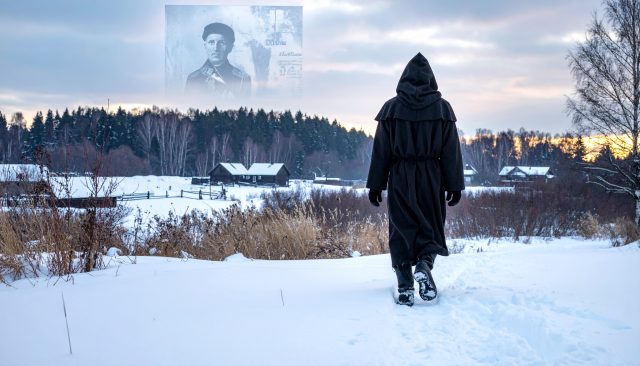
The conspiracy gained massive physical weight in 1836—eleven years after the Tsar’s official death—when a wandering holy man was arrested in the Perm province for traveling without a passport. Calling himself Feodor Kuzmich, the man refused to reveal his true identity or origins.
He accepted a brutal lashing and forced exile to Siberia with the quiet grace of a religious martyr. His sudden arrival, combined with his stoic refusal to explain his past, immediately caught the attention of locals who noticed he did not carry himself like a typical Russian peasant.
5. The Monk Possessed Classified Military Knowledge
Once settled in the Siberian city of Tomsk, Kuzmich began to display an education that completely contradicted his status as a vagabond. He spoke multiple foreign languages, understood the intricate etiquette of the aristocracy, and most surprisingly, possessed highly classified knowledge of the 1812 military campaigns against Napoleon.
He could accurately recount the specific maneuvers of Russian generals and the layout of St. Petersburg palaces—details that a commoner in remote Siberia could not possibly know without having lived them.
4. The Aristocracy Treated Him With Secret Deference
Members of the Russian elite who journeyed to Siberia and encountered Kuzmich often treated the hermit with a highly suspicious level of reverence. Local aristocrats, such as the wealthy merchant Semyon Khromov, fiercely protected the monk and built him a private cabin.
There are even enduring rumors that the future Tsar Alexander II secretly visited Kuzmich during a royal tour of Siberia in 1837. While no one openly declared him to be the former Tsar—an act that would invite charges of treason—the respectful, almost fearful tone of these interactions suggested the elite were playing along with a highly classified royal secret.
3. He Spoke in Vague, Deflective Riddles
When directly pressed about his origins or his clear aristocratic bearing, Kuzmich never broke character. Instead of inventing a fake backstory, he deflected questions, changed the subject, or answered in spiritual riddles.
According to lore, when Khromov explicitly asked Kuzmich on his deathbed if he was actually Tsar Alexander I, the monk simply pointed upward and said, “God knows.” A normal man facing execution or exile would invent a history to save himself; a man actively hiding a world-altering identity would accept the punishment to maintain the lie.
2. The Russian Orthodox Church Quietly Embraced the Myth
While the state naturally suppressed any official talk of a faked death, the Russian Orthodox Church treated Feodor Kuzmich with deep, institutional reverence. Rather than dismissing him as a royal imposter or a fraud, the Church leaned into his holy reputation. In 1984, the Church officially canonized him as a saint (Righteous Feodor of Tomsk). While they do not explicitly state he was the Romanov Emperor, their quiet veneration of the man ensures the historical door remains firmly open.
1. The Rumor of the Empty Tomb
The legend refuses to die largely because the physical evidence remains aggressively disputed. Following the Russian Revolution, rumors leaked that Soviet authorities secretly opened Tsar Alexander I’s tomb in the Peter and Paul Fortress in the 1920s—and found it completely empty.
While the Soviet government never officially confirmed this, the persistent claim has driven modern historians to demand closure. In recent years, the Russian Orthodox Church and historical societies have debated conducting DNA testing on the remains of Kuzmich to finally compare them to the Romanov bloodline.
Conclusion
Did the most powerful man in Europe successfully fake his death, trade his crown for a coarse robe, and spend his final decades wandering the frozen expanses of Siberia? While modern history requires a definitive smoking gun, the legend of Tsar Alexander I and Feodor Kuzmich thrives precisely because of the overwhelming circumstantial evidence.
The timeline of the Tsar’s spiritual crisis, the highly suspicious nature of his remote death, and the inexplicable aristocratic knowledge of a nameless monk stack together just a little too neatly to be dismissed as mere folklore.
Ultimately, this story endures because it taps into a deeply human fascination: the idea that the ultimate flex of absolute power isn’t conquering the world, but successfully walking away from it.