
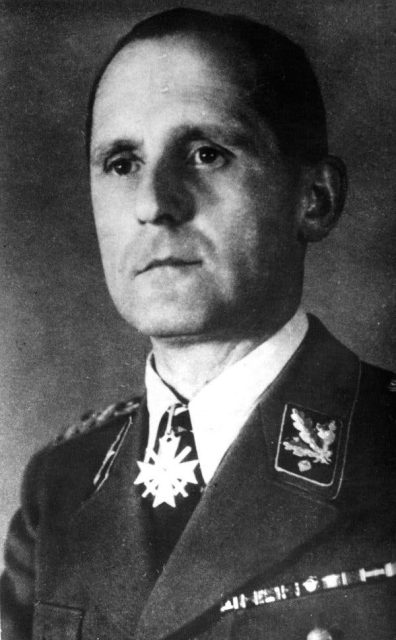
The feared head of the Gestapo vanished as Nazi Germany collapsed. No confirmed grave, no arrest, and decades of conflicting intelligence reports have fueled speculation that Heinrich Müller may have become one of the Cold War’s biggest secrets.
Few figures vanished as completely, or as conveniently, as Heinrich Müller.
As the chief of the Gestapo, Müller was one of the most feared men in the Third Reich. He oversaw vast intelligence networks, brutally dismantled the German resistance, and operated as a primary architect of the Holocaust.
Then, on May 1, 1945, he walked out of the Führerbunker in Berlin and disappeared.
Unlike almost every other senior Nazi, Müller was never captured, never put on trial at Nuremberg, and never conclusively identified among the dead. Over the decades, one terrifying theory has proven especially persistent: American intelligence secretly protected and recruited him.
While most mainstream historians consider this a myth born out of Cold War paranoia, declassified files prove that the CIA and Army intelligence chased his ghost for decades. Here are ten reasons why the legend that the CIA hid Heinrich Müller refuses to die.
10. The Ultimate Disappearance
When Berlin fell in 1945, the highest ranking Nazi officials were either captured by the Allies, committed suicide, or left behind highly visible corpses.
Müller did none of these things. He simply vanished into the rubble. There is no confirmed grave, no verified postwar sighting, and no official arrest record. For a man who controlled the most heavily documented secret police force in human history, leaving absolutely zero trace of his own fate felt impossible to the public.
9. America Was Openly Recruiting Former Nazis
The conspiracy theory does not exist in a vacuum. It is grounded in the uncomfortable reality of the early Cold War.
Through highly classified initiatives like Operation Paperclip, American intelligence agencies actively recruited hundreds of former German scientists, military engineers, and intelligence specialists to keep them out of Soviet hands.
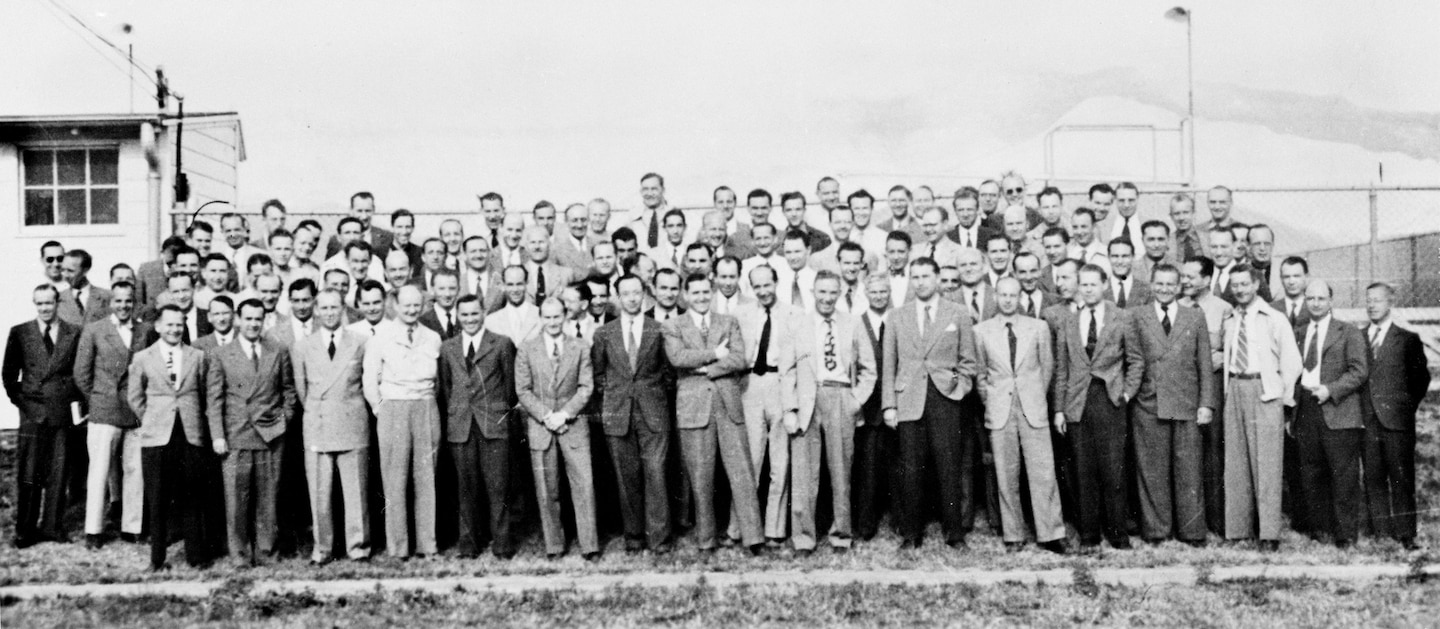
Because the U.S. was demonstrably willing to overlook the dark pasts of useful assets like Wernher von Braun, theorists argue that a man with Müller’s unparalleled intelligence background would have been considered a highly coveted prize.
8. He Was the Ultimate Intelligence Asset
Unlike Hitler or Goering, Müller was not a flamboyant politician. He was a ruthless, calculating intelligence professional.
Before and during the war, he built massive networks of informants and managed complex counterespionage operations against the Soviet Union. As the Iron Curtain descended, the West was desperate for detailed information on Soviet tactics. Supporters of the survival theory argue that Müller’s encyclopedic knowledge of Eastern European spy networks would have made him the most valuable anticommunist asset on earth.
7. The Postwar Investigations Were a Mess
In the chaotic years immediately following the war, the U.S. Counter Intelligence Corps and the OSS produced deeply conflicting reports regarding Müller’s fate.
Some field agents suggested he died during the chaotic breakout from the Reich Chancellery. Others claimed he successfully escaped to South America. Because the intelligence agencies themselves could not get their stories straight in the 1940s, it created the lasting public impression of an active, deliberate coverup.
6. The Gehlen Organization Rumors
Following the war, the United States helped fund and establish the Gehlen Organization. This was an intelligence agency formed entirely of former Nazi spies and led by Wehrmacht General Reinhard Gehlen.
Over the years, persistent rumors placed Müller deep within this shadowy network, operating under a false name while feeding Soviet intelligence to the CIA. While these rumors were never conclusively verified, the fact that American intelligence was funding his former colleagues added massive fuel to the fire.
5. The CIA Was Still Hunting Him in the 1960s
If the American government was entirely convinced Müller died in 1945, they certainly did not act like it.
Thanks to the Nazi War Crimes Disclosure Act of 1998, millions of pages of classified documents were released. They revealed that the CIA and Army intelligence kept the Müller file open for decades. In the 1960s, American intelligence agents were still actively tapping the phones of his former mistresses and relatives, listening for any sign that the Gestapo chief was trying to make contact.
Key insight: Intelligence agencies routinely monitor unresolved cases. However, to conspiracy theorists, the fact that the CIA was still searching for him 20 years later proved that he successfully slipped the net.
4. The Soviet Defection Theory
One complication often overlooked in the CIA conspiracy theory is that the Soviet Union wanted him just as badly.
A massive rival theory claims that Müller recognized Germany was doomed and secretly defected to the KGB. Some historians believe he would have been far more useful to Stalin than to Truman, as he possessed the names of every German spy operating inside Russian borders. The fact that both superpowers had strong motives to hide him only deepens the speculation.
3. The Glaring Hole at Nuremberg
The Nuremberg Trials were designed to bring the architects of the Third Reich to public justice and provide closure to a traumatized world.
Müller’s absence on the defendant’s bench was glaring. As one of the highest ranking officials completely unaccounted for, his disappearance created a historical vacuum. Without a trial, a public confession, or an execution, the public never received the closure required to let the Gestapo chief fade into history.
2. He Knew Where the Bodies Were Buried
This is the core argument driving the conspiracy: Müller knew too much.
He understood the inner workings of European underground networks, secret financial accounts, and the blackmail files of high ranking officials better than almost anyone alive. If intelligence agencies were willing to recruit low level informants to win the Cold War, theorists argue it is entirely plausible they would strike a deal with the devil himself to gain access to his mental archives.
1. The Declassified Files Did Not Kill the Legend
Most modern historians agree that the simplest explanation is the true one. Heinrich Müller was killed during the Battle of Berlin in May 1945, and his body was lost in a mass grave.
However, when the CIA finally declassified his massive dossier in the early 2000s, it failed to provide a definitive smoking gun. There was no indisputable proof of his death. And when one of history’s most powerful, cunning secret policemen vanishes into a fog of classified documents and missing bodies, the legend will always outlive the facts.
Conclusion
Did American intelligence hide Heinrich Müller?
There is no verified evidence proving that they did. Most historians remain highly skeptical of the claim and consider his death in the ruins of Berlin the most likely explanation.
Yet the theory persists because it sits right at the intersection of two undeniable historical facts. Müller completely disappeared, and Cold War intelligence agencies were more than willing to work with former enemies when it suited their strategic interests. Between those two realities lies a dark mystery that continues to fascinate researchers, conspiracy theorists, and history enthusiasts to this day.