
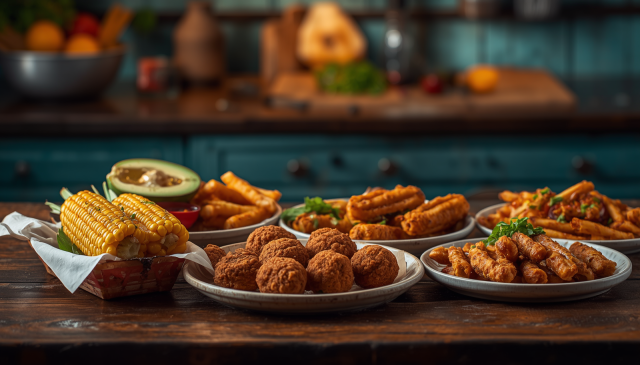

Street food has a way of transporting you, one bite of smoky elote or a perfectly sauced bánh mì can feel like stepping into a crowded night market halfway across the world. The problem is that most people don’t have the time, budget, or travel freedom to chase those flavors in their country of origin. Restaurant versions often come at a premium, and many assume these dishes are too complex to recreate at home without professional equipment.
This guide changes that. Inside, you’ll discover 10 authentic street food masterpieces you can realistically execute in a normal home kitchen, using everyday ingredients and straightforward techniques. From crispy falafel to golden arancini, each recipe is broken down for practical success without sacrificing flavor or texture.
These dishes were carefully selected for their accessibility, consistency, and high success rate for home cooks. Each one relies on repeatable methods and widely available ingredients, proving that world-class street food is absolutely within reach and no plane ticket required.
10. Spanish Churros
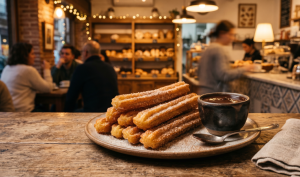
Spanish churros are a cornerstone of Iberian street food culture. Simple, fast, and built for one purpose: frying to a perfect crisp and dunking into thick hot chocolate. Sold from churrerías and street carts across Madrid and beyond, they are naturally vegan and rely on a minimalist dough that transforms into something light, crunchy, and deeply satisfying when cooked at high heat.
What defines authentic churros is their structural purity. There is no richness in the dough itself, no butter, no sugar… just a lean mixture that fries into a crisp shell with a slightly airy interior. The sweetness comes later, from a generous coating of sugar after frying and the traditional pairing with rich, almost pudding-like hot chocolate. The result is a snack that is simple in composition but precise in execution.
Pro Tip: Keep the dough lean and hot-water based. Just flour, boiling water, and salt. The simplicity is what creates the signature crisp exterior and light interior.
What You’ll Need
- 1 cup all-purpose flour
- 1 cup boiling water
- ½ teaspoon salt
- Vegetable oil for frying
- ½ cup sugar (for coating)
- Optional: thick hot chocolate for serving
How to Make It
- Bring water to a boil and add salt.
- Pour boiling water into the flour and mix quickly until a smooth dough forms.
- Let the dough cool slightly until safe to handle.
- Transfer to a piping bag fitted with a star tip.
- Heat oil to 350°F (175°C).
- Pipe strips of dough directly into the hot oil, cutting to length.
- Fry until golden brown and crisp on all sides.
- Remove and drain on paper towels.
- Roll in sugar while still warm and serve immediately.
Why This Recipe Works
The high hydration from boiling water gelatinizes the flour, creating a dough that puffs slightly in hot oil while maintaining structure. Without added fat or sugar, the exterior fries into a crisp shell that contrasts beautifully with the light interior, delivering the unmistakable texture of authentic Spanish street churros.rast between crunchy exterior and fluffy interior that defines authentic Spanish churros.
9. Canadian Poutine

Few dishes represent Canadian comfort food better than poutine. Born in the province of Quebec and popularized throughout Montreal’s vibrant food scene, this humble street-food masterpiece transforms three simple ingredients into something unforgettable. Crispy fries form the foundation, fresh cheese curds add their signature squeaky bite, and rich brown gravy ties everything together in a warm, savory blanket of flavor.
The appeal of poutine lies in its contrast of textures. Every forkful delivers crunchy fries, creamy cheese curds, and silky gravy. It’s indulgent without being complicated, making it a favorite late-night street food and one of Canada’s most iconic culinary creations. While countless variations exist today, the traditional version remains the gold standard.
Pro Tip: Temperature is everything. The fries must be blisteringly hot right out of the oil, and the gravy must be boiling to ensure the cheese curds melt just enough to become perfectly squeaky and gooey.
What You’ll Need
- 4 large russet potatoes, cut into fries
- Vegetable oil for frying
- 2 cups fresh cheese curds
- 2 tablespoons butter
- 2 tablespoons all-purpose flour
- 2 cups beef or chicken stock
- Salt and black pepper to taste
How to Make It
- Soak the cut potatoes in cold water for 30 minutes, then drain and pat dry.
- Fry the potatoes at 325°F (163°C) for 4–5 minutes until softened but not browned.
- Remove and let them rest for 10 minutes.
- Increase the oil temperature to 375°F (190°C) and fry again until golden and crispy.
- Meanwhile, melt the butter in a saucepan and whisk in the flour to form a roux.
- Slowly add the stock, whisking constantly until a smooth gravy forms.
- Simmer until thickened, then season with salt and pepper.
- Place the hot fries in a serving bowl and immediately scatter the cheese curds over them.
- Pour the boiling gravy over the top and serve at once.
Why This Recipe Works
Double-frying creates fries sturdy enough to stand up to the gravy without becoming soggy. Fresh cheese curds provide the authentic texture that defines true poutine, while a rich homemade gravy delivers the savory depth that transforms a simple plate of fries into Canada’s most beloved street-food classic.
8. Vietnamese Bánh Mì

Bánh mì is one of the most iconic street foods in the world. A product of Vietnam’s culinary evolution and its adaptation of the French baguette into something entirely its own. Found everywhere from Hanoi to Ho Chi Minh City, it is a high-impact sandwich built on contrast: crisp bread, rich savory fillings, pickled vegetables, fresh herbs, and a sharp hit of chili heat.
What defines a great bánh mì is balance. The bread provides structure and crunch, while pâté, meats, and mayonnaise add richness and depth. Pickled carrots and daikon cut through with acidity, and fresh cilantro and chilies bring brightness and heat. Every bite is engineered to be bold, layered, and never heavy, making it one of the most efficient and satisfying street meals ever created.
Pro Tip: The bread is everything. Traditional Vietnamese baguettes achieve their airy interior and thin, glass-like crust through high-protein wheat flour, dough conditioning, and aggressive steam-baking, not rice flour. If using a standard baguette, hollow out some of the soft interior to maintain the ideal filling-to-bread ratio and preserve the signature crunch.
What You’ll Need
- 2 Vietnamese-style baguettes or small French baguettes
- 4 tablespoons chicken or pork pâté
- 8 ounces roasted pork, grilled chicken, or Vietnamese cold cuts
- 1 cup pickled carrots and daikon
- ½ cucumber, thinly sliced
- Fresh cilantro sprigs
- 1 small chili or jalapeño, thinly sliced
- 2 tablespoons mayonnaise
- Soy sauce or Maggi seasoning to taste
How to Make It
- Slice the baguettes lengthwise without cutting all the way through.
- Lightly toast the bread to restore crispness.
- Spread mayonnaise on one side and pâté on the other.
- Layer in the chosen protein evenly.
- Add pickled carrots and daikon.
- Top with cucumber, cilantro, and sliced chili.
- Finish with a light drizzle of soy sauce or Maggi seasoning.
- Gently press, slice, and serve immediately.
Why This Recipe Works
The strength of bánh mì lies in contrast engineering. The crust provides structural crunch, while the airy interior absorbs sauces without collapsing. Pickled vegetables introduce acidity to balance the richness of meats and pâté, and fresh herbs lift the overall profile. Proper assembly ensures every bite hits sweet, salty, sour, spicy, and savory in perfect sequence.t shines while delivering the signature crunch that has made this Vietnamese street-food icon famous around the world.
7. Italian Arancini (Risotto Balls)
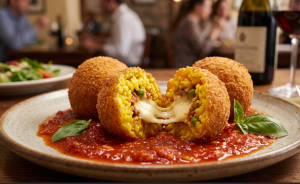
Arancini are one of Sicily’s most beloved street-food treasures, transforming humble risotto into golden, crispy spheres of pure comfort. Named after their resemblance to small oranges, these fried rice balls feature a crunchy breadcrumb coating that gives way to creamy rice and a savory filling. Whether stuffed with ragù, mozzarella, peas, or a combination of all three, arancini deliver a satisfying contrast of textures that has made them a staple of Sicilian food culture for generations.
What makes arancini so irresistible is the journey from the first bite to the last. The crisp shell crackles beneath your teeth before revealing rich, flavorful risotto and a molten center. Originally created as a practical way to use leftover risotto, they have evolved into a celebrated street-food masterpiece that showcases Italy’s talent for turning simple ingredients into something extraordinary.
Pro Tip: The risotto must be chilled overnight. Trying to form and bread warm risotto is a recipe for a messy, falling-apart disaster.
What You’ll Need
- 4 cups chilled leftover risotto
- 4 ounces mozzarella cheese, cut into small cubes
- 1 cup cooked meat ragù (optional)
- 1 cup all-purpose flour
- 2 eggs, beaten
- 1½ cups breadcrumbs
- Vegetable oil for frying
- Salt and black pepper to taste
How to Make It
- Place a scoop of chilled risotto in your hand and flatten it slightly.
- Add a cube of mozzarella and a spoonful of ragù, if using.
- Enclose the filling with more risotto and shape into a compact ball.
- Repeat until all the risotto has been used.
- Roll each ball in flour, then dip in beaten egg, and coat thoroughly with breadcrumbs.
- Heat oil to 350°F (175°C).
- Fry the arancini in batches for 4–5 minutes until deep golden brown.
- Transfer to a paper towel-lined plate to drain.
- Serve hot while the center is still creamy and melted.
Why This Recipe Works
Chilling the risotto overnight allows the starches to firm up, making the rice easy to shape and less likely to fall apart during frying. The breadcrumb coating seals in moisture while creating a crisp exterior, resulting in the perfect contrast between crunchy shell, creamy risotto, and molten filling that defines authentic Sicilian arancini.
6. Indian Aloo Tikki (Spiced Potato Patties)
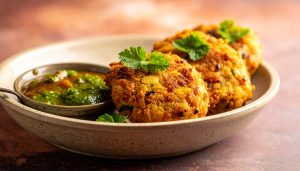
Aloo tikki is one of North India’s most iconic street snacks, found sizzling on griddles across bustling markets from Delhi to Lucknow. These spiced potato patties are crisp on the outside, soft and fluffy inside, and layered with warming spices that make them instantly addictive. Often served with chutneys, yogurt, or tucked into chaat, they are the backbone of India’s vibrant street-food culture.
What sets aloo tikki apart is its ability to deliver bold flavor with minimal ingredients. The potatoes act as a neutral canvas for cumin, coriander, chili, and fresh herbs, while the pan-fried crust provides that essential crunch. Whether eaten on their own or as part of a loaded chaat, they are a perfect example of how simple street food can still feel deeply satisfying and complex.
Pro Tip: Use starchy potatoes (like Russets) and ensure they are completely cool and dry before mashing. A spoonful of cornstarch or rice flour in the mix guarantees a glass-like crunch.
What You’ll Need
- 4 large starchy potatoes (Russet or similar)
- 1–2 green chilies, finely chopped
- 1 teaspoon grated ginger
- ½ teaspoon cumin powder
- ½ teaspoon coriander powder
- ½ teaspoon red chili powder (to taste)
- 2 tablespoons fresh coriander leaves, chopped
- Salt to taste
- 2 tablespoons cornstarch or rice flour
- Oil for shallow frying
How to Make It
- Boil potatoes until tender, then drain thoroughly.
- Let them cool completely and ensure no moisture remains.
- Mash the potatoes until smooth and lump-free.
- Add chilies, ginger, spices, coriander, and salt.
- Mix in cornstarch or rice flour to help bind the mixture.
- Shape into small, flat patties.
- Heat a skillet with a thin layer of oil.
- Fry patties on medium heat until golden and crisp on both sides.
- Drain on paper towels and serve hot with chutneys or yogurt.
Why This Recipe Works
Dry, starchy potatoes create a stable structure that crisps beautifully when fried. The addition of starch acts as a binding and crisping agent, ensuring the patties hold their shape while developing a crunchy exterior that contrasts perfectly with the soft, spiced interior typical of authentic aloo tikki.
5. Middle Eastern Falafel

Falafel is one of the Middle East’s most iconic street foods, celebrated across the Levant, especially in countries like Lebanon, Palestine, Israel, and Jordan. These deep-fried herb-and-legume fritters are known for their crisp golden crust and vibrant green, aromatic interior. Traditionally served in warm pita with tahini, pickles, and fresh vegetables, falafel is a cornerstone of fast, flavorful street eating.
What defines falafel is its contrast of texture and its intense herbal freshness. Parsley, cilantro, garlic, and warm spices create a bold, fragrant base that becomes light and airy when fried correctly. Each bite delivers a crunchy exterior that gives way to a soft, fluffy center packed with flavor. While chickpea-based versions dominate the Levantine region, falafel is a broad category with important regional variations.
In Egypt, the same concept appears as ta’ameya, where split fava beans replace chickpeas entirely. This variation produces a lighter, greener, and more delicate fritter that remains equally beloved in Egyptian street food culture.
Pro Tip: Never use canned chickpeas. For Levantine falafel, use dried chickpeas soaked overnight. For Egyptian ta’ameya, use soaked split fava beans, the base ingredient determines the entire texture.
What You’ll Need
- 1½ cups dried chickpeas (soaked overnight, not cooked)
or 1½ cups split fava beans (soaked overnight for ta’ameya) - 1 small onion, roughly chopped
- 3 cloves garlic
- 1 cup fresh parsley
- ½ cup fresh cilantro
- 1 teaspoon cumin powder
- 1 teaspoon coriander powder
- ½ teaspoon baking soda
- Salt and black pepper to taste
- Oil for frying
How to Make It
- Drain soaked legumes thoroughly (chickpeas or fava beans).
- Add legumes, onion, garlic, parsley, and cilantro to a food processor.
- Pulse until finely ground but not puréed.
- Transfer to a bowl and mix in spices, salt, and baking soda.
- Chill mixture for 30–60 minutes to firm up.
- Shape into small balls or patties.
- Heat oil to 350°F (175°C).
- Fry in batches until deep golden and crisp.
- Drain on paper towels and serve in pita with tahini and fresh vegetables.
Why This Recipe Works
Soaked, uncooked legumes preserve structure, allowing the mixture to bind naturally without becoming pasty. Chickpeas create a slightly denser Levantine-style falafel, while fava beans produce the lighter, fluffier Egyptian ta’ameya. In both cases, fresh herbs provide color, aroma, and lift, ensuring a crisp exterior and tender, flavorful interior.perfectly crisp exterior with a light, fluffy, and intensely flavorful interior that defines authentic Middle Eastern falafel.
4. Venezuelan Arepas

Arepas are the backbone of Venezuelan street food, simple cornmeal pockets that transform into something far greater than the sum of their ingredients. Found sizzling on griddles from Caracas to coastal food stalls, they are crisp on the outside, soft and steamy inside, and endlessly adaptable. Split them open and they become edible vessels for fillings like shredded beef, black beans, cheese, or avocado.
What makes arepas so essential is their neutrality and texture. The corn flavor is mild and comforting, allowing fillings to take center stage while the exterior delivers a satisfying bite. Naturally gluten-free and incredibly filling, they are both a staple food and a creative playground for cooks who want maximum flavor with minimal complexity.
Pro Tip: Pre-cooked cornmeal (masarepa) is non-negotiable, standard cornmeal won’t bind correctly. Sear them in a pan to get a crust, then finish them in the oven so the inside cooks through.
What You’ll Need
- 2 cups pre-cooked cornmeal (masarepa)
- 2½ cups warm water
- 1 teaspoon salt
- 1 tablespoon vegetable oil (plus more for cooking)
- Optional fillings: cheese, shredded beef, black beans, avocado
How to Make It
- In a bowl, mix masarepa and salt.
- Slowly add warm water, mixing until a soft dough forms.
- Let the dough rest for 5–10 minutes to hydrate fully.
- Divide into equal portions and shape into thick discs.
- Heat a skillet with a little oil over medium heat.
- Sear arepas for 4–5 minutes per side until golden crust forms.
- Transfer to a preheated oven at 350°F (175°C) and bake for 10–15 minutes.
- Let cool slightly, then slice open.
- Fill with your chosen ingredients and serve warm.
Why This Recipe Works
Masarepa is partially cooked and finely ground, which allows it to hydrate quickly and form a stable dough without gluten. The skillet sear locks in flavor and creates texture, while the oven finish ensures the interior cooks through evenly, resulting in the perfect balance of crisp exterior and soft, pillowy center.
3. Taiwanese Scallion Pancakes (Cong You Bing)
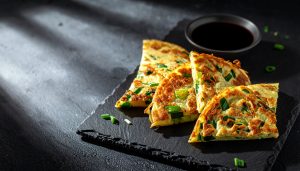
Scallion pancakes are a cornerstone of Taiwanese night market cuisine… they’re crispy, flaky, and irresistibly savory. Unlike batter-based pancakes, these are made from a simple dough that is transformed through technique into dozens of delicate layers. Served piping hot from street griddles, they’re golden on the outside, chewy in the center, and packed with fragrant scallions in every bite.
What makes cong you bing so addictive is the interplay of texture and aroma. The exterior shatters slightly when bitten, giving way to soft, laminated layers that pull apart with each tear. The scallions release a mild onion sweetness, while sesame oil adds a deep, nutty richness. It’s humble street food elevated entirely by method.
Pro Tip: The laminating process is everything. Rolling the dough flat, brushing it with sesame oil and scallions, rolling it into a tight cylinder, and coiling it like a snail shell creates the signature flaky layers.
What You’ll Need
- 2 cups all-purpose flour
- ¾ cup warm water
- ½ teaspoon salt (plus more for seasoning layers)
- 2 tablespoons sesame oil
- 1 cup finely chopped scallions
- Vegetable oil for frying
How to Make It
- Mix flour, salt, and warm water to form a soft dough.
- Knead until smooth, then rest for 30 minutes.
- Divide dough into 4 equal portions.
- Roll one portion into a thin sheet.
- Brush with sesame oil and sprinkle salt and scallions evenly.
- Roll into a tight log, then coil into a spiral.
- Flatten gently into a disc using a rolling pin.
- Heat oil in a skillet over medium heat.
- Fry each pancake until golden brown and crisp on both sides.
Why This Recipe Works
The layering technique traps thin sheets of dough separated by oil and scallions, which steam and crisp during frying. This creates the signature flaky structure that defines authentic scallion pancakes, delivering a perfect balance of crunch, chew, and savory depth in every bite.
2. German Currywurst

Currywurst is the undisputed king of Berlin’s late-night street food scene. A dish that turns a simple sausage into something unexpectedly addictive. Sliced bratwurst is smothered in a warm, spiced curry ketchup sauce and finished with a dusting of curry powder. Served with fries or a bread roll, it’s fast, filling, and deeply comforting in that unmistakable German street-food way.
What makes currywurst so memorable is its balance of smoky, tangy, and subtly sweet flavors. The sausage delivers a juicy, savory bite, while the sauce brings warmth from curry spice and brightness from tomato. It’s not complicated food, but it’s engineered for maximum satisfaction after dark in busy Berlin kiosks and food stands.
Pro Tip: The sauce is everything. Simmer high-quality ketchup with a splash of apple cider vinegar, a pinch of baking soda (to cut the acidity), and a generous spoonful of mild Indian curry powder.
What You’ll Need
- 4 bratwurst sausages
- 1 cup ketchup (high quality)
- 1–2 tablespoons curry powder (mild preferred)
- 1 tablespoon apple cider vinegar
- ½ teaspoon baking soda
- 1 teaspoon paprika (optional, for depth)
- Salt and black pepper to taste
- Vegetable oil for pan-frying
- Optional: fries or crusty bread for serving
How to Make It
- Pan-fry or grill the bratwurst until browned and cooked through.
- Remove and slice into bite-sized pieces.
- In a saucepan, warm the ketchup over low heat.
- Stir in curry powder, vinegar, and paprika.
- Add a pinch of baking soda to mellow the acidity and stir well.
- Simmer for 5–7 minutes until slightly thickened and aromatic.
- Pour the sauce generously over the sliced sausage.
- Finish with an extra dusting of curry powder on top.
- Serve immediately with fries or bread.
Why This Recipe Works
The ketchup base provides sweetness and body, while curry powder introduces warmth and complexity. The baking soda subtly neutralizes sharp acidity, creating a smoother, rounder sauce that clings perfectly to the sausage. The result is a street-food classic that feels both simple and engineered for maximum flavor impact.
1. Mexican Elote (Grilled Street Corn)

Elote is one of Mexico’s most beloved street snacks, found sizzling on charcoal grills in bustling markets and roadside stalls from Mexico City to Oaxaca. At its core, it’s simple grilled corn on the cob… but once it’s charred and coated in creamy, tangy, spicy toppings, it becomes an unforgettable explosion of flavor. Smoky, sweet corn meets cooling crema, sharp cheese, chili heat, and a squeeze of lime in every bite.
What makes elote so addictive is its layered contrast. The corn itself delivers natural sweetness and a subtle charred bitterness from the grill, while the coating adds richness, acidity, and heat. It’s messy, unapologetic street food meant to be eaten hot, held in hand, and enjoyed without restraint. Every bite captures the essence of Mexican street food culture: bold, vibrant, and perfectly balanced.
Pro Tip: Don’t substitute the cheese. If you can’t find Cotija, use crumbled feta. Parmesan doesn’t provide the right salty crumble or texture needed for authentic elote.
What You’ll Need
- 4 ears of fresh corn, husked
- 2 tablespoons mayonnaise
- 2 tablespoons Mexican crema (or sour cream)
- ½ cup Cotija cheese (or feta, crumbled)
- 1 teaspoon chili powder (or Tajín seasoning)
- 1 lime, cut into wedges
- 1 tablespoon butter (optional, for grilling)
How to Make It
- Preheat a grill or cast-iron pan over high heat.
- Lightly brush corn with butter if desired.
- Grill corn, turning frequently, until evenly charred.
- Mix mayonnaise and crema in a bowl.
- Brush the hot corn with the creamy mixture.
- Sprinkle generously with Cotija cheese.
- Dust with chili powder or Tajín.
- Finish with a squeeze of fresh lime juice.
- Serve immediately while hot and juicy.
Why This Recipe Works
High-heat grilling caramelizes the natural sugars in the corn, creating deep smoky sweetness that anchors the dish. The creamy coating clings to the kernels, while the cheese and chili add salt, heat, and texture. The lime cuts through the richness, ensuring every bite stays bright and balanced—exactly like authentic Mexican street-side elote.
Bring Global Street Food Into Your Kitchen
Cooking the world’s most iconic street foods does not require a commercial kitchen, specialized equipment, or years of formal culinary training. What it does require is attention to technique, respect for ingredients, and a willingness to get a little hands-on. From flaky Taiwanese scallion pancakes to smoky Mexican elote, each dish in this list proves that some of the most unforgettable flavors on the planet are built from simple methods executed well. Master the basics, and the rest follows naturally.
You now have a practical roadmap to recreate 10 global street food masterpieces in your own kitchen, each one designed to deliver maximum flavor with minimal complication.
Pick one recipe from this list and make it this week. Then drop a comment with the street food you’re starting with, or share your recreation on social media and tag your post so others can see your results. The best way to learn these dishes is not to read about them… but to cook them, plate them, and share them.