
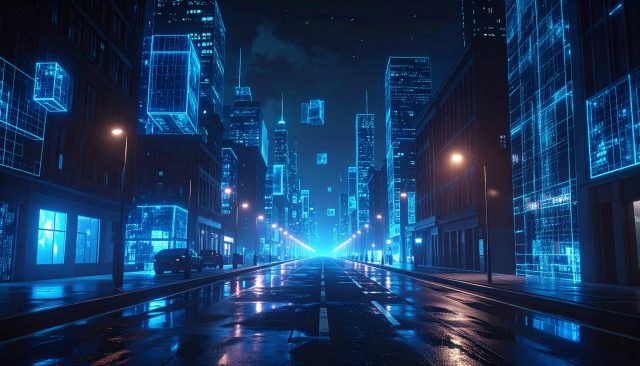

For thousands of years, philosophers asked whether reality is truly what it seems. Ancient thinkers questioned the nature of existence, while modern physicists have uncovered a universe that often behaves in ways that completely defy common sense. Today, one of the most provocative ideas comes not from science fiction, but from respected philosophers, computer scientists, and theoretical physicists. What if our entire universe is actually a sophisticated computer simulation?
Known as the Simulation Hypothesis, the theory suggests that everything we experience, from distant galaxies to our own private thoughts, could exist inside an unimaginably advanced computational system created by a civilization far beyond our own. While there is currently no hard scientific proof that this is true, several incredible observations have led researchers to seriously discuss the possibility. Some tech billionaires are even secretly funding research to figure out how to break us out of the simulation.
The clues below are not definitive evidence that we live in a matrix. Instead, they are unusual scientific observations, philosophical arguments, and unexplained phenomena that have fueled one of the most fascinating debates of the modern era. If you want to dive even deeper into the mysteries of our cosmic origins after reading this, check out our definitive guide on how the universe began.
Here are ten terrifying clues that suggest we might just be lines of code.
10. The Universe Appears to Have a Built In Speed Limit
Everywhere we look in the cosmos, one fundamental rule never seems to break. Nothing can travel faster than the speed of light.
According to Einstein and his theory of relativity, this cosmic speed limit of roughly 299,792 kilometers per second is absolute. No matter how powerful an engine becomes or how much energy is applied, this barrier remains completely unbroken. To believers in the simulation theory, this looks incredibly suspicious.
They argue this resembles a processing limit inside a computer. Video games and digital simulations often impose maximum speeds or rendering limits because hardware has finite processing resources. If a character moves too fast, the game engine crashes. If reality itself is being computed by a massive machine, perhaps the speed of light simply represents the maximum clock speed of the processor running our universe.
9. Space May Not Be Truly Continuous
For centuries, scientists assumed space was infinitely smooth. You could theoretically divide a distance in half forever. But modern quantum physics is far less certain about that concept.
Several theories of quantum gravity suggest that space and time may actually consist of incredibly tiny discrete units rather than being perfectly continuous. The smallest meaningful scale in the universe is known as the Planck length. It is a measurement so unfathomably small that the human brain cannot properly comprehend it.
Imagine zooming into a high resolution digital photograph. Eventually, the smooth image breaks down and individual square pixels become clearly visible. Supporters of the simulation idea suggest that the Planck length is exactly that. It is the literal pixel size of our universe. If reality has a smallest possible unit that cannot be divided any further, it strongly suggests that space itself is digitally constructed on a grid.
8. Quantum Particles Behave Strangely When Observed
One of the most famous and terrifying experiments in quantum physics is the double slit experiment.
When tiny particles such as electrons are fired through two narrow slits without anyone watching them, they produce an interference pattern on the wall behind them. This means they are behaving like a wave of pure potential. However, when scientists place a measuring device to observe which slit the particle actually travels through, the wave pattern instantly collapses. The particles suddenly behave like solid individual objects.
This bizarre phenomenon has puzzled physicists for nearly a century. Simulation enthusiasts point out that this is exactly how video games work. To save processing power, open world games do not fully render the environment behind you until you turn your camera to look at it. They suggest the universe conserves computational resources by only rendering reality as solid matter when a conscious observer is actively looking at it.
7. Mathematics Describes Reality With Unreasonable Precision
Why should abstract mathematics invented by the human brain describe the physical universe so perfectly?
Equations developed centuries ago by isolated mathematicians constantly predict entirely new cosmic phenomena decades before they are ever observed through a telescope. The equations of relativity predicted black holes and gravitational waves nearly a hundred years before humanity had the technology to actually detect them. The existence of antimatter and the Higgs boson were also mathematically proven long before experimental science caught up.
Nobel prize winning physicist Eugene Wigner famously described this chilling phenomenon as the unreasonable effectiveness of mathematics. Supporters of the simulation hypothesis argue that mathematics works so flawlessly because it is literally the underlying source code of our reality. We are simply discovering the programming language used by our creators.
6. The Universe Seems Remarkably Calibrated for Life
The universe is balanced on a knife edge. If several fundamental cosmic constants were even slightly different, reality would completely collapse.
If the strength of gravity was slightly stronger, the universe would have crushed itself into a black hole immediately after the Big Bang. If the mass of the electron or the strength of the nuclear force varied by a fraction of a percent, stars could never form and basic chemistry would be physically impossible. Life would absolutely not exist.
Many scientists try to explain this away using the multiverse theory, suggesting we just got incredibly lucky. However, simulation theorists suggest a much simpler answer. These physical values were intentionally selected. Just like a developer adjusting the gravity sliders in a video game engine to make the physics fun, the creators of our simulation perfectly calibrated the constants to produce a stable universe capable of generating conscious life.
5. Information Appears to Be Fundamental to Reality
For centuries, humans believed that the universe was made of solid matter. Then we realized matter was made of atoms. Then we realized atoms were mostly empty space. Now, theoretical physicists suggest that information itself might be the most fundamental ingredient of existence.
Legendary theoretical physicist John Archibald Wheeler summarized this radical shift with the famous phrase It from bit. According to his perspective, physical reality literally emerges from pure information. Everything you can touch, see, or feel is fundamentally constructed from binary yes and no answers at the quantum level.
Quantum information theory and modern black hole physics all heavily point toward information playing the central role in nature. To simulation advocates, this is the ultimate smoking gun. It proves that reality behaves exactly like software, where digital data takes precedence over physical hardware.
4. The Universe Runs on Elegant Fractal Rules
Nature appears astonishingly organized and repetitive across massive scales.
Gravity works the exact same way on Earth as it does billions of light years away in a distant galaxy. The spiral shape of a massive galaxy perfectly mirrors the spiral shape of a tiny nautilus shell on a beach. The neural network of the human brain looks terrifyingly identical to the massive cosmic web of dark matter holding the universe together.
To computer scientists, this consistency strongly resembles procedural generation. When developers want to build a massive digital world without coding every individual tree or planet, they write a single elegant fractal rule. The computer then repeats that rule endlessly to generate infinite complexity. The fact that the universe repeats the same mathematical patterns at both the microscopic and macroscopic levels suggests we are living inside a procedurally generated environment.
3. The Bostrom Simulation Argument
In 2003, Oxford philosopher Nick Bostrom published a paper that completely legitimized the simulation theory in the academic world. Rather than looking for physical glitches, he proposed a terrifying logical argument based entirely on probability.
According to Bostrom, one of three things must absolutely be true about humanity. First, human civilizations almost always destroy themselves before reaching the technological capability to run realistic simulations. Second, advanced civilizations survive but simply lose interest in simulating conscious beings. Third, we are almost certainly living inside a simulation right now.
His reasoning is brilliant. If future humans eventually create billions of realistic simulated worlds for research or entertainment, those digital individuals would vastly outnumber the biological originals. Statistically speaking, the odds that you happen to be one of the lucky original humans living in base reality are one in a billion. Pure math suggests you are just a digital copy.
2. Physicists Are Actively Searching for Glitches
One reason the Simulation Hypothesis receives so much mainstream attention is that it has escaped internet conspiracy forums and entered legitimate university laboratories.
Respected physicists are now actively designing experiments to search for glitches in the matrix. They are looking for underlying computational structures that could leave detectable signatures in high energy cosmic rays or the fabric of spacetime itself. Some scientists are searching for rounding errors in the cosmos, theorizing that a computer simulating a universe would eventually have to take mathematical shortcuts to save memory.
While no definitive proof has been found yet, the mere fact that serious scientists are securing funding to investigate whether we are trapped inside a machine proves that the theory is no longer considered crazy. The Mandela Effect, where large groups of people remember history differently, is often cited by the public as proof of developers actively patching and updating the timeline.
1. We Cannot Prove We Are Not Simulated
Perhaps the most deeply unsettling clue is not mathematical or scientific at all. It is a philosophical trap that we can never escape.
If a supercomputer were sophisticated enough to perfectly reproduce every observation we could possibly make, how would we ever know the difference? Every scientific experiment we conduct would return perfectly consistent results because the simulation itself dictates the laws of physics. The code would never let us see outside the code.
This makes the Simulation Hypothesis extraordinarily difficult, and perhaps physically impossible, to debunk. No matter how deep we look into a microscope or how far we peer through a telescope, we might just be looking at higher resolution renderings generated for our benefit. The question remains wide open, and that total uncertainty is the most terrifying truth of all.
Conclusion
The Simulation Hypothesis remains one of the most fascinating intersections of modern philosophy, theoretical physics, and computer science.
Despite its massive popularity among tech moguls and internet theorists, there is currently no hard evidence that humanity lives inside a giant server rack. Most traditional physicists still regard the idea as a fun thought experiment rather than an established scientific law.
Still, the terrifying clues explored here raise profound and haunting questions about reality, consciousness, and the limits of human knowledge. Whether the universe is a physical accident or a beautifully programmed piece of software, one fact remains completely unchanged. We are incredibly lucky to exist, and we will never stop trying to hack the system to discover the truth.