
India’s revolutionary leader was declared dead after a 1945 plane crash, but missing records, conflicting testimony, and decades of sightings fueled one of history’s most enduring disappearance mysteries.
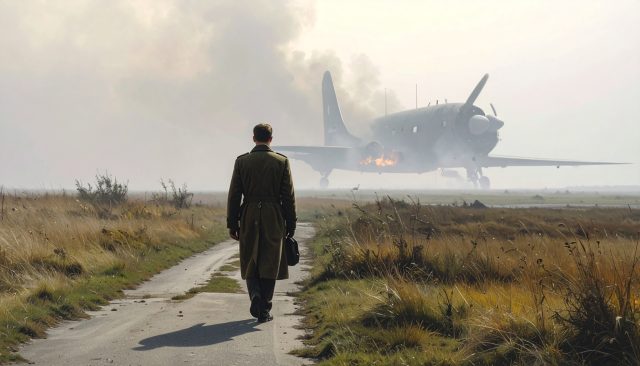
On August 18, 1945, just three days after Imperial Japan announced its surrender in World War II, a heavily overloaded Mitsubishi Ki-21 bomber took off from the Matsuyama aerodrome in Taipei.
Aboard was Subhas Chandra Bose, India’s most fiercely militant independence leader, commonly known as “Netaji.”
Officially, the bomber’s engine failed almost immediately. The plane crashed and caught fire, and Bose reportedly died hours later from third-degree burns in a local Japanese military hospital.
But from the very beginning, the public flatly refused to believe the official narrative. There was no publicly displayed body, no definitive photographs, and immediate whispers of an international cover-up.
For decades, the idea that Bose faked his death to escape British treason charges has remained modern India’s most fiercely debated historical mystery. Here are ten compelling pieces of evidence that fueled the enduring legend of his survival.
10. No Publicly Verified Body Was Ever Presented
The most glaring hole in the official narrative is the complete lack of physical proof.
According to the Japanese military, Bose’s body was hastily cremated on August 20, 1945, amidst the chaotic bureaucratic collapse following the end of the war. There were no photographs taken of his corpse.
The ashes were eventually transported to the Renkōji Temple in Tokyo, where they remain to this day. However, despite decades of public outcry, definitive modern DNA testing has never been successfully authorized or conducted on those ashes, leaving the physical evidence entirely circumstantial.
9. The Witness Accounts Contradicted Each Other
The only Indian survivor of the crash was Bose’s trusted aide, Colonel Habibur Rahman. While Rahman maintained that Bose died in the hospital, other eyewitnesses provided highly conflicting details.
Medical staff, including the attending physician Dr. Yoshimi, and various Japanese officers gave differing accounts of the exact time of death, the severity of the burns, and the exact sequence of events following the crash.
While conflicting testimony is standard in the chaotic fog of major disasters, the massive geopolitical stakes magnified every single inconsistency. To skeptics, the shifting stories felt less like human error and more like a hastily rehearsed cover story.
8. Crucial Plane Crash Records Were Missing
When researchers and historians dug into the wartime archives of Japanese-occupied Taiwan, they found massive bureaucratic gaps.
Most notably, no official death certificate was ever issued in the name of Subhas Chandra Bose by the local Taipei authorities in 1945. The certificate that did exist was issued for a Japanese soldier named “Ichiro Okura.”
While historians argue this was likely a pseudonym used to protect Bose’s identity while traveling, conspiracy theorists point to the missing documentation as proof that the crash was entirely staged.
7. British Intelligence Kept Hunting Him
If the Allied forces were completely convinced that Bose had died in Taiwan, they didn’t act like it.
Recently declassified British intelligence files reveal that MI6 and the Viceroy of India, Lord Wavell, remained highly suspicious of the crash story. The British Empire actively continued tracking rumors and monitoring his inner circle well into 1946.
Internal memos show that British authorities were terrified Bose had actually slipped away and was preparing to launch a massive post-war revolt. The fact that the British government doubted his death gave the conspiracy massive mainstream credibility.
6. The Soviet Union Asylum Theory
The most heavily researched alternative theory is that the plane crash was a brilliant smokescreen designed to help Bose escape to the Soviet Union.
Bose’s ultimate destination on August 18 was reportedly Manchuria, where he hoped to contact Soviet forces. The theory suggests that he successfully made contact and was granted asylum by Joseph Stalin to continue his anti-British campaign.
However, a darker twist to this theory claims that Stalin eventually betrayed Bose, throwing him into a freezing Siberian gulag where he ultimately died. While no conclusive Soviet files have been found, several Indian researchers have repeatedly demanded full access to KGB archives.
5. Official Government Investigations Directly Clashed
The Indian government has launched three separate, highly publicized commissions to uncover the truth—and they could not agree.
While the Shah Nawaz Committee (1956) and the Khosla Commission (1970) both concluded that Bose died in the crash, the explosive Mukherjee Commission (1999–2005) shattered the consensus.
After reviewing declassified Taiwanese records, Justice M.K. Mukherjee explicitly concluded that the plane crash never actually happened as reported, and that the ashes in Tokyo do not belong to Bose. When official government inquiries completely contradict one another, conspiracy theories thrive.
4. Decades of Unexplained Sightings
A dead man usually fades from the rumor mill within a few years. Bose did not.
For decades, alleged sightings poured in from across the globe. People claimed to have seen him inside Soviet prisons, walking the streets of China, and living deep in the Indian Himalayas.
One of the most famous rumors claimed he was secretly present in Tashkent during the signing of the 1966 Indo-Pakistani peace accords. While most of these sightings were easily debunked, their sheer volume proved that the public psyche never accepted his death.
3. The Bizarre “Gumnami Baba” Mystery
One of the strangest chapters in this historical saga centers on a highly educated, faceless ascetic monk known as Gumnami Baba (or Bhagwanji), who lived in Faizabad, India, until his death in 1985.
He spoke with commanding authority, communicated from behind a curtain, and possessed an incredible understanding of international geopolitics.
When his belongings were examined after his death, investigators found high-end German binoculars, round-rimmed spectacles identical to Bose’s, and personal correspondence from members of Bose’s inner circle. Handwriting experts even noted a chilling similarity to Bose’s penmanship.
2. Bose Had the Ultimate Motive to Disappear
By the summer of 1945, Bose’s political and military landscape had completely collapsed.
Germany had fallen, and Japan was surrendering. Because he had allied with the Axis powers to raise the Indian National Army, the British Empire considered him a high-value traitor. If captured, he would face a highly publicized military trial at the Red Fort and almost certain execution.
Faking his own death was strategically brilliant. It allowed him to evade British capture and gave him the freedom to potentially negotiate a new alliance with the advancing Soviet forces.
1. The Declassified Files Didn’t Kill the Legend
In 2016, the Indian government finally declassified hundreds of secret files relating to Subhas Chandra Bose, hoping to put the mystery to rest once and for all.
Instead of providing closure, the files only highlighted the sheer amount of confusion, unverified intelligence, and political anxiety that surrounded his final days.
Most mainstream historians today firmly accept that Netaji died in the fiery wreckage in Taipei. But because the historical record is so incredibly fragmented, the final chapter of India’s most defiant freedom fighter remains tantalizingly open.
Conclusion
The legend of Subhas Chandra Bose exists somewhere between hard historical reality and powerful national mythology.
Perhaps he truly died a tragic, agonizing death on a Taiwanese runway in the final days of World War II. Or perhaps, armed with brilliant tactical foresight, one of the most wanted political figures of the 20th century vanished into the chaotic fog of a collapsing world.
Without a body, a definitive DNA test, or a unified historical consensus, there may never be a final answer. And in the world of historical mysteries, that permanent uncertainty is exactly what keeps a legend alive.